Finally, an Interest Rate Reprieve – But a Ceasefire in the Middle East Doesn’t Have the RBA Popping Champagne Yet
Wanderstayfinder.com – The Reserve Bank of Australia (RBA) has decided to maintain its cash rate at 4.35%, ending a sequence of three consecutive hikes. This pause in rate adjustments has offered a temporary reprieve for households grappling with higher borrowing costs, but the central bank’s governor, Michele Bullock, made it clear that the fight against inflation is far from over. While the decision signals a moment of calm, the economic landscape remains volatile, and the RBA is still on guard against potential further tightening.
The Battle Against Inflation Persists
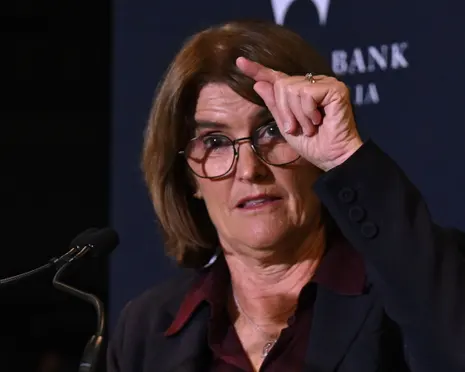
Bullock acknowledged the “tough” impact of elevated interest rates on everyday Australians during her post-meeting press conference. “Households are feeling the strain,” she noted, but emphasized that the central bank cannot afford to ease up. “We are still in the process of bringing consumer price growth back within the 2-3% target range.” This goal, she reiterated, is a key priority, and the RBA’s stance reflects its determination to stabilize the economy, even if it means continuing to raise rates in the near future.
“I want to be very clear that inflation remains too high,” Bullock said. “Today’s decision does not rule out further tightening in monetary policy if that is what is required to bring inflation down.”
Despite the ceasefire in the Middle East, which has temporarily eased tensions in the region, the RBA has not yet celebrated with champagne. The conflict between Iran and Israel, which escalated in late February, disrupted global oil supplies through the Strait of Hormuz. While the closure of this critical shipping route initially sent shockwaves through financial markets, its impact on inflation has since been somewhat mitigated by a recent peace deal between the US and Iran. This development has lowered global oil prices to three-month lows, around $83 a barrel, but the road to stability is still uncertain.
Geopolitical Factors and Economic Uncertainty
The geopolitical situation continues to influence economic outcomes, though its effect has been tempered by the peace agreement. “If the conflict does end and the Strait of Hormuz is reopened, this should support the flow of commodities and lower prices,” Bullock stated. However, she cautioned that the reopening of the strait will take time, and the risks of renewed hostilities remain.
Financial markets, too, are divided on whether the RBA will need to act again. While the pause in rate hikes has raised hopes of a potential easing, the probability of a further increase by year’s end remains around 50%. Economists are split between those who believe the economy has entered a slowdown and those who argue that inflationary pressures will keep the RBA on high alert. The central bank’s decision has not yet swayed public opinion, with many still anticipating the possibility of another rate hike.
Slowing Growth and Rising Unemployment
Outside of inflation, the RBA is also navigating a broader economic slowdown. The nation’s growth has slowed significantly at the start of the year, with unemployment climbing to 4.5%—its highest level since late 2021. This increase, coupled with a drop in consumer confidence, has created a complex picture for policymakers. “Consumer confidence is at around its lowest levels on record,” Bullock noted, adding that the current mood mirrors the pessimism seen during the pandemic’s peak.
Rising unemployment and weaker growth are typically signs of a need for lower interest rates, yet inflation at 4.2% continues to argue for tighter monetary policy. This contradiction has left the RBA in a difficult position, balancing the need to curb price increases with the risk of stifling economic activity. “The path to full employment is not yet clear,” Bullock observed, highlighting the delicate balance the central bank must maintain.
Peace Talks and the Path to Normalcy
The peace deal between the US and Iran has brought some optimism to global markets, but its impact on the RBA’s decision is limited. While the agreement has eased fears of prolonged oil supply disruptions, it does not guarantee immediate relief for the economy. “Any progress towards peace is welcome,” Bullock said, but she stressed that the reopening of the Strait of Hormuz will depend on the confidence of shipping companies and the restoration of energy infrastructure damaged during the conflict.
“We’re very pleased with developments, but realistic about how long it will take for the world economy to normalise,” said Treasurer Jim Chalmers, echoing the cautious tone of the RBA governor.
Chalmers and Bullock both acknowledged that while the ceasefire offers a positive development, the path to full economic recovery will be gradual. “Months of work will be needed to repair infrastructure and restore confidence in the strait’s safety,” Chalmers added. This sentiment underscores the challenge of relying solely on geopolitical outcomes to stabilize the economy, as other domestic factors—such as housing affordability and wage growth—continue to exert pressure.
For now, the RBA’s decision to hold rates provides a small window of opportunity for households and businesses. However, the central bank remains vigilant, ready to adjust its strategy if inflationary trends worsen. The key question is whether the temporary calm in the Middle East will be enough to shift the economic narrative or if the RBA will need to act again to keep prices in check.
A Delicate Balance in the Face of Uncertainty
The RBA’s dilemma is emblematic of the broader economic challenges facing Australia. While the ceasefire in the Middle East has alleviated one source of inflationary risk, the central bank must still contend with domestic headwinds. The combination of slowing growth, rising unemployment, and stubborn inflation has created a scenario where rate cuts are unlikely, and further hikes are still a possibility.
Bullock’s remarks highlight the central bank’s cautious approach. “We are in a difficult terrain,” she said, noting that the economy is on the edge of a potential double-dip recession. The decision to hold rates reflects a strategic pause, allowing time to assess the long-term effects of the conflict and the peace deal. However, this pause does not signal a shift in policy direction, and the RBA is prepared to respond swiftly if conditions change.
As the economy adjusts to the new normal, the interplay between inflation and growth will remain central to the RBA’s decisions. While the ceasefire and the peace deal between the US and Iran have reduced some risks, the central bank is unlikely to declare victory just yet. “The outlook is uncertain,” Bullock concluded, “and we must remain flexible in our approach.”
With the probability of a rate hike still hovering around 50%, the RBA’s next move will depend on a range of factors. The recovery of the oil market, the pace of economic activity, and the trajectory of inflation will all play a role in shaping the central bank’s strategy. For now, the decision to hold rates offers a moment of respite, but the economic battle is far from over.