Nepal floods: children as young as 11 among 35 Australians missing after disaster

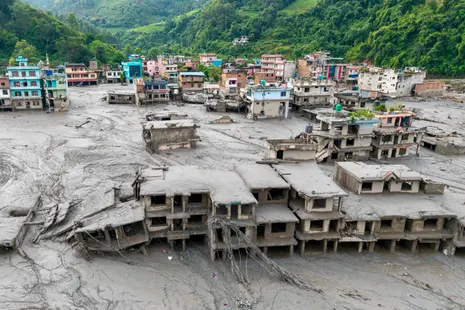
Table of Contents
Flash Floods at Nepal-Tibet Border Leave 35 Australians Missing, Including Children as Young as 11
Wanderstayfinder.com – Devastating flash floods that tore through the high-altitude valley straddling the Nepal-Tibet border have left 35 Australians unaccounted for, with families across New South Wales and beyond waiting for news of loved ones who were in the region on spiritual pilgrimages and guided treks. Among the first identified victims of the disaster is a Sydney-based couple, Venkatraman Balakrishnan, 52, and his wife Chitra Venkatraman, 46, who had been travelling to Mount Kailash for a multi-day Hindu pilgrimage known as the Kailash Yatra.
The couple was part of a group of 15 Australians taking part in a tour run by Himalayan Glacier Adventures. Their son, Akash Venkatraman, confirmed the family had been staying in riverside accommodation in the town of Syabrubesi and had intended to depart on Wednesday morning — plans that were obliterated when floodwaters surged through the valley. Contact was severed the previous day, and since then the family has been sustained by an outpouring of community support back home in Australia.
“The rest of us here have a wide range of support who are each trying their best to see what they can do,” Venkatraman told Guardian Australia. “Overall, I’m focused on continuing as normal as worrying will get me nowhere.”
A Tour Group of 47 Cut Off from the Outside World
Sagar Pandey, founder and chief executive of Himalayan Glacier Adventures, confirmed he had lost all communication with his 47-person tour group, which included the 15 Australians alongside visitors from the United Kingdom, the United States, Canada, and Singapore, as well as local guides. The group had completed a roughly seven-hour drive from Kathmandu to reach the valley and was scheduled to set out from their hotel toward the Chinese border at approximately 8.30 a.m. on the morning the flood struck.
Pandey, who also serves as president of the Trekking Agencies’ Association of Nepal, said he had coordinated with other local operators whose guides had likewise gone silent in the affected zone. He later flew a helicopter over the Rasuwa area where the tour had been based and described a landscape rendered unrecognisable.
“To be honest … you would think there was no human civilisation there at all. The flash flood swept away everything, everything, you couldn’t see any human creations. Still, I have a hope, but like 1%; the rest I don’t have a hope, they are missing and missing and missing.”
From the air, Pandey estimated around 100 people were visible on higher ground, whom he believed were local residents who had managed to escape the worst of the inundation.
Religious Community Mobilises Search Efforts
Vasan Srinivasan, chief executive officer of the Mental Health Foundation Australia, said that all but one of the 15 missing Australians on the Himalayan Glacier Adventures tour were Sydney-based members of his religious organisation, the Australia Bharatha Brahmin Samaj. He described the group as tightly knit, with family connections binding the travellers together.
“They are great contributors to our community and have assisted me with lots of my fundraising activities for mental health in New South Wales,” Srinivasan said. “Hopefully God can give me the privilege of getting them home to Sydney.”
Srinivasan said he was leveraging every available government contact to trace the group’s whereabouts.
The Scale of the Disaster
The missing Australians spanned ages from 11 to 64 and included two families of four travelling together. Guardian Australia confirmed that several of the unaccounted-for travellers came from Sydney’s north-western suburbs, and at least 10 of the missing were based in New South Wales.
The broader toll of the flooding is staggering. As of Thursday afternoon, nearly 1,400 people remained missing across the affected valley on both sides of the border. Nepal police confirmed that 270 bodies had been recovered, according to Reuters.
Separate groups of 11 and six Australians were also reported unaccounted for in the region. Eleven of the missing were among 80 people lost during an Isha Foundation trek, a fact confirmed by the organisation’s founder, Sadhguru. He said the group had been at an immigration crossing when the waters arrived.
“All of us, including the volunteers and support teams are deeply anguished and are doing our utmost to assist in the rescue,” Sadhguru posted on X. “There has been no official information on the whereabouts of any of the people who were at the immigration office. We are working with the authorities to see if we can get to the location and stand ready to be part of the rescue efforts, regardless of the risk involved.”
Kathmandu Holiday Tours and Travels reported one additional missing Australian and was contacted for further comment. Up to six more Australians were also reported missing in connection with other tour operators in the area.
Background: The Kailash Yatra and the Region’s Vulnerability
The Nepal-Tibet corridor around Mount Kailash is one of the most sacred pilgrimage routes in Hinduism. Devotees undertake multi-day treks through high-altitude valleys, often crossing into Chinese-administered Tibet, to complete the Kailash Yatra. The route draws thousands of international visitors each year, many of whom travel in organised groups with local guides and operators.
The geography of the region — narrow valleys flanked by steep slopes and fed by glacial melt and monsoon rains — makes it acutely vulnerable to sudden flash flooding, particularly in the late-summer months when heavy rainfall can trigger rapid water surges with little warning. The concentration of tourists, infrastructure, and temporary accommodation in small towns like Syabrubesi amplifies the risk when such events occur.
For families in Sydney and elsewhere in Australia, the coming days will be defined by a painful uncertainty: whether the rivers that carried their loved ones toward sacred peaks have also carried them beyond reach.
Related Reading
Frequently Asked Questions
What is Nepal floods?
Nepal floods is the main topic of this guide. The article explains the context, practical details, and next steps readers should understand.
Why does Nepal floods matter?
Nepal floods matters because readers are looking for a useful answer, not just a short summary. Good content should match search intent and help them decide what to do next.