Concerns over US company’s gas fracking plan for world’s most intact tropical savanna in WA revealed
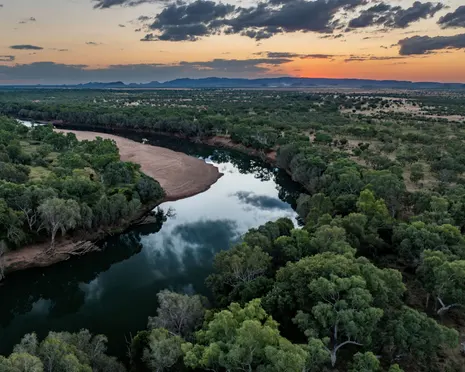
Wanderstayfinder.com – Federal authorities have voiced ongoing worries about an American company’s proposal to frack gas in Western Australia’s Kimberley region, a vast expanse recognized as the world’s largest and most undisturbed tropical savanna. The initiative, led by Texas-based Black Mountain Energy via its subsidiary Bennett Resources, aims to secure federal approval for 20 gas wells as part of the Valhalla project, situated west of Fitzroy Crossing. This location, adjacent to a creek that drains into the Fitzroy River—a national heritage site—poses a potential threat to the region’s delicate ecosystems and its endangered wildlife.
The project has sparked debate due to its proximity to the Fitzroy River, which serves as a crucial habitat for the critically endangered northern blue-tongued skink and the largetooth sawfish, a species reliant on the river for its nursery grounds. Despite Western Australia’s Environmental Protection Authority recommending approval under state regulations, federal environment officials have expressed reservations about the thoroughness of the company’s environmental impact assessments. Documents obtained through a freedom of information request reveal that the federal department has raised repeated concerns about the quality of data submitted by Black Mountain Energy.
Officials highlighted that the company failed to provide sufficient information regarding the area’s water resources and the ecosystems dependent on groundwater. Correspondence from last year shows federal staff informed Black Mountain that their assessment was incomplete, particularly in identifying surface water and groundwater interactions. This omission, according to the department, hampers the ability to fully evaluate the potential consequences of fracking on the region’s environment. The focus is on understanding how the project might affect water systems, which are vital for sustaining native species and the broader Martuwarra Fitzroy River catchment.
Further details from the federal environment department indicate that the company’s analysis of groundwater-dependent ecosystems was fragmented, leading to conclusions that lacked strong support. The department emphasized that without comprehensive data, it remains difficult to determine whether the fracking activities would cause significant harm. This includes assessing the impact on species like the northern blue-tongued skink and the largetooth sawfish, which are already under threat from environmental pressures.
The situation has prompted calls for additional consultation with traditional owner groups connected to the Fitzroy River’s cultural and spiritual significance. Federal officials noted that Black Mountain Energy had not adequately addressed these connections in its initial proposal, despite asserting that the project would not harm the river. The department argued that without robust evidence, the company’s claims remain unproven, and further analysis is necessary to validate their environmental safeguards.
Environmental advocates, including the conservation group Environs Kimberley, have intensified pressure on the federal government to intervene. The group, which secured the released documents, urged the environment minister, Murray Watt, to use his authority under national nature laws to halt the project. “We’ve called on him to essentially scrap the assessment because the company has clearly not done what the department has requested in terms of providing information,” said Environs Kimberley’s executive director, Martin Pritchard. “They’ve had long enough to undertake this work. They appear to be not wanting to do it, and without that work, there’s no way the commonwealth could make a decision on whether there would be significant impacts or not.”
The federal environment department’s concerns align with those of an independent scientific committee, the Independent Expert Scientific Committee (IESC), which advises on the water impacts of gas projects under the federal water trigger. In a report shared in January, the IESC noted that Black Mountain Energy’s assessment was “limited and disjointed,” with conclusions about the project’s effects on surface and groundwater resources largely unsupported. The committee identified key gaps, including the lack of detailed studies on hydrogeological processes and the relationship between surface water and groundwater in the area.
These findings underscore the uncertainty surrounding the project’s environmental risks. The department stressed that without a clearer understanding of the region’s water systems, it cannot confidently predict the long-term consequences of fracking. This includes the potential disruption of habitats for species that rely on the Fitzroy River’s ecosystem, which is already fragile due to climate change and human activity. The IESC’s report also highlighted the importance of groundwater-dependent ecosystems, which are particularly vulnerable to changes in water availability.
Black Mountain Energy has maintained that its plans would not significantly affect the Fitzroy River. However, federal officials argue that the company’s failure to provide site-specific data on groundwater resources weakens this claim. The department’s correspondence makes it clear that the lack of evidence has left critical questions unanswered, particularly about how the project might alter water flow patterns and impact the survival of species like the largetooth sawfish. This has led to a standoff between the company and the federal government, with the latter insisting on more rigorous scrutiny before granting final approval.
As the debate continues, the Kimberley region’s status as a globally significant ecological area remains a focal point. The area’s intact savanna and minimal human interference make it a critical zone for biodiversity conservation. Environmentalists warn that approving the Valhalla project could set a precedent for industrial expansion in one of the last pristine regions of the world. “This is the last place in the world that should be industrialised by the oil and gas fracking industry,” Pritchard reiterated. “It has the largest, most intact tropical savanna in the world and it’s in the top 4% of the least impacted coastlines anywhere on Earth.”
The federal government is now under pressure to decide whether to override state recommendations and proceed with the project. While the EPA has endorsed the development, its approval is based on state-level assessments that may not account for the broader national implications. With the release of new documents, the scrutiny on Black Mountain Energy has intensified, and the company faces the challenge of proving its environmental claims within the next few months. The outcome of this evaluation will determine the future of the Valhalla project and its impact on one of Australia’s most vital natural landscapes.