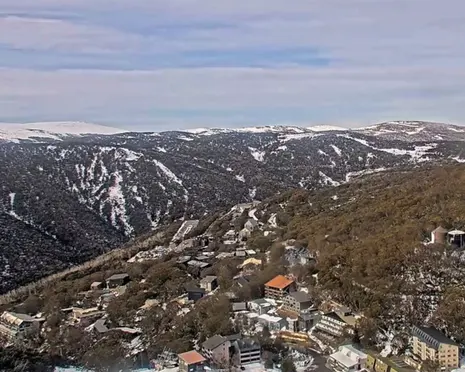
Australian Ski Resorts Smash July Climate Records
Unprecedented Heat Sweeps Alpine Destinations
Wanderstayfinder.com – Australian ski resorts smash July climate benchmarks as alpine regions experience extraordinary warmth. New South Wales and Victoria destinations recorded temperatures reaching twelve degrees Celsius above seasonal averages, creating remarkable conditions for winter sports. The Bureau of Meteorology confirmed that multiple ski areas established new temperature records during the month, marking one of the most significant heat events in recent history.
Mount Hotham and Falls Creek both recorded their warmest July readings on record, while Thredbo set a fresh mark for the hottest single day in the month. These figures arrive after a challenging start to the winter sports season, with limited snowfall and persistent warmth affecting mountain regions across the country. Resorts have relied heavily on artificial snow production to maintain viable slopes for visitors.
Atmospheric Patterns Drive Temperature Surge
A slowly moving high-pressure system generated the exceptional temperatures across alpine zones. This weather pattern featured clear skies and descending dry air masses that trapped heat at higher elevations. Angus Hines, a senior forecaster with the Bureau of Meteorology, explained that this configuration produced a temperature inversion—where conditions closer to sea level became cooler than those found at mountain summits.
“These temperatures were a substantial departure from the norm and even from previous bursts of heat for July,” Hines noted. “This highlights the likely issues we will have with ski seasons into the future with a warming climate.”
The forecaster indicated that above-average warmth would persist across ski regions until approximately Wednesday, with potential for light snow flurries over the weekend before another temperature increase arrives early the following week.
Historical Records Broken Multiple Times
At Mount Hotham in Victoria’s alpine territory, where official temperature measurements extend back thirty-six years, the prior hottest July day stood at 8.7 degrees Celsius, established in 1994. Remarkably, this benchmark was surpassed three separate times during the current month alone. The mercury reached 12 degrees Celsius on Sunday, representing a dramatic contrast to the typical July daily maximum of zero degrees.
Falls Creek experienced similar upheaval in its records. The previous highest July temperature of 9.8 degrees Celsius, set in 1992, was eclipsed first by 11.5 degrees on Saturday and then by 13 degrees on Sunday. The average daily maximum for this location during July normally sits at 1.2 degrees Celsius.
Additional alpine regions also established new daily temperature records during the weekend: Thredbo reached 14 degrees Celsius, Cabramurra hit 14.3 degrees, and Mount William climbed to 15.2 degrees Celsius. Nighttime warmth also broke records across multiple locations, with Mount Buller reaching 5.7 degrees, Mount Baw Baw hitting 12 degrees, Mount William at 9.4 degrees, and both Mount Hotham and Falls Creek recording 4.6 degrees Celsius.
Visitors and Scientists Share Observations
Dr Andrew Watkins, a climate scientist affiliated with the Climate Council, visited Mount Hotham on Friday when temperatures were already approaching the historic 1994 benchmark. “It was incredibly warm up there,” he observed. “You do not expect to see temperature records that are more than 30 years old being broken by two or three degrees. It is quite phenomenal.”
“I don’t think any climatologist is surprised by events like this any more. It is shocking in its own way,” Watkins added.
Laura Gray, a visitor from Bright in Victoria, explored both Mount Hotham and Falls Creek during the weekend. She witnessed skiers navigating slopes in T-shirts and without gloves—sightings uncommon for mid-winter. “It did feel pretty bizarre and I had to keep reminding myself that it was still mid-July and not the spring,” she remarked. “In the morning it was lovely to ski but once the sun got high enough on the slopes it turned slushy very quickly.”
Gray noted that the unusual conditions would likely impact snow quality and skiing experience throughout the remainder of the season. The current El Niño pattern developing across the tropical Pacific Ocean, combined with extended forecasting models from the meteorological bureau, indicates that alpine zones should anticipate continued dry and elevated temperature conditions throughout the remainder of winter—a scenario described as particularly unfavorable for snow accumulation.