UK and Japan set to agree investment deal worth £18bn
Wanderstayfinder.com – The United Kingdom and Japan are poised to finalize a significant £18bn investment agreement, marking a pivotal moment in their economic partnership. This landmark accord, which is expected to be signed ahead of the G7 summit next week, aims to bolster bilateral ties through a range of commercial and governmental commitments. Among these, a £9bn deal focused on offshore wind energy stands out, signaling a major step toward shared climate goals and industrial collaboration. The agreement also highlights the UK’s growing focus on securing long-term technological partnerships, particularly in the energy sector.
Leadership and Diplomatic Engagement
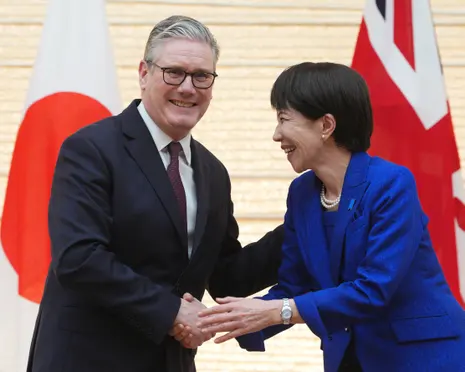
Prime Minister Keir Starmer will host Japan’s Prime Minister Sanae Takaichi at Downing Street on Sunday, setting the stage for the summit. The meeting comes amid heightened anticipation for the G7 summit, where global leaders are expected to address pressing issues such as economic resilience, climate action, and security. Starmer’s office emphasized that the discussions will underscore the UK’s commitment to fostering innovation and investment, particularly in strategic industries. This visit is part of a broader diplomatic push to strengthen ties with Japan, a key ally in both economic and security matters.
Downing Street has confirmed that over a dozen agreements will be unveiled during the summit, with the investment pact serving as a centerpiece. The deal includes provisions to enhance cooperation between British and Japanese entities, particularly in renewable energy, aerospace, and advanced manufacturing. A notable aspect of the agreement is the collaboration between Rolls-Royce and Japan’s Atomic Energy Agency, which will focus on developing next-generation nuclear technologies. This partnership aims to accelerate the transition to cleaner energy sources while supporting the UK’s industrial ambitions.
Broader Economic Implications
Business leaders from both nations will convene to explore future opportunities for growth, with the summit serving as a platform to showcase joint ventures. The £18bn investment is projected to create tens of thousands of jobs across various sectors, from energy to technology. Starmer highlighted the deal’s potential during a press briefing, stating:
“These landmark agreements will bring multibillion-pound investment into the UK, creating tens of thousands of new employment opportunities and driving cutting-edge advancements. As G7 economies and steadfast security partners, we are collaborating with Japan to pioneer some of the most transformative technologies on the global stage, combining the strengths of British and Japanese expertise to fuel progress across the nation.”
The investment deal also includes measures to support UK defense firms in accessing Japanese capital. This move is designed to strengthen the country’s defense capabilities and ensure long-term funding for military projects. The agreements reflect a strategic alignment between the two nations, with Japan playing a crucial role in diversifying the UK’s economic partnerships. Analysts suggest that the collaboration could serve as a model for future international alliances, particularly in the wake of global economic uncertainty.
Context of Political Challenges
The announcement of the investment deal follows a period of political upheaval within the UK government. Prime Minister Keir Starmer’s leadership has faced scrutiny after the unexpected resignation of John Healey as defence secretary, which was sparked by disagreements over military funding. Healey’s exit was joined by several other high-profile figures, including armed forces minister Al Carns and two parliamentary aides, adding pressure to Starmer’s administration. Despite these challenges, the summit represents a renewed effort to project stability and unity.
Healey’s resignation, which occurred just days before the G7 meeting, has raised questions about the government’s ability to manage its economic and security priorities. The dispute centered on long-term funding for the armed forces, a critical issue for maintaining national security and military readiness. His departure has also prompted speculation about the potential for a leadership challenge, with opposition parties capitalizing on the situation to question Starmer’s tenure. However, the investment deal with Japan is seen as a way to reaffirm the government’s focus on economic growth and international cooperation.
The collaboration with Japan is viewed as a strategic counterbalance to the UK’s domestic challenges. By securing foreign investment and forging partnerships, the government seeks to stabilize its economic trajectory. The agreements are expected to benefit both countries, with Japan gaining access to the UK’s energy markets and the UK benefiting from Japan’s technological know-how and financial resources. This partnership aligns with the G7’s shared objectives of fostering innovation and addressing global challenges through collective action.
Focus on Innovation and Future Prospects
Rolls-Royce’s involvement in the agreement highlights the UK’s ambition to lead in next-generation energy technologies. The company’s collaboration with Japan’s Atomic Energy Agency will focus on developing advanced nuclear reactors, potentially revolutionizing energy production. Such initiatives are critical for meeting the UK’s net-zero targets and reducing reliance on fossil fuels. The deal also includes provisions to streamline regulatory processes and attract further private investment in green energy projects.
Business leaders from both countries are expected to play a key role in shaping the future of this partnership. The discussions will explore ways to enhance trade, technology transfer, and joint research initiatives. By combining British engineering and Japanese innovation, the two nations aim to create a competitive edge in emerging markets. The summit is anticipated to set the tone for deeper integration, with long-term commitments to strengthen bilateral economic ties.
The £18bn investment deal is a testament to the UK’s proactive approach in securing economic stability. With global markets fluctuating and domestic challenges mounting, the agreement provides a tangible solution to bolster growth. It also signals a shift toward more diversified international partnerships, reducing dependence on traditional trade routes. The inclusion of the £9bn offshore wind component underscores the UK’s commitment to renewable energy, a sector that has seen rapid development in recent years.
Global Significance and Strategic Alignment
As the G7 summit approaches, the UK and Japan’s collaboration is being framed as a symbol of unity among the world’s leading economies. The summit will provide an opportunity to discuss how the partnership can contribute to global economic recovery and technological leadership. Starmer emphasized that the deal is not only about financial investment but also about building a shared vision for the future of industry and innovation.
With the UK’s economy navigating a period of transformation, the investment from Japan is seen as a critical catalyst for growth. The agreement will be closely watched by investors and policymakers alike, as it reflects the nation’s ability to attract foreign capital despite internal challenges. The focus on technology and energy underscores the UK’s commitment to addressing climate change while ensuring economic competitiveness. This strategic alignment is expected to strengthen the UK’s position in the global market and reinforce its role as a leader in innovation.
In the context of recent political shifts, the investment deal with Japan is viewed as a strategic move to stabilize the government’s image. By prioritizing economic collaboration, Starmer aims to demonstrate the administration’s effectiveness in driving growth and international partnerships. The summit will also allow the UK to showcase its commitments to global challenges, reinforcing its role as a key player in the G7. As the agreement moves forward, it will be crucial to monitor its impact on both economies and the broader geopolitical landscape.