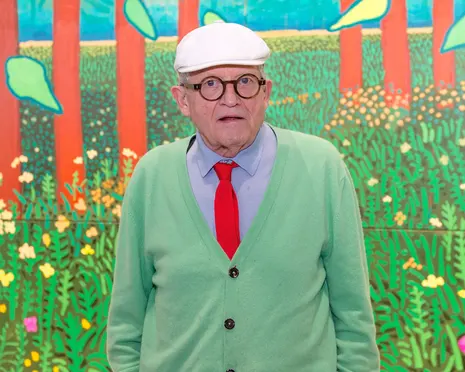
David Hockney, British Artist, Dies at 88
Wanderstayfinder.com – David Hockney, a pioneering British artist known for his iconic depictions of pools and portraits, has died at the age of 88. His passing marks the end of a remarkable era in the art world, as his innovative style and vibrant creativity reshaped modern art across two centuries. Hockney’s legacy is defined by his ability to blend traditional techniques with experimental forms, leaving an indelible impact on both 20th-century movements and contemporary visual culture. From his early works to his embrace of digital media, his career spanned six decades, evolving through phases that challenged artistic norms and inspired countless creators.
Revolutionary Path from Pop Art to Digital Innovation
David Hockney’s journey in the art world began in the 1960s, when he emerged as a central figure of the pop art movement. Pieces like *A Bigger Splash* and *Portrait of an Artist (Pool With Two Figures)* captured the essence of 1960s Los Angeles, blending bold colors with playful compositions. These works became cultural landmarks, symbolizing the era’s spirit of creativity and excess. Yet, Hockney’s influence transcended his pop art roots, as he continuously redefined artistic boundaries throughout his career.
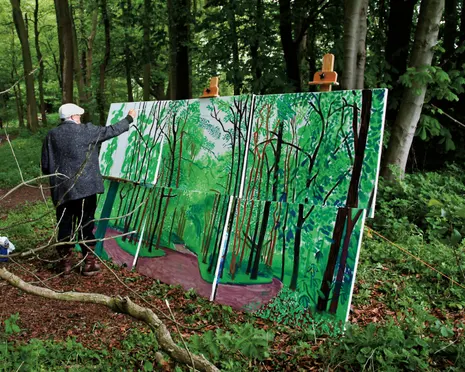
As he aged, Hockney adapted to new technologies, transitioning from traditional canvas to iPad drawings and 3D installations. This shift reflected his enduring curiosity and willingness to explore novel mediums. His ability to maintain a distinctive voice while embracing innovation solidified his status as a visionary. Colleagues and critics alike noted his sharp wit and infectious enthusiasm, which permeated every creative endeavor.
Artistic Legacy and Celebrated Contributions
Tracey Emin, a fellow British artist, praised Hockney’s work, stating:
“A great artist and a wonderful man, who with the power of art changed the perception of Britishness. A proud chain-smoking homosexual, who flew the flag higher than any other British artist.”
This sentiment was echoed by UK Prime Minister Keir Starmer, whose spokesperson noted:
“The prime minister is saddened to hear of the death of David Hockney, one of Britain’s most celebrated artists. His vivid, instantly recognisable work influenced generations of creators, and the prime minister’s thoughts are with his friends and family.”
King Charles III also paid tribute to Hockney, writing on social media:
“David was one of life’s true originals; one who wore his genius as lightly as those beloved yellow Crocs of his that helped brighten Palace occasions. I trust they will see him tread safely into the hereafter as we mourn a man whose irrepressible charm and constant innovation will be most sorely missed, but whose dazzling creativity lives on in galleries and museums around the world.”
The monarch highlighted his role as a Yorkshireman and a global artistic icon, underscoring his lasting relevance.
Retrospective and Posthumous Recognition
Hockney’s representatives shared that he “passed away peacefully at home on 11 June 2026, one month short of his 89th birthday.” They emphasized his legacy as a “man of enthusiasm for life, outstanding sense of humour, and investigative curiosity.” His signature phrase, “Love Life,” encapsulated his approach to art and existence, which continued to inspire even after his death.
In response to his passing, London’s Tate Britain announced a major retrospective planned for next year, featuring a selection of his most iconic works. The gallery also intends to unveil a multimedia installation in the Turbine Hall of Tate Modern, showcasing his experimental use of technology. “David’s passing brings to a close an extraordinary body of work characterised by reinvention,” said Alex Farquharson, the gallery’s director, adding:
“He was an endlessly inventive artist, with a unique vision of the world. His witty and sharp observations were a constant presence in both his work and in person.”
Early Life and Artistic Beginnings
David Hockney was born in Bradford, West Yorkshire, in 1937, as the fourth of five siblings in a family he called “radical working-class.” His parents nurtured his artistic talent from an early age, encouraging him to pursue his passion. After studying at Bradford College, he debuted his first painting—a portrait of his father—at the Yorkshire Artists Exhibition. This early success set the stage for a career that would span decades, evolving through phases that reflected both his personal growth and artistic experimentation.