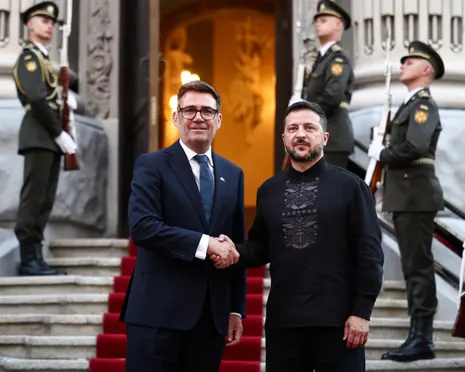
Andrew Griffith and Tom Tugendhat join Badenoch’s top team in Tory reshuffle

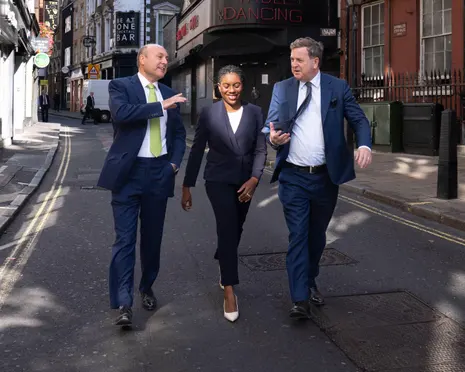
Table of Contents
Badenoch Overhauls Shadow Cabinet, Installing Business Veteran as Chancellor and Hawk as Foreign Secretary
Wanderstayfinder.com – The Conservative opposition leadership has undergone its most dramatic personnel shake-up since Kemi Badenoch took the party helm, with two of the most prominent figures in the shadow frontbench removed in a single Monday announcement. Badenoch dismissed shadow chancellor Mel Stride and shadow foreign secretary Priti Patel, installing Andrew Griffith and Tom Tugendhat respectively in their place — moves that signal a sharp recalibration of both economic messaging and foreign-policy posture ahead of the next electoral cycle.
Economic Leadership: From Ideologue to Operator
Stride, who occupied the shadow chancellor’s brief from the moment Badenoch assumed leadership, had struggled to carve out a distinct economic identity for the opposition. Labour’s own fiscal turbulence had offered the Conservatives a window to differentiate, yet Stride’s tenure was widely perceived within the party as failing to capitalise on that opening. His replacement, Griffith, brings a very different profile: the former chief operating officer of Sky and chair of Just Eat steps into the role from the shadow business portfolio, a seat that will now pass to Claire Coutinho, previously the shadow energy secretary.
A senior Conservative figure characterised the appointment as a deliberate pivot toward pragmatic economic governance.
“A no-nonsense, pro-growth shadow chancellor with real business experience,” the source described Griffith, adding, “Kemi is changing the way the Conservative party approaches economic policy and creating a new economic leadership team for the next phase, focused on growth, higher living standards and fiscal credibility.”
Badenoch herself framed the change in terms of continuity rather than rupture, paying tribute to Stride while confirming his return to the backbenches.
“He helped us steady the ship, rebuild economic credibility and become an effective opposition, and I am genuinely grateful for his contribution,” Badenoch said. “Exceptionally loyal, and I will always be grateful to him for the work he has done.”
Stride, in turn, pledged continued loyalty to the new leadership.
“The Conservative party must continue to champion an approach which is both radical and deliverable … The Conservatives have a good story to tell on this now, and one that I know will continue to grow stronger and stronger under Kemi’s leadership,” he stated.
Foreign Policy: A Hawk Takes the Helm
The foreign secretary’s brief, long associated with Patel’s international profile, now passes to Tugendhat — a former security minister and Badenoch leadership challenger who had previously declined a shadow cabinet post. His appointment is notable because it draws a prominent voice from the party’s centrist One Nation current into the frontbench, even as his own foreign-policy instincts lean decidedly hawkish, particularly on China and Iran.
“We’re facing the most dangerous moment in a generation. Too often, the government has responded with weakness. As shadow foreign secretary, I’ll ensure Britain chooses strength again,” Tugendhat declared upon confirmation of his role.
Patel, who announced her departure on Sunday evening, will retain an “international role” within the party, tasked with deepening ties to centre-right and conservative movements abroad. She also cited a desire to spend more time serving her Essex constituency.
“I’m pleased to continue supporting Kemi and the Conservative party in a new role strengthening our relationships with fellow conservatives and centre-right parties around the world,” Patel said. “At a time of profound global uncertainty, when our values and freedoms are under threat, conservatives must work more closely together.”
Other Departures and Appointments
The reshuffle extends well beyond the two headline changes. Stuart Andrew, shadow health secretary, was also removed; he confirmed via a post on X that he would return to the backbenches. Helen Grant, the shadow solicitor general, has likewise requested to step down from the frontbench. James Cleverly, who had served as shadow communities secretary, exited the cabinet to pursue a bid for London mayor — a candidacy he announced on Sunday. Cleverly, who lost the leadership contest to Badenoch and is generally regarded as a more moderate voice within a party that has drifted rightward amid the rise of Nigel Farage’s Reform UK, insisted his departure was not a reaction to ideological pressure.
“I am going to put forward a classic Conservative case to be the mayor of London, and it’s about enterprise, it’s about opportunity,” Cleverly told Times Radio.
His shadow communities brief will be assumed by Katie Lam, a hardline anti-migration MP who has served as one of the party’s most visible media voices on immigration. Meanwhile, Coutinho — who will shortly begin maternity leave — will be covered on the business portfolio by Julia Lopez, previously the shadow minister for the now-abolished science, innovation and technology department.
Continuity at the Top
Not every frontbench seat was disturbed. Chris Philp retains the shadow home secretary’s brief, and James Cartlidge continues as shadow defence secretary. Two newer appointments round out the reshuffle: Joy Morrissey takes the shadow minister for women and equalities portfolio, while Harriet Cross, another member of the 2024 parliamentary intake, is expected to assume the shadow Scotland secretary role.
The breadth of the changes — spanning economic strategy, foreign affairs, health, communities, and the solicitor general’s office — marks the most extensive single-day turnover in the shadow cabinet since Badenoch’s accession. For a party still consolidating its post-election identity and competing against both a Labour government and a fast-growing right-wing challenger, the reshuffle is less a routine rotation than a statement of intent: Badenoch is assembling what she describes as a growth-oriented, fiscally credible, and internationally assertive opposition team for the next phase of Conservative politics.
Related Reading
Frequently Asked Questions
What is Andrew Griffith and Tom Tugendhat join?
Andrew Griffith and Tom Tugendhat join is the main topic of this guide. The article explains the context, practical details, and next steps readers should understand.
Why does Andrew Griffith and Tom Tugendhat join matter?
Andrew Griffith and Tom Tugendhat join matters because readers are looking for a useful answer, not just a short summary. Good content should match search intent and help them decide what to do next.