Germany poised to identify suspect in Leipzig drone attack on Ukrainian plane

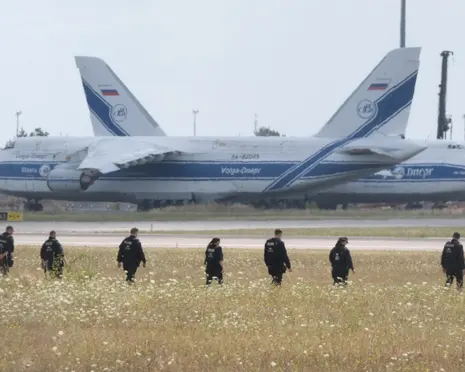
Table of Contents
Berlin Prepares Formal Attribution for Leipzig Drone Plot as Sanctions Package Takes Shape
Wanderstayfinder.com – Chancellor Friedrich Merz told the public broadcaster ARD on Sunday evening that the federal government is on the verge of naming the party it holds responsible for a suspected drone strike aimed at a Ukrainian military cargo aircraft at Leipzig/Halle airport on 4 August. The announcement, he said, will be made “in the coming days” and will be coordinated closely with European Union and NATO allies.
“We are in the process of concluding the investigations; we have reached a broad agreement within the federal government on how we will respond, and we will make this clear in the coming days. It won’t take much longer.”
Until now, Berlin has kept the identity of the suspected orchestrator under wraps, though speculation across European capitals has pointed squarely at Moscow. The Kremlin has publicly denied any role in the incident. Merz stressed that whatever conclusions emerge will be shared with partners before they are made public.
“It will be a response from Germany, but our partners in the European Union and NATO will not be taken by surprise.”
What Happened at Leipzig/Halle
The sequence of events unfolded over several days in late July and early August. A drone loaded with an explosive charge was located in close proximity to a Ukrainian Antonov transport aircraft — the type of wide-body cargo plane routinely used to ferry military hardware into Ukraine. Investigators determined that the device was designed to settle onto the aircraft’s wings, which at the time were carrying a full load of aviation kerosene. The charge, however, never went off, according to findings referenced in last week’s investigative reporting.
Roughly twenty minutes after the first drone was spotted, a second unmanned aircraft apparently made contact with a DHL freight jet that was on final approach. The DHL pilot aborted the landing and diverted the aircraft to another airfield. Days later, a third drone was recovered from an open field in a municipality that sits directly against the western perimeter of the Leipzig airport complex. Forensic specialists from the federal criminal police office (BKA) detected traces of a compound that preliminary analysis identified as hexogen — a powerful military explosive. That device, too, failed to detonate.
Investigators’ internal reporting, as relayed through media channels, carried a line suggesting the plot’s ambition exceeded what the public had been told: “The perpetrators may have had a far larger attack in mind than previously known to the public.”
Expected Retaliatory Measures
Two outlets — the daily Die Welt and the policy news site Politico — cited unnamed government sources to say Berlin intends to formally attribute the operation to Russia and to pair that attribution with a substantial new sanctions package negotiated jointly with Brussels. The measures are expected to target Russia’s shadow fleet, the network of vessels that continue to move seaborne oil under flags of convenience while evading existing price caps and insurance restrictions. A further step reportedly under discussion is the forced closure of Russian House, the cultural and diplomatic representation building that occupies a prominent site in central Berlin. In kind, Moscow would be expected to shutter the Goethe Institute, Germany’s principal cultural body operating inside Russia.
The timing of the announcement carries its own political weight. EU defence ministers and foreign affairs ministers convene this week in Wicklow, Ireland, and Berlin has been speculating that the venue could serve as the stage for the formal attribution. Merz stopped short of naming a suspect last week but issued a pointed warning:
“They will pay for this.”
He framed the necessity of a firm response around what he described as a widening tolerance among saboteurs for collateral destruction: “Attackers are increasingly ruthlessly accepting even serious property damage, and even injuries and deaths.”
Election Backdrop in Eastern Germany
The announcement lands amid a heated state-level election campaign across eastern Germany, with voters heading to the polls this Sunday. The anti-immigration, populist Alternative für Deutschland (AfD) is polling strongly in those states, and the question of how Germany should manage its relationship with Moscow — and whether continued military support for Ukraine is sustainable — has become a central campaign issue. The AfD’s foreign policy spokesperson, Markus Frohnmaier, acknowledged that Germany faces hybrid threats “without a doubt,” yet declined to speculate on attribution, urging the government to “first establish transparency and provide information about the current state of knowledge.”
For readers tracking the broader picture: Leipzig/Halle is one of Germany’s busiest freight airports and a key node in the overland logistics corridor that has carried Western-supplied armour, ammunition, and spare parts into Ukraine since 2022. A successful strike on a kerosene-laden Antonov would have risked a catastrophic fuel fire on the tarmac, potentially destroying adjacent aircraft and infrastructure. The fact that three separate drones were deployed — none of which detonated — suggests either a deliberate rehearsal, a mechanical failure, or an attempt to keep the operation deniable until the political moment was right. Berlin’s decision to wait until after the eastern-state vote before making its formal attribution may reflect a desire to avoid handing the AfD a fresh campaign talking point, or conversely to ensure the announcement carries maximum diplomatic weight once the electoral noise has faded.
Related Reading
Frequently Asked Questions
What is Germany poised to identify suspect in Leipzig?
Germany poised to identify suspect in Leipzig is the main topic of this guide. The article explains the context, practical details, and next steps readers should understand.
Why does Germany poised to identify suspect in Leipzig matter?
Germany poised to identify suspect in Leipzig matters because readers are looking for a useful answer, not just a short summary. Good content should match search intent and help them decide what to do next.