China is concealing scale of flood disaster, say Tibet campaigners

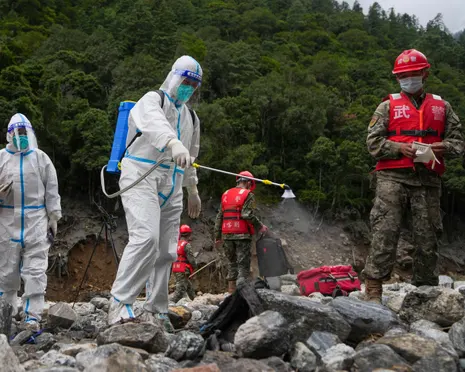
Table of Contents
Glacier Collapse on the Nepal-Tibet Border Sparks Floods; Tibet Advocates Challenge Beijing’s Casualty Figures
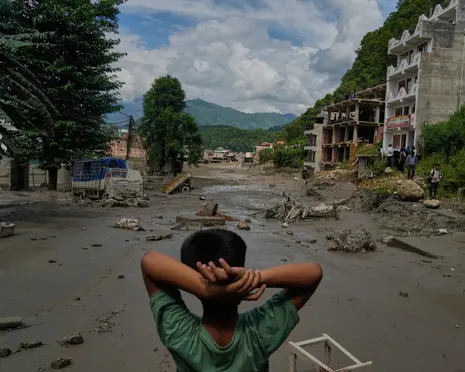
Wanderstayfinder.com – When a glacier gave way along the Nepal-Tibet border on 26 August, sending torrents of meltwater and debris cascading through mountain valleys, the resulting devastation was felt on both sides of the international boundary. On the Nepali side, the death toll has now surpassed 900, with more than 4,000 people still unaccounted for. Tourists from India, the United States, Britain, Australia, and Canada remain missing in the high-altitude terrain long favoured by trekkers and religious pilgrims. Yet on the Tibetan side of the same border, a far more opaque picture has emerged — one that exiled advocacy organisations say Beijing is deliberately understating.
Official Numbers Versus Ground Reports
Chinese authorities have confirmed 16 fatalities and listed 546 people as missing, a figure that includes 261 foreign nationals. The International Campaign for Tibet, however, contends that its on-the-ground sources indicate the true toll is substantially worse. The organisation points to the destruction of at least 300 homes across four villages — Sale, Serchung, Labi, and Rizi — that were among the hardest struck by the floodwaters.
“What is visible in Nepal exposes what is being concealed in Tibet,” said Tencho Gyatso, president of the campaign group. “Four villages – Sale, Serchung, Labi and Rizi – were among the hardest hit, with approximately 300 homes reportedly destroyed and many people still missing.”
Gyatso added that the fragmentary intelligence her team has been able to assemble from survivors and local contacts points to affected populations “far higher” than the figures released by provincial officials. She cautioned that the limited data available from the ground makes independent verification nearly impossible in a region where foreign correspondents operate under severe accreditation restrictions and where Tibetan residents risk imprisonment simply for passing information to outside journalists or advocacy organisations.
“Officially released glimpses, however important, cannot tell us what is happening across all affected communities,” Gyatso stated.
Penalties for Sharing Information
Public discourse about the disaster has been tightly managed. On Sunday, Tibetan public security authorities announced that at least ten individuals had been penalised for disseminating what officials termed “false disaster information.” No details were provided regarding the specific nature of those penalties. A separate report carried in the state-run Tibet Daily on 27 August noted that two Tibetan residents were detained for questioning after posting what the paper described as “rumours” claiming more than 1,000 people had been swept away near the border.
Survivors from the affected villages, according to multiple sources cited by the advocacy group, have been relocated to Gyirong, a town roughly 30 kilometres (18 miles) from the border crossing that bore the brunt of the flooding. Those displaced residents are reportedly kept under strict administrative oversight and barred from communicating freely with the outside world.
Social Media and the Narrative Battle
Despite official controls, posts about the disaster continued to trend on Chinese social media platforms on Monday. Many comments echoed state-approved narratives praising rescue operations, while others pressed questions about the discrepancy between what Nepali authorities disclosed and what Beijing acknowledged.
Hu Xijin, a prominent commentator and former chief editor of the state-run Global Times, posted on Weibo accusing a small number of voices of attempting to “stir controversy by fabricating baseless claims.” His post drew more than 300 comments and thousands of likes. Yet beneath the surface of that engagement, at least one commenter asked pointedly why every substantive update was arriving from the Nepali side of the border rather than from Chinese officials.
Other users were more direct. One, identified only as Zhang, challenged the official death toll: “Clearly thousands of people were swept away, yet the authorities reported only three deaths and 265 people missing.” Another user, Zhou, wrote: “In this wave of mudslides, one entire village was wiped out. It was definitely more than a thousand [deaths].”
“The Chinese government portrays it like it’s only happening in Nepal and there’s nothing across the border. For any type of crisis, the way China handles it is that there is no crisis. The party is in control,” Gyatso observed.
Broader Questions: Development, Ecology, and Control
Maya Wang of Human Rights Watch framed the information gap within a longer pattern of governance. “The instinct of the Chinese government is always to kind of control and to ensure the narrative which is to portray itself as a very efficient government,” she said. She also noted that questions have been raised about how large-scale development of the valleys in an ecologically and geologically fragile zone may have contributed to the severity of the disaster.
Human rights organisations have long documented Beijing’s tight regulation of movement, religious practice, and information flow within Tibet. Exiled Tibetan groups have consistently criticised the pace and scale of infrastructure projects in the plateau region, arguing that such development heightens vulnerability to natural hazards while simultaneously limiting the ability of local communities to report conditions independently. The glacier-triggered floods of late August have sharpened those concerns, placing the question of accountability — and of how many lives were truly lost in the Tibetan valleys — squarely in public view, even as official channels continue to present a markedly narrower account of the catastrophe.
Related Reading
Frequently Asked Questions
What is China is concealing scale of flood?
China is concealing scale of flood is the main topic of this guide. The article explains the context, practical details, and next steps readers should understand.
Why does China is concealing scale of flood matter?
China is concealing scale of flood matters because readers are looking for a useful answer, not just a short summary. Good content should match search intent and help them decide what to do next.