US strikes Iranian launchers in strait of Hormuz, sparking reprisal attack on airbases in Jordan

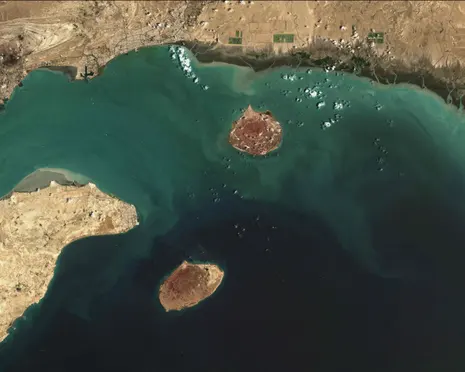
Table of Contents
US Strikes Iranian Launchers in Strait of Hormuz
Wanderstayfinder.com – A fragile lull in the six-month US-Iran war shattered on Sunday after American forces struck two Iranian rocket launchers positioned on Larak island, a small outcrop sitting squarely inside the Strait of Hormuz. Hours later, Tehran answered with a ballistic-missile barrage aimed at two US-operated airfields in Jordan, dragging the conflict back into open exchange after weeks of uneasy quiet.
The Larak Island Operation
A senior Pentagon official confirmed the action in a brief Sunday statement:
“I can confirm that earlier today US forces struck two Iranian launchers on Larak island. Islamic Revolutionary Guard Corps forces were observed preparing to launch rockets with sea mines into the strait of Hormuz.”
Iran’s semi-official Tasnim wire described the hit as a drone strike rather than a manned-aircraft run. The timing was pointed: Washington had announced just days earlier that every explosive device had been cleared from the waterway, and the new operation was framed as a preventive step to stop Tehran from seeding additional mines into active shipping lanes. President Donald Trump had declared the previous week that all mines had been detonated or physically removed and that any vessel or small craft caught laying fresh devices would be destroyed on sight.
Tehran’s Missile Response
The IRGC moved quickly. Iranian state television announced that ballistic missiles were fired at what it called “technical infrastructure, maintenance facilities, and enemy fighter jet positions” at the King Hussein Air Base and the al-Azraq airfield, both US-operated sites inside Jordan. The corps claimed the salvo inflicted “heavy damage” on those installations and said the Larak operation had killed and wounded several soldiers and civilians. A spokesperson, speaking through the semi-official Fars agency, pledged that the United States would be made to pay both economically and militarily.
By Sunday evening, however, a US source told Reuters that every incoming missile aimed at American forces in Jordan had been intercepted and that no significant impact had been recorded.
Where the War Stands
The exchange landed at a particularly volatile juncture. The conflict began on 28 February when American and Israeli forces launched coordinated strikes on Iranian territory; Tehran answered with its own missile and drone salvos aimed at Israel and at Gulf states hosting US installations. Since then, fighting has oscillated between brief escalations and longer pauses. The most recent direct American strikes on Iranian soil had occurred in late July, after which Washington shifted emphasis to threatening costly sanctions on any nation continuing to support Tehran economically or militarily.
Diplomatic channels brokered primarily by Pakistan and Qatar spent months attempting to negotiate a comprehensive end to hostilities. A ceasefire was reached in April, and a memorandum of understanding outlining a path toward a final peace agreement was signed in June. Neither document produced a durable settlement. Washington subsequently declared a state of “economic warfare” against Tehran, tightening financial pressure while keeping military options open.
Human and Economic Toll
The cumulative cost has been severe. US-Israeli strikes on Iranian territory, combined with Israeli operations in Lebanon, have killed thousands and displaced millions. On the American side, eighteen service members have been killed in the course of the war. The economic dimension is equally consequential: the conflict triggered a blockade of the Strait of Hormuz, a chokepoint that before the fighting began carried roughly one-fifth of all oil barrels consumed globally. Even brief disruptions to transit through that corridor send shockwaves through energy markets, shipping insurance rates, and inflation expectations across every major economy.
Frequently Asked Questions
Where exactly did the US strike take place? Two Iranian rocket launchers were hit on Larak island, a small landmass located directly inside the Strait of Hormuz between Iran and Oman.
What did Iran fire back, and at what targets? Tehran launched ballistic missiles at the King Hussein Air Base and the al-Azraq airfield in Jordan, both operated by US forces. The IRGC described the targets as technical infrastructure, maintenance facilities, and fighter-jet positions.
Were any US personnel killed in the retaliatory barrage? A US source told Reuters on Sunday evening that all incoming missiles were intercepted and no significant impact had been recorded.
How long has the US-Iran conflict been running? The war began on 28 February with coordinated American and Israeli strikes on Iranian territory, crossing its six-month threshold just days before the Sunday exchange.
Why does the Strait of Hormuz matter? Before the fighting began, the waterway carried approximately one-fifth of the world’s daily oil supply. Disruptions to transit through the strait affect energy prices, shipping insurance, and inflation expectations globally.