Ratko Mladić, the ‘Butcher of Bosnia’, dies in The Hague

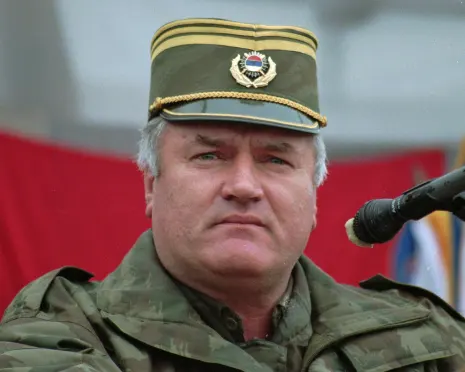
Table of Contents
Death of Ratko Mladić Closes a Chapter in Bosnia’s Longest-Running War Crimes Case
Wanderstayfinder.com – The man whom Bosnian survivors called the architect of their suffering is dead. Ratko Mladić, the Serbian general whose life sentence for genocide had made him perhaps the most recognizable face of the 1990s Balkan wars, passed away in a hospital in The Hague on 27 August 2026. He had been serving his sentence in a Dutch prison, where a succession of strokes had progressively eroded his physical condition in recent months.
The International Residual Mechanism for Criminal Tribunals confirmed the death in a brief statement issued later that day. Judge Graciela Gatti Santana, overseeing the residual court’s work, directed that a full inquiry be opened into the circumstances surrounding Mladić’s final hours.
“Mladić passed away today while hospitalised in The Hague.”
A Name Synonymous with Ethnic Cleansing
For decades, Mladić carried the epithet “Butcher of Bosnia” across international headlines. The label was not mere journalism. Under his command, Bosnian Serb forces carried out a systematic programme of expulsion, siege, and mass killing designed to carve a contiguous Serbian territory out of Bosnia-Herzegovina. The United Nations tribunal for the former Yugoslavia later determined that this objective — the forcible removal of Bosnian Muslims, Croats, and other non-Serbs from defined regions — constituted a criminal conspiracy shared by Mladić, the late Serbian president Slobodan Milošević, and Bosnian Serb political leader Radovan Karadžić.
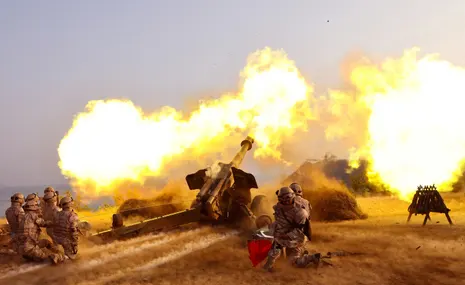
The war that produced this campaign lasted more than three years and claimed over 100,000 lives while displacing more than one million people. Mladić’s forces besieged Sarajevo, the Bosnian capital, subjecting its residents to daily bombardment by artillery, tanks, and snipers. Approximately 10,000 civilians died under that siege. Towns across the country were encircled with heavy weapons inherited from the former Yugoslav People’s Army, and villages were set ablaze. Meanwhile, some 22,000 UN Protection Force personnel watched from the periphery, constrained by mandates that forbade them from taking sides.
Srebrenica: The Massacre That Defined a Generation
The culmination of Mladić’s military career came in July 1995 at Srebrenica, a town the United Nations had designated a “safe area.” After Dutch peacekeeping units withdrew, Bosnian Serb troops rounded up thousands of Muslim men and boys, executed them, and bulldozed their bodies into mass graves. At least 8,000 people were killed in what remains the worst single massacre in Europe since the Second World War.
Mladić had the siege itself filmed. In footage later admitted as evidence, he praised his soldiers — his “lads” — and addressed UN peacekeepers who had accepted his solemn assurance that the town’s inhabitants would be safe under his protection.
“We give this town to the Serb people as a gift.”
He framed the conquest as revenge against the Ottoman Turks, who had once administered the region. The following day, his forces were captured on camera distributing sweets to children and promising them safe passage through checkpoints. At those same checkpoints, thousands of men and boys were being prepared for execution.
When NATO attempted in 1995 to check his advances with the threat of limited airstrikes, Mladić’s troops seized UN peacekeepers and used them as human shields, chaining them to positions likely to draw fire.
Arrest, Trial, and Defiance
Mladić evaded capture for sixteen years. He was finally arrested in Serbia in 2011 and transferred to the Hague tribunal. His trial ran for years before a verdict in 2017: life imprisonment for genocide, war crimes, and crimes against humanity.
Throughout proceedings, Mladić displayed an unbroken contempt for the court. At a 2014 hearing he declared:
“I do not recognise this court.”
When the sentence was handed down, he rose and shouted:
“This is all lies, you are all liars!”
Former UN High Commissioner for Human Rights Zeid Ra’ad al-Hussein, commenting after the conviction, called Mladić “the epitome of evil.” The general had earlier ordered his troops to “scorch the brains” of Bosnian Muslims and had boasted, in private and public settings, of being a “Serbian god.”
Personal Background and Final Days
Mladić was the son of a partisan fighter killed in 1945 during the Second World War. Family accounts place his birth in March 1943 in the small Bosnian village of Bozinovici, which would have made him 83 at death; official documents, however, recorded his birth year as 1942, yielding the age of 84 cited in some reports. He rose through the ranks of the communist Yugoslav People’s Army and was serving as an officer when Yugoslavia’s disintegration began in 1991.
When Bosnian Serbs launched their armed challenge to Bosnia’s Muslim-led secession in 1992, Mladić was selected to command the newly formed Bosnian Serb army. That force rapidly overran roughly 70 percent of the country’s territory in its opening months.
The news of his death first surfaced on Serbian state television after his son, Darko, spoke publicly about his father’s deteriorating health. The confirmation from the Hague tribunal followed hours later, closing a judicial file that had spanned more than a decade of trial, appeal, and incarceration.
For Bosnia’s survivors, the death of the man convicted of orchestrating Srebrenica does not erase the graves, but it removes the last living commander of the campaign that defined the country’s modern trauma. The inquiry ordered by Judge Gatti Santana will now examine the final days in hospital, ensuring that the circumstances of his passing receive the same scrutiny the tribunal applied to the crimes for which he was punished.
Related Reading
Frequently Asked Questions
What is Ratko Mladić the Butcher of Bosnia?
Ratko Mladić the Butcher of Bosnia is the main topic of this guide. The article explains the context, practical details, and next steps readers should understand.
Why does Ratko Mladić the Butcher of Bosnia matter?
Ratko Mladić the Butcher of Bosnia matters because readers are looking for a useful answer, not just a short summary. Good content should match search intent and help them decide what to do next.