Bronze age treasure stolen in four-minute Spanish museum heist

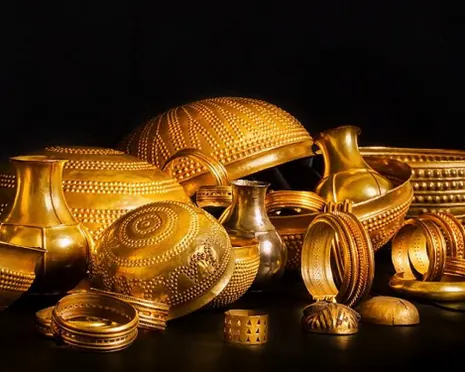
Table of Contents
Four Minutes to Erase 3,000 Years of Heritage: Spain’s Villena Gold Hoard Vanishes in Dawn Raid
Wanderstayfinder.com – A collection of bronze age goldwork long regarded as the single most significant prehistoric find in all of Europe has been stripped from its display case in the Spanish town of Villena, in a lightning strike that lasted barely four minutes. The raid, carried out on a Thursday morning, targeted the Treasure of Villena — a hoard of 66 objects, predominantly crafted from gold, dating to roughly 1000 BC. By the time the thieves slipped out of the building, the majority of the collection was already gone, leaving behind only a handful of lesser items and a community in shock.
The Heist in Detail
According to a spokesperson for the Villena town council, the museum’s alarm triggered at approximately 5.20 am local time (4.20 am BST). By 5.24 am, the intruders had exited the premises. The spokesperson characterised the operation as both “super-fast and super-professional,” underscoring the precision with which the criminals moved through the space.
Manuel Pineda, the Spanish government’s deputy representative in the province of Alicante, indicated that the perpetrators arrived in multiple vehicles and gained entry through a window. Despite the speed of the break-in, the town council spokesperson stressed that every security system in the building had activated as designed and that there had been “no failure” on the part of the museum. Authorities were nonetheless probing a possible diversion: shortly before the main alarm sounded, a separate alarm had triggered at the town’s sports centre, and investigators were examining whether the thieves had engineered that distraction deliberately.
A Mayor’s Grief
Fulgencio Cerdán, the mayor of Villena, addressed journalists with visible emotion, his voice cracking as he described the loss.
“We are absolutely devastated, I’m even trembling. The truth is that for those of us from Villena, this destroys us. It’s part of our heritage, of our wealth.”
Cerdán added that the thieves had carried away most of the treasure. Local media reported that the items left behind included three silver vessels, a single bracelet, and fragments of the decorative ornamentation belonging to the bastón del reyezuelo — a prehistoric ceremonial scepter sometimes translated as the “Kingfisher staff.”
What Was Stolen
The Treasure of Villena was unearthed in 1963 by the archaeologist José María Soler, who recovered it from a vessel sunk in a dried-out riverbed within the town itself. The hoard comprises 29 bracelets, 11 bowls, three bottles, and an assortment of smaller ornamental pieces. For decades it served as the centrepiece of a modest architectural museum in the Alicante province. Since May 2024, the collection has occupied a purpose-built room inside the newly opened, municipally owned Villena Museum, giving the town a dedicated cultural institution for the first time.
The material composition of certain pieces has puzzled scholars for generations. While the bulk of the objects are gold, some incorporate silver, iron, amber, and a dark leaden substance coated in a ferrous-appearing oxide. A study published in the journal Trabajos de Prehistoria proposed that these anomalous components were likely forged from rare meteoritic iron — a finding that would elevate the hoard’s scientific significance well beyond its already extraordinary archaeological value. The mayor estimated the gold content alone at approximately €1.7 million (£1.45 million), though the true worth of the collection, given its irreplaceable historical and metallurgical importance, is effectively incalculable.
A Pattern Across Europe
The Villena raid lands amid a troubling wave of bold museum thefts spanning the continent. Last October, burglars broke into the Louvre in Paris in broad daylight and departed within eight minutes carrying jewellery appraised at €88 million. More recently, Italy’s culture ministry announced the disappearance of four paintings by the Renaissance master Antonello da Messina from a Sicilian museum, describing them as works “of extraordinary value.” Two days before that announcement, Italian police reported the recovery of canvases by Renoir, Cézanne, and Matisse — collectively valued above $10.4 million — that had been taken from the Magnani-Rocca Foundation Museum near Parma.
The European police agency Europol, in a report released at the start of the week, noted that member states had observed a recent shift “towards violent and forceful methods” in cultural property crime, a trend that may signal the entry of new criminal networks specifically oriented toward high-value artefacts.
“Some thieves apprehended in recent cases appear to coordinate their efforts on an ad hoc basis, often recruited locally through social media and instant communication channels, without prior connections to each other. This differs from the usual structure of criminal networks involved in cultural goods trafficking, which typically operate in a core group organised around a leader.”
Expert Assessment
Mauro Hernández, a professor of archaeology at the University of Alicante and a leading specialist on the Villena material, told the broadcaster Cadena SER that the Villena operation bore unmistakable hallmarks of advance planning.
“They had it very well planned. They knew how to do it, how to act and how to escape.”
Whether the meteoritic-iron hypothesis ultimately holds or not, the loss represents a blow to European prehistoric archaeology that no insurance policy can fully remedy. For the residents of Villena, the theft is not merely a crime statistic; it is the removal of an object that has anchored their civic identity for over sixty years. The investigation continues, and the question of whether the remaining fragments — the scepter’s ornamentation, the silver vessels, the lone bracelet — will ever be reunited with their stolen counterparts now hangs over a town still reeling from the speed with which its most treasured inheritance vanished into the night.
Related Reading
Frequently Asked Questions
What is Bronze age treasure stolen in four?
Bronze age treasure stolen in four is the main topic of this guide. The article explains the context, practical details, and next steps readers should understand.
Why does Bronze age treasure stolen in four matter?
Bronze age treasure stolen in four matters because readers are looking for a useful answer, not just a short summary. Good content should match search intent and help them decide what to do next.