Vuelta a España: giant hail forces stage three abandonment in Pyrenees

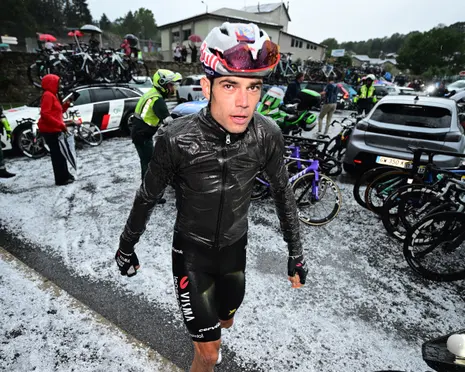
Table of Contents
Pyrenees Hailstorm Halts Vuelta a España Stage Three
Wanderstayfinder.com – A wall of ice the size of golf balls tore through the French Pyrenees on Monday, bringing the third stage of the Vuelta a España to an abrupt and unprecedented halt. With roughly 15 kilometres still to cover on the 174-kilometre route from Gruissan to Font-Romeu, the peloton was cresting the Col de Mont-Louis when the sky turned black and a barrage of hailstones began ricocheting off the asphalt, striking riders and spectators alike. The race was called off before a single rider could cross the line.
The decision came after race leader Tadej Pogacar, riding for UAE Emirates-XRG, was spotted gesturing to the main group to peel away from the course. Moments later, soaked and shivering cyclists dismounted and shuffled toward a nearby hotel for shelter, while spectators gathered at the Font-Romeu finish watched thick blankets of ice accumulate across the road in bewildered silence.
“For the security of the riders, stage three has been cancelled due to hail and severe weather,” race organisers confirmed shortly after the call. “There will be no winner and no podium ceremony.”
A Breakaway Left Hanging
The stage had begun under deceptively benign conditions. Warm sunshine bathed the flat coastal approaches out of Gruissan, and a five-rider breakaway group slipped clear early, building a comfortable cushion over the chasing pack. Among those in the front group were Mats Wenzel of Kern Pharma and Lorenzo Fortunato of XDS Astana, who sat 25 seconds clear of the peloton when the weather turned. Their effort, which had carried them through the early mountainous sections, was rendered meaningless by the storm.
For Pogacar, the Slovenian champion who had been positioned near the front of the main group throughout the climb with his team dictating the tempo, the stage represented a prime opportunity to extend his overall advantage and stake a claim on the stage victory. That ambition was extinguished in seconds as the hailstorm swallowed the road.
General Classification Unchanged
Because no rider was credited with a stage finish, the general classification carried over unchanged from stage two. Pogacar retains the overall lead by nine seconds over Belgium’s Wout van Aert of Dutch Visma-Lease a Bike, with Britain’s Matt Brennan sitting a further ten seconds behind. The razor-thin margins at the top of the standings mean that a single decisive day could reshuffle the hierarchy entirely.
The abandonment also means that Pogacar’s bid to complete the Grand Tour collection — winning all three men’s Grand Tours (Tour de France, Giro d’Italia, and Vuelta a España) in a single career — remains very much alive but unfulfilled. He has claimed the Tour and the Giro; the Vuelta has eluded him. Tuesday’s stage four offers another shot.
What Comes Next: Andorra’s Wall
The race resumes on Tuesday with stage four, a 170-kilometre affair that both begins and concludes in Andorra la Vella and features three first-category climbs. The profile is considerably more demanding than the coastal-and-Pyrenees mix of the opening days, and it will test the general-classification contenders in sustained, high-altitude efforts. Pogacar’s team will almost certainly look to control the tempo through the intermediate climbs and arrive at the final ascent with a select group, hoping to convert their overall advantage into a decisive gap.
For van Aert and the handful of riders within a minute of the leader, the cancellation removes a day on which they might have been able to probe Pogacar’s limits in a rolling, crosswind-affected finish. Instead, they inherit a fresh mountain stage with the same nine-second deficit intact — a margin that can be erased by a single sprint or a single mistake.
Weather as a Race Factor
While rain and wind are routine hazards in a three-week Grand Tour, a hailstorm of sufficient intensity to force a full stage abandonment is rare. Organisers weigh rider safety against the competitive calendar, and in this case the decision was made quickly: with hailstones large enough to cause injury on impact and visibility dropping rapidly at altitude, continuing would have risked crashes and medical emergencies on narrow mountain roads. The absence of a podium ceremony, while disappointing for fans who had travelled to Font-Romeu, underscored that no result was worth the danger.
The riders’ immediate priority was shelter and warmth. Images from the scene showed cyclists in soaked kit huddled in hotel lobbies, while the finish area lay buried under centimetres of ice. Fans who had queued along the final kilometres were left stranded on a road that had become impassable within minutes.
As the Vuelta rolls into its mountain heartland, the question shifts from whether Pogacar can defend his slim lead to whether the weather will allow the race to proceed at all. The Pyrenees have delivered their verdict for Monday; Tuesday’s Andorran peaks will deliver their own.
Related Reading
Frequently Asked Questions
What is Vuelta a España?
Vuelta a España is the main topic of this guide. The article explains the context, practical details, and next steps readers should understand.
Why does Vuelta a España matter?
Vuelta a España matters because readers are looking for a useful answer, not just a short summary. Good content should match search intent and help them decide what to do next.