Nebraska school district asks police to stop using shock gloves on students

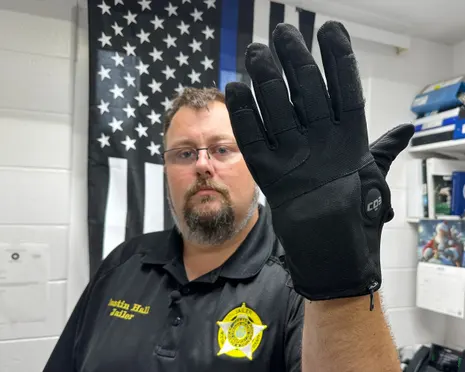
Table of Contents
Nebraska’s Largest School District Drops Electric Shock Gloves from Hallway Patrol
Wanderstayfinder.com – Students returning to classrooms across Omaha’s public schools this fall will find one less piece of electrical equipment in the hands of the officers stationed in their hallways. The Omaha Public Schools district, the largest public school system in Nebraska, secured a formal agreement from the Omaha Police Department to cease carrying compact electric-shock gloves in school buildings. The move, finalized on 20 August, came after Superintendent Matthew Ray issued a direct request two days earlier, asking that school resource officers no longer deploy the devices during their daily presence in middle and high schools.
What the Gloves Are and How They Got There
The devices, formally called “generated low output voltage emitters” and colloquially known simply as “Gloves,” deliver a brief electrical pulse when an officer touches a person for up to 15 seconds. Before activation, officers are expected to issue a verbal warning. The gloves have seen limited use in correctional facilities over recent years, and their entry into school corridors represented a new frontier for a technology most Americans associate with airports or detention centers.
The Associated Press first broke the story of Immigration and Customs Enforcement’s plan to equip officers with the gloves, drawing public attention to a procurement that had been quietly moving through local agencies. Omaha Police Department records show the department entered a contract in 2025 with Compliant Technologies LLC, the manufacturer, paying roughly $66,000 for a batch of 40 units. Most of the department’s 34 school resource officers received training and were cleared to carry the devices.
A Dispute Over Timing and Transparency
Ray told a packed school board meeting on 17 August that he had only learned about the gloves the prior week. He followed that statement with a public letter addressed to the schools community, formally requesting that officers stop using the devices. Omaha police complied within 48 hours.
That timeline, however, did not sit well with local television station KETV, which uncovered emails dating to 2023 in which Omaha police had already notified school districts of its intention to outfit officers with the gloves. An official within the Omaha district acknowledged that staff had known about the devices for some time, noting that Bellevue police had been carrying them at two Omaha-area schools well before the current controversy erupted.
Neighboring Districts Hold Steady
The decision does not uniformly reshape policing across the metro area. The Bellevue Police Department, which patrols two schools within the Omaha district and serves the larger Bellevue school system, announced its officers will continue carrying the gloves. Amanda Oliver, spokesperson for Bellevue schools, emphasized the district’s established communication channels with its local police force.
“We’ve got a great communication and dialogue that we have with them consistently. And so for us right now, no changes are being made,” Oliver said.
Three additional large districts in the Omaha metro area — Millard, Elkhorn, and Westside — also host Omaha school resource officers in their buildings. None had taken steps to restrict glove use as of the latest reporting. The AP left messages seeking comment from all three districts.
Voices from the Boardroom
Roughly 30 residents and board members addressed the school board on 17 August, and every speaker opposed the practice. No one spoke in its favor. Parents, students, and educators described the prospect of an electric pulse in a school corridor as alarming and inconsistent with the environment schools are meant to provide.
“I can’t even imagine walking down the hallway and seeing a peer of mine being electrocuted in a place that is supposed to be a safe space for students,” said Nora Wessel, a senior at Omaha Central High School. “Yet, this is now a very real possibility. These are adults we are supposed to be able to trust, but these weapons create a barrier for our students to turn to resource officers when needed.”
Ken Trump, president of the consulting firm National School Safety and Security Services, urged districts to pause before introducing new force-continuum technology into school settings. He pointed to questions about how officers would handle students with disabilities or special medical conditions, how parents would receive timely notification, and under precisely what circumstances deployment would be authorized.
“Less than lethal doesn’t mean low risk,” Trump said.
What Remains in the Officer’s Belt
The Omaha Police Department confirmed that school resource officers will retain their standard toolkit: stun guns, batons, pepper spray, and firearms. The department held a news conference before the ban took effect, during which an officer demonstrated how the gloves allow a quick, controlled response to someone refusing commands. Records show the gloves were deployed twice during the 2025–26 school year in Omaha, while Bellevue police logged two uses in earlier years.
Mayor John Ewing Jr., who helped architect the school resource officer program during his tenure on the police force, said the department respected the district’s decision to “opt out.” Police Chief Todd Schmaderer, in a joint statement with the mayor, characterized the gloves as “the safest use-of-force option in the rare times when it is used,” while acknowledging the district’s right to set its own comfort parameters.
Ray framed the decision not as a rejection of law-enforcement partnership but as a calibration of tools to the school environment. He acknowledged the longstanding relationship between the district and its policing partners and the role resource officers play in promoting campus safety. Continued glove use, he said, “would be counterproductive to our work together.”
Broader Implications
The episode lands amid a national conversation about how much tactical equipment should follow officers into spaces where children spend six hours a day. School resource officers — a model expanded across dozens of states since the 1990s — were originally conceived as relationship builders and rapid-response assets. The introduction of electrical devices, even low-output ones, reframes that relationship in the eyes of many families. Whether other districts in the metro area follow Omaha’s lead, or whether manufacturers and agencies push the technology further into educational settings, will shape the next chapter of school-safety policy in Nebraska and beyond.
Related Reading
Frequently Asked Questions
What is Nebraska school district asks police to stop?
Nebraska school district asks police to stop is the main topic of this guide. The article explains the context, practical details, and next steps readers should understand.
Why does Nebraska school district asks police to stop matter?
Nebraska school district asks police to stop matters because readers are looking for a useful answer, not just a short summary. Good content should match search intent and help them decide what to do next.