Strangers in their own land: Mexicans deported from Trump’s America find refuge in ‘Little LA’

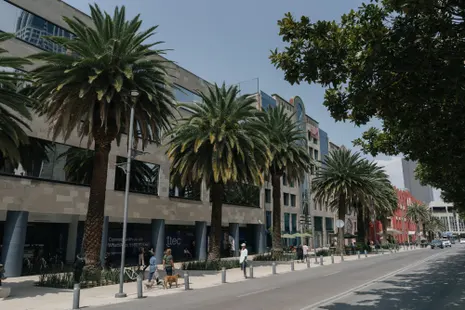
Table of Contents
When Home Becomes a Foreign Country: How Mexico City’s Tabacalera District Is Absorbing a Wave of Deportees
Wanderstayfinder.com – Since Donald Trump returned to the White House in January 2025, roughly 145,500 Mexican nationals have been forcibly removed from United States territory under an aggressive anti-immigration enforcement campaign. Many of those sent home had spent decades on the American side of the border, raising children in English-speaking schools and building careers in cities thousands of miles from their birthplaces. For them, the flight back to Mexico lands not in a familiar landscape but in one that feels alien — a country whose streets, bureaucracy, and social rhythms they can no longer navigate. Into that gap has stepped an unlikely sanctuary: the Tabacalera neighborhood in downtown Mexico City, a district so steeped in American cultural residue that locals and newcomers alike call it “Little LA.”
A Neighborhood That Reads Like a US Suburb
Wide boulevards shaded by towering palms, vintage-style cantinas serving mezcal alongside craft beer, and a constant bilingual murmur of English and Spanish drifting from café terraces — Tabacalera carries the aesthetic imprint of decades of cross-border commerce and migration. The resemblance to Los Angeles is not merely cosmetic. Over the past several years the area has quietly become the de facto landing zone for returnees who need somewhere that does not immediately remind them of what they have lost. For people whose formative adult years unfolded in American cities, the palm-lined streets and English-language signage offer a psychological bridge between two identities they can no longer reconcile.
Christopher Gil Ortíz: Thirty Years Gone, One Detention Later
In June of this year, Christopher Gil Ortíz was walking to his job in Los Angeles when Immigration and Customs Enforcement agents intercepted him, cuffed his wrists, and loaded him into a detention van. He had been living undocumented in the United States for years, enduring what he described as a state of perpetual anxiety. Paradoxically, the moment the handcuffs clicked shut, he felt a release.
“At this point I was like, OK, that’s it, I’m going back,” he recalled. “It’s like they took a weight off my shoulders.”
Ortíz had left Mexico more than three decades ago as a child. His deportation sent him back to a country he could barely recognize, leaving his wife and two small children behind in Los Angeles. Authorities dropped him in Tulum, a resort town on the Yucatán coast. From there he traveled to Cancún, where thieves emptied his hotel room of every possession. He eventually made his way north to Mexico City, where relatives still lived.
“I was nervous,” he said. “Even though I was born here, I have very vague memories of the city itself.”
The practical obstacles stacked up quickly: obtaining a birth certificate, securing a national identity document, finding employment in a labor market that had shifted dramatically since his childhood. It was his sister who pointed him toward a lifeline — a TikTok post from an organization called New Comienzos, meaning “New Beginnings,” based squarely in Little LA and dedicated to helping returnees rebuild their lives.
“Seeing the palm trees, it kind of does make you feel like you’re in LA,” Ortíz said, adding that he was grateful to New Comienzos. “There’s a lot of people that are going through what I’m going through and I’m pretty sure there’s going to be more.”
Israel Concha: From Speeding Ticket to Community Architect
Israel Concha, founder and executive director of New Comienzos, built the organization from personal wreckage. He had lived in the United States for thirty years, settling in Texas with his pregnant wife and running a private transport business that had become profitable.
“I wanted to try to achieve that American dream, and I think I succeeded,” he said.
Then a single speeding ticket on his way to collect a client unraveled everything. He spent two years fighting his case from inside detention before being deported in 2014. His first day back in Mexico brought a kidnapping by a criminal gang operating in tandem with local police. After a severe beating, he escaped to Mexico City and took a job at a bilingual call centre — one of several emerging in Tabacalera that draw young returnees fluent in English.
“That was my welcome to my native country,” Concha said.
Within a year of landing that call-centre job, Concha launched New Comienzos to address the gaps he saw in government assistance for recent arrivals. The organization now provides legal aid, free English-language certification and classes, and one-on-one mentorship for people navigating the bureaucratic and emotional aftermath of deportation.
“People didn’t just need a job; many of them needed emotional support because they had just lost everything following a deportation,” he explained.
Preparing for the Next Wave
Concha is explicit about what he expects ahead. Under the current administration’s enforcement posture, he anticipates a sharp acceleration in removals.
“The atmosphere [in the US] right now is one of humanitarian crisis and panic. People no longer even want to take their children to school,” Concha said. “You’ll probably start seeing mass deportations in a few months.”
Little LA remains the organization’s operational hub. Concha describes the neighborhood not as a charity project but as an experiment in social reintegration.
“A community reintegration lab,” he said, “that’s what we’ve created there in Little Los Angeles.”
The Faces Arriving Now
Sergio Aaron Pérez, 36, arrived in Tabacalera after years of American life. Clad in a Los Angeles Lakers jersey and a baseball cap, his face and forearms mapped with tattoos, he looks as though he just stepped off a transborder flight. For Pérez, the district’s American-tinged streetscape is not nostalgia but continuity — a place where the English he speaks daily and the rhythms he learned in the US do not demand an immediate, jarring translation into a Mexican identity he never fully formed.
The broader implication is structural. Mexico’s federal government has offered limited formal reintegration programming for deportees, leaving gaps that community organizations must fill. As enforcement intensifies and the number of returnees climbs, neighborhoods like Tabacalera risk becoming de facto intake zones — informal, under-resourced, and dependent on the goodwill of local businesses and volunteer networks. The palm trees of Little LA offer shade, but the infrastructure of belonging — documentation, housing, mental-health care, labor-market re-entry — remains fragile and largely improvised.
Related Reading
Frequently Asked Questions
What is Strangers in their own land?
Strangers in their own land is the main topic of this guide. The article explains the context, practical details, and next steps readers should understand.
Why does Strangers in their own land matter?
Strangers in their own land matters because readers are looking for a useful answer, not just a short summary. Good content should match search intent and help them decide what to do next.