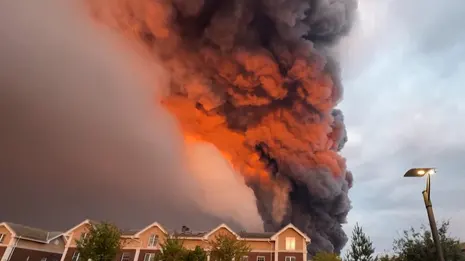
Israel’s Ben-Gvir posts video of gallows site for hanging Palestinians

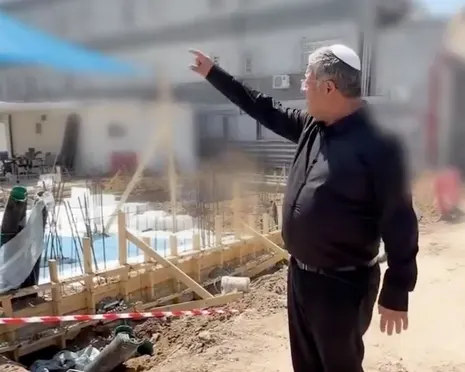
Table of Contents
Gallows Under Construction: Israel’s Execution Site for Palestinian Terror Convicts Takes Shape
Wanderstayfinder.com – A newly built hanging facility, complete with spectator booths reserved for victims’ families, is rising in an undisclosed location near an Israeli prison. The project was unveiled not through an official government announcement but through a social media clip posted by National Security Minister Itamar Ben-Gvir, who appeared on camera gesturing toward freshly poured concrete foundations and declaring the site the place where “terrorists will be executed.”
The video, shared across his social platforms, captured Ben-Gvir walking through a cordoned-off construction zone where a bulldozer and other heavy machinery were visible. In the clip, the minister framed the gallows as the culmination of a series of promises he had made to his political base.
“I promised to worsen the conditions of terrorists in prisons – we kept it. I promised to pass the Death Penalty for Terrorists law – we did. And now the death row and hanging facility are also starting to take shape.”
A Law Written for One Side of the Divide
The execution site will serve exclusively Palestinians convicted of terror offences under Israel’s military courts system. Jewish Israelis, by contrast, are effectively shielded from capital punishment under a clause that limits the statute’s reach to killings committed with the “intent to deny the existence of the state of Israel.” In practice, this means the death penalty operates as a single-track sentence available only to non-Jewish defendants tried before military tribunals.
The underlying statute, passed earlier this year by the Knesset with 62 votes in favour and 48 against, mandates that military courts impose the death penalty as the sole available sentence unless a judge identifies “special circumstances” warranting life imprisonment. The legislation was one of two major bills enacted by Israeli lawmakers during the year and has drawn sustained criticism from human-rights bodies and foreign governments since its adoption.
“It also dismantles fundamental safeguards to prevent the arbitrary deprivation of life and protect the right to a fair trial, and further empowers Israel’s system of apartheid, which is maintained by scores of discriminatory laws against Palestinians,” said Erika Guevara-Rosas, senior director at Amnesty International, at the time the bill cleared the legislature.
The Minister Behind the Project
Ben-Gvir has held the national security portfolio since 2022, interrupted only by a brief two-month absence last year. His political career is marked by a record of convictions: incitement to racism, interference with a police officer carrying out his duties, and support for a designated terrorist organisation — the Kach movement founded by Meir Kahane, which was banned in Israel in 1998.
His public persona has grown increasingly theatrical. In May, on his 50th birthday, he was photographed with a cake bearing an iced image of a noose. Weeks later, he drew fresh international firestorm by proposing a nightly quota of targeted killings in Gaza.
“I think we should be doing 30 to 40 targeted assassinations per night. Not just those who pose an immediate threat. There are people there who don’t deserve to live … They are not even people.”
Sanctions and Diplomatic Reactions
The assassination remarks landed within days of the gallows video and compounded an already heavy diplomatic burden. France and Ireland had recently added Ben-Gvir to their sanctions lists, joining the United Kingdom, which imposed measures on him the previous year. European leaders moved quickly to distance themselves from his language.
French Foreign Minister Jean-Noël Barrot labelled the comments “unacceptable and inhuman.” German Chancellor Friedrich Merz stated he strongly condemned “the inhumane appeals made by minister Ben-Gvir, which violate international law.” At the United Nations, Secretary-General António Guterres described the remarks as “appalling,” “outrageous,” “dehumanising,” and “dangerous.”
Settlement Expansion and the Two-State Question
The gallows announcement arrived amid a broader wave of international criticism aimed at Israeli government actions. Among the most recent flashpoints: the release of new tenders for the E1 settlement block, a sprawling planned development on the western edge of Jerusalem that would physically sever the West Bank from East Jerusalem. UK Foreign Secretary Ed Miliband denounced the move as an “unacceptable and destructive act” and summoned Israel’s charge d’affaires to lodge a formal protest.
“The UK has been clear privately and publicly in our opposition to E1 and our support for a two-state solution as the only way to ensure long-term security and peace for both Palestinians and Israelis. All settlements damage that prospect and are a flagrant breach of international law.”
For observers tracking the trajectory of Israeli policy, the gallows complex represents more than a single construction project. It is the physical endpoint of a legislative and administrative architecture that, critics argue, codifies a two-tier system of justice in which capital punishment is available to one population and categorically unavailable to another — a distinction drawn not by the severity of the crime but by the defendant’s national identity and the court that tries him.
Related Reading
Frequently Asked Questions
What is Israel s Ben Gvir posts video?
Israel s Ben Gvir posts video is the main topic of this guide. The article explains the context, practical details, and next steps readers should understand.
Why does Israel s Ben Gvir posts video matter?
Israel s Ben Gvir posts video matters because readers are looking for a useful answer, not just a short summary. Good content should match search intent and help them decide what to do next.