Activist forced out of US after criticising Trump-aligned Colombian politician

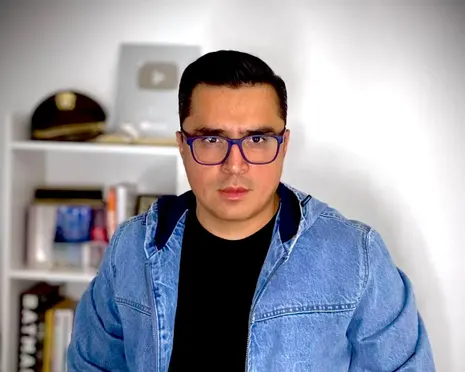
Table of Contents
Colombian Activist Detained and Expelled After Protesting Against Trump-Endorsed Candidate in Miami
Wanderstayfinder.com – A Colombian political activist who spent over a decade in the United States was arrested, held in prolonged solitary confinement, and ultimately compelled to leave the country after holding protest signs outside voting locations in Miami during the final week before Colombia’s presidential election. The episode, unfolding in June 2026, has drawn sharp attention to the boundaries of political speech for non-citizens on American soil and to the degree of influence a foreign government’s preferred candidate can exert over US immigration enforcement.
The activist, Franklin Humberto Coral Garrido — widely known by his shortened name, Beto Coral — is 40 years old and has no criminal record. He traveled from his home state to Florida specifically to urge fellow Colombians abroad to withhold their votes from Abelardo de la Espriella, a far-right millionaire lawyer whose candidacy carried the explicit endorsement of President Donald Trump. Outside polling stations in Miami, Coral displayed banners warning that the candidate would “help deport all of you” if elected.
A Memo, an Arrest, and a 30-Day Detention
The morning after the election-day protests, Secretary of State Marco Rubio dispatched a memorandum to the Department of Homeland Security asserting that Coral had exploited his presence in the United States “to conduct political activity” directed at a Colombian presidential candidate. The memo further stated that DHS was authorized to take measures to “facilitate his departure.” Within hours of that communication, Coral was taken into custody.
Over the next 30 days, Coral endured what he describes as systematic mistreatment inside federal detention. He alleges physical assault, denial of adequate food and water, and extended isolation. He estimates that 24 of the 30 days were spent in solitary confinement. Before his eventual voluntary departure back to Colombia in mid-July, he was transferred six times between detention facilities spread across four states.
“Those journeys were extremely long, and the agents wouldn’t give me water or food,” Coral recounted. “ICE officers shoved me, threw me against the wall and kicked me in the legs.”
On the day of his arrest, Coral had been returning from a supermarket run accompanied by his 12-year-old son.
First Case Tied to a Foreign Election
Immigrants have previously faced US detention over political activism — most prominently the Palestinian student Mahmoud Khalil, who was held after protesting the war in Gaza. Analysts and advocates, however, regard Coral’s case as the first in which the triggering remarks concerned a foreign nation’s electoral contest rather than a domestic or international conflict.
“They detained me simply because I protested against a Trump-backed candidate,” Coral said.
The matter carries particular weight because de la Espriella went on to win the Colombian presidency and was sworn in earlier this month, succeeding the left-wing president Gustavo Petro, with whom Trump had engaged in repeated public clashes. The new president’s administration now occupies the very office Coral had sought to influence from abroad.
Public Postings and the “El Quitavisas” Label
In early June, Deputy Secretary of State Christopher Landau posted on social media that Colombians abroad who were “tempted to undermine or manipulate the democratic process” should expect their visas to be at risk. Coral, who had been publicly critical of de la Espriella for years, responded with a wry remark: “That’s why they call me El Quitavisas (the visa taker).” De la Espriella, then still a candidate, replied on the same platform: “I have the list, dear deputy secretary.”
On the morning of 16 June — the same day Rubio’s memo was issued — de la Espriella published a post reading: “There will be good news for Colombia and for patriotic Colombians abroad,” accompanied by an AI-generated image depicting “El Quitavisas” projected into the sky. That afternoon, Coral was arrested.
“De la Espriella knew that I was going to be arrested and announced it on X,” Coral stated.
Neither the US State Department nor de la Espriella’s office responded to requests for comment.
A Long-Running Personal and Legal Rivalry
The confrontation between Coral and de la Espriella predates the election by years. De la Espriella, a practicing lawyer, represented former president Álvaro Uribe Vélez in a Florida defamation suit brought against Coral after the activist publicly accused Uribe of directing paramilitary groups. Coral lost that case and was ordered to issue a public apology.
In May of the previous year, Coral filed a complaint with the FBI alleging that de la Espriella had secretly recorded a telephone conversation between the two men and subsequently attempted to blackmail him using the recording. Rubio’s memo, in turn, cited Coral’s alleged “use of US courts to target a Colombian presidential candidate” as one strand of political activity carried out, in the secretary’s framing, “on behalf of the Petro government.”
Asylum Background and Daily Life in the US
Coral first entered the United States on a tourist visa in December 2015. In March 2016 he applied for political asylum, explaining that he had received death threats in Colombia after investigating the murder of his father, Humberto Coral Caballero. Caballero had been a police captain who participated in the US-backed operation that killed the drug lord Pablo Escobar in 1993; he was killed himself months later.
“I had been waiting for a decision on my asylum application since 2016, but I always had legal status and a work permit,” Coral explained.
While his asylum case remained pending, Coral supported himself through a range of ordinary labor: driving for Uber, working in construction, cooking, waiting tables, and baking. He also maintained a public presence as an activist and YouTuber focused on Colombian human-rights issues.
Broader Implications
The case raises questions that extend well beyond one individual’s visa status. It tests whether a foreign government’s preferred candidate can effectively trigger US immigration enforcement against a critic, and it probes the limits of political expression for non-citizens who hold lawful status. For the roughly 1.3 million Colombians residing in the United States — many of them in Florida — the episode has sharpened anxieties about whether dissent from a foreign election will be treated as grounds for removal. Immigration-law scholars note that while the Immigration and Nationality Act permits action against non-citizens engaged in activities deemed inconsistent with their status, the speed and specificity of the response here — a same-day memo followed by an arrest within hours — marks an unusual escalation that few observers had anticipated.
Related Reading
Frequently Asked Questions
What is Activist forced out of US after?
Activist forced out of US after is the main topic of this guide. The article explains the context, practical details, and next steps readers should understand.
Why does Activist forced out of US after matter?
Activist forced out of US after matters because readers are looking for a useful answer, not just a short summary. Good content should match search intent and help them decide what to do next.