Trump orders cuts to South Korea joint drills despite warnings about Kim regime

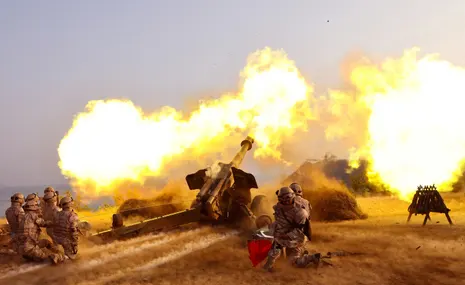
Table of Contents
Trump Orders Cuts to South Korea Drills
Wanderstayfinder.com – President Donald Trump announced on Sunday evening that he had directed Secretary of Defense Pete Hegseth to “substantially reduce” American participation in the ongoing Ulchi Freedom Shield exercise alongside South Korea. The directive landed while the drill was already in progress, overriding explicit cautions from senior military leaders in both Washington and Seoul who warned that Pyongyang’s forces had absorbed drone-warfare and electronic-warfare techniques from their deployment beside Russian troops in Ukraine.
What the Exercise Entails
Ulchi Freedom Shield is one of two principal annual joint drills run by Seoul and Washington. It opened on Monday and is scheduled to wrap up on 27 August. Planners had projected roughly 18,000 South Korean service members, supplemented by American forces and personnel from 11 of the 18 member states of the United Nations Command — the multinational body charged with overseeing the 1953 armistice that halted active fighting in the Korean War.
In a social-media post, Trump described himself as “not happy” with the scale of US involvement, citing what he called his “very good relationship with Kim Jong-un.” He characterized the drills as costly and, in his words, sending a signal that was “totally inappropriate and hostile, to a country that, as long as Donald J Trump has been president, has been unthreatening and respectful.”
“It was too late to cancel the drills, so I have ordered the defence secretary to substantially reduce them.”
The president also faulted Seoul’s foreign-policy choices, asserting that South Korea had declined to assist in what he termed the “denuclearisation of the Islamic republic of Iran” — a recurring expectation in his administration that allied nations contribute to American strategic goals beyond their own neighborhood.
Seoul’s Response and Expert Reactions
The presidential Blue House issued a statement saying it was reviewing the post and expressing the hope that “the friendly relationship between the US and North Korean leaders will lead to meaningful dialogue between the two countries, opening discussions aimed at advancing peace and stability on the Korean peninsula.” The office added that the two allies would continue coordinating on their combined defence posture and military exercises — language that stopped short of endorsing the cuts while avoiding a direct confrontation with Washington.
Cheong Seong-chang, vice-president of the Seoul-based Sejong Institute thinktank, warned that if Trump meets Kim again he could go considerably further, potentially halting the exercises outright or trimming US troop levels without first consulting Seoul. Cheong called the US-South Korea alliance “extremely important” but argued that South Korea should progressively reduce its security dependence on Washington and work toward securing its own nuclear deterrent — an idea with broad domestic public support even though the government has rejected it and other regional powers oppose it.
Leif-Eric Easley, a professor of international studies at Ewha Womans University, offered a sharper critique, cautioning that downsizing the exercise would “slow the process of South Korea taking on greater responsibility for its own defence, and weaken deterrence against possible conflicts in Asia.”
“The cost savings from downsizing drills are marginal, while the diplomatic benefits for relations with North Korea are doubtful.”
Lim Eul-chul, a North Korea specialist at Kyungnam University, was blunt about Pyongyang’s likely read: the regime would regard a partial reduction as essentially meaningless.
“The North will only view it as meaningful if the joint exercises are cancelled in their entirety rather than scaled back. It has little reason to see this as meaningful.”
Precedent and the Ukraine Factor
This is not the first time Trump has used the lever of joint exercises to pressure Pyongyang toward diplomacy. Following his landmark summit with Kim in June 2018, that year’s Ulchi Freedom Guardian exercise was scrapped entirely and other drills were suspended or trimmed before being redesigned, renamed, and resumed in modified form. On Saturday, Trump posted an archival photograph of himself posing with the North Korean leader on Truth Social, reiterating his claim that the two “get along great” — a move that fueled speculation he may be laying groundwork for another summit.
The Ukraine dimension sharpens the stakes. North Korean units fighting alongside Russian forces have returned with hands-on experience in drone operations and electronic warfare, skills that South Korean and American planners had factored into the exercise’s design. Scaling back the drill mid-cycle, critics argue, removes precisely the rehearsal window needed to counter those newly acquired capabilities.
FAQ
When does the Ulchi Freedom Shield exercise end? It is scheduled to conclude on 27 August, having commenced on Monday of the same week Trump issued his reduction order.
How many troops were originally expected to participate? Approximately 18,000 South Korean service members, plus American forces and personnel from 11 of the 18 UN Command member states.
Did Seoul endorse the cuts? Not explicitly. The Blue House said it was “reviewing” the post and expressed hope for dialogue, while affirming continued coordination on combined defence posture — a formulation that neither endorsed nor rejected the reduction.
Has Trump done something similar before? Yes. After the June 2018 summit with Kim Jong-un, the 2018 Ulchi Freedom Guardian exercise was cancelled outright and other drills were suspended or trimmed before later resuming in modified form.