Ontario free to axe Toronto bike lanes, region’s top court rules

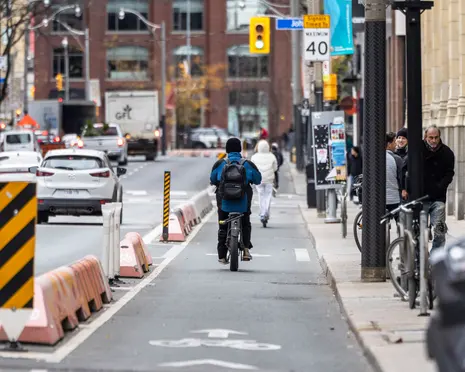
Table of Contents
Ontario’s Highest Court Clears Path for Toronto Bike Lane Removal
Wanderstayfinder.com – The Ontario Court of Appeal has delivered a decisive verdict that allows the provincial government to dismantle Toronto’s protected cycling infrastructure on its most heavily trafficked corridors. This ruling, announced on Friday, effectively overturns a previous judicial determination that had protected the lanes under constitutional guarantees. The decision represents a significant victory for Premier Doug Ford’s administration, which has consistently opposed the cycling network’s expansion across the city.
A Legal Battle Over Urban Infrastructure
Ontario’s legislative body enacted measures in 2024 granting the province authority to eliminate the cycling lanes, even though Toronto had recently completed their installation. However, this initiative encountered substantial resistance when cycling advocacy organizations initiated legal proceedings challenging the province’s power to remove the infrastructure. Their case gained momentum during July 2025, when a superior court judge determined that dismantling the lanes would breach constitutional protections by potentially increasing risks to public safety.
The lower court’s reasoning centered on Canada’s Charter of Rights and Freedoms, which safeguards citizens’ right to life and security of the person. The judge concluded that removing the protected cycling corridors would elevate the probability of accidents and injuries, thereby violating these fundamental protections. Friday’s appellate decision fundamentally altered this interpretation, establishing that no constitutional entitlement exists specifically for bicycle lanes.
Constitutional Interpretation Shifts
The appellate court’s judges articulated that governments retain the authority to modify legislation concerning cycling infrastructure without constitutional constraint. They emphasized that judicial bodies cannot declare legislation unconstitutional merely because experts anticipate policy failures. Justice Huscroft, writing in the decision, noted that neither the government nor the legislature must accept policy recommendations from external advisors.
“This isn’t just about keeping people on bikes safe. It helps pedestrians. It helps other drivers. It has a very strong traffic calming effect that we need in major cities,” said Michael Longfield, executive director of Cycle Toronto.
Longfield, whose organization participated in the legal challenge, expressed disappointment following the ruling. His comments highlighted the broader benefits of cycling infrastructure beyond protecting cyclists themselves, noting how the lanes contribute to overall urban mobility and safety for all road users.
Political and Financial Implications
Toronto’s mayor, Olivia Chow, responded to the decision by confirming ongoing negotiations with the provincial government. She emphasized her commitment to developing a solution that ensures safety for every type of road user. Longfield expressed optimism that municipal and provincial officials might reach an alternative arrangement preserving cycling infrastructure while addressing government concerns.
Ontario’s transportation minister, Prabmeet Sarkaria, characterized the appellate court’s ruling as a triumph for practical governance. The provincial government has not yet specified whether it will proceed with lane removal or when such action might occur. A municipal assessment from 2024 estimated that dismantling the cycling network would impose an additional C$48m (£26m) burden on taxpayers.
Internal Concerns About Policy Direction
Confidential briefings acquired by the Trillium newspaper revealed that Ontario’s own civil servants questioned the wisdom of removing cycling lanes. These internal assessments indicated that eliminating the protected corridors would neither alleviate traffic congestion nor necessarily improve conditions. Some provincial staff members cautioned that Ontario might appear to be overstepping its authority by interfering with municipal planning decisions.
“Neither the government nor the legislature is under any obligation to accept policy advice,” wrote Justice Huscroft in the decision.
Longfield characterized Ford’s focus on cycling lanes as an excessive exercise of provincial power over local affairs. He described it as unreasonable to suggest that eliminating bicycle infrastructure represents a primary solution to urban traffic problems. Instead, he advocated for evidence-based approaches that address congestion through comprehensive strategies rather than targeting specific transportation modes.
Looking Ahead
The appellate court’s decision opens multiple pathways for Ontario and Toronto. The province may proceed with complete removal of the 19km of protected cycling infrastructure, potentially incurring the estimated C$48m cost. Alternatively, negotiations between municipal and provincial leaders could result in modified infrastructure or alternative traffic management strategies. The outcome will significantly influence how Ontario balances provincial authority with municipal autonomy in urban planning matters.
For cyclists and urban planning advocates, the ruling represents both a setback and an opportunity. While the immediate threat of lane removal has materialized, the ongoing dialogue between government levels suggests that compromise remains possible. The final resolution will likely depend on whether provincial leaders prioritize infrastructure elimination or seek collaborative solutions that accommodate both cycling advocates and traffic management objectives.
Related Reading
Frequently Asked Questions
What is Ontario free to axe Toronto bike?
Ontario free to axe Toronto bike is the main topic of this guide. The article explains the context, practical details, and next steps readers should understand.
Why does Ontario free to axe Toronto bike matter?
Ontario free to axe Toronto bike matters because readers are looking for a useful answer, not just a short summary. Good content should match search intent and help them decide what to do next.