Teachers demand more scrutiny of Catholic school funding amid allegations of ‘sham arrangement’ with NSW Liberal group

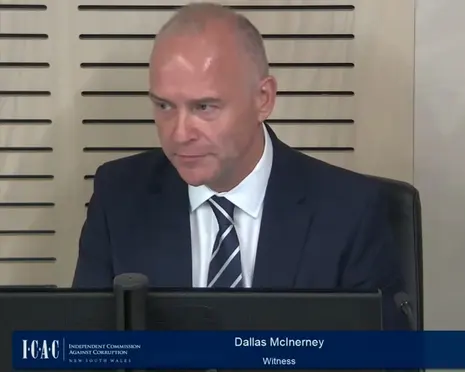
Table of Contents
Education Union Calls for Deeper Investigation into Catholic School Funding Practices
Wanderstayfinder.com – The Independent Education Union’s New South Wales division has formally requested enhanced oversight of Catholic educational institutions following serious allegations that public money may have been diverted to support political factional activities. This demand comes as the chief executive of Catholic Schools NSW testified before a corruption commission, maintaining that financial arrangements with a lobbying firm were legitimate rather than a “sham arrangement” designed to channel funds to Liberal party operations.
Dallas McInerney, who serves as the organization’s chief executive, provided testimony to the NSW Independent Commission Against Corruption on Friday. He firmly stated that funding allocated to Catholic Schools NSW had not been improperly utilized. The commission is currently examining whether McInerney facilitated and authorized unlawful donations from the governing body, which oversees approximately 600 Catholic schools across the state, to support what have been described as branch stacking initiatives by the Reformers faction.
Understanding the Reformers Faction and Branch Stacking
The Reformers represent a conservative Christian faction within the Liberal Party that has advocated for more traditional positions on social issues. Their policy priorities have included opposition to abortion access, euthanasia legislation, and same-sex marriage recognition. Branch stacking refers to the practice of recruiting party members to influence internal elections and decision-making processes, potentially giving certain factions disproportionate power within the organization.
During the inquiry, commissioners heard evidence that Catholic Schools NSW made payments totaling $130,900 to Beckington, a consulting firm operated by Reformers members Christian Ellis and Jeremy Greenwood. These payments were processed through consulting service invoices spanning from August 2019 through August 2021. Subsequently, Greenwood’s separate entity, JPG Advisory, received $135,000 between December 2021 and December 2023.
Allegations of Misuse of Public Funds
Further testimony revealed that Robert Assaf and Dylan Whitelaw, both employed by Catholic Schools NSW, dedicated work hours to factional activities rather than their official duties. The Independent Education Union’s NSW branch, which had maintained silence during the investigation, expressed serious concerns about these developments.
“Deeply concerned by … [allegations] that public funding for Catholic schools may have been wrongfully spent on Liberal party matters,” the union stated in its formal response.
Carol Matthews, secretary of the IEU NSW/ACT branch, emphasized that existing oversight mechanisms had been insufficient. She noted that organizations like Catholic Schools NSW, which administer public funds on behalf of Catholic diocesan schools, had not received the same level of scrutiny applied to other publicly funded entities.
“Regardless of the findings of Icac in this matter, there should be greater scrutiny of bodies such as Catholic Schools NSW, which receive public funding on behalf of non-government schools,” Matthews declared in her statement.
Financial Context and Political Response
The financial stakes are substantial. Approximately 80 percent of the funding distributed by Catholic Schools NSW originates from state and federal government sources. In 2024 alone, government contributions reached approximately $3.8 billion across the education sector. This represents a significant portion of public expenditure on education in New South Wales.
NSW Premier Chris Minns has declined to order an independent audit of the schools governing body while the ICAC investigation continues. This decision has drawn mixed reactions from stakeholders who believe additional transparency would strengthen public confidence in the funding system.
McInerney stepped aside from his executive position before the commission hearings commenced, stating that his departure would allow Catholic Schools NSW to continue its essential educational mission without disruption. The organization has indicated it will not provide responses to questions that extend beyond the eight-week inquiry period and ongoing legal proceedings.
Key Figures and Communication Records
During Friday’s proceedings, McInerney addressed communications from February 2021 between Assaf and Jean-Claude Perrottet, the younger brother of former NSW Premier Dominic Perrottet. Notably, Jean-Claude Perrottet was not accused of any wrongdoing in connection with these matters.
Assaf and Jean-Claude Perrottet were not directly employed by Beckington at the time. However, Jean-Claude Perrottet wrote to Assaf regarding a meeting: “Ellis and I caught up with Dallas in Bowral to discuss money, had a long convo.” When questioned about whether the arrangement constituted a sham arrangement through which funds would ultimately reach the Reformers members, McInerney responded negatively.
Additional evidence presented to the inquiry suggested that when the Catholic Schools NSW contract transitioned from Beckington to JPG Advisory in 2021, both Assaf and Jean-Claude Perrottet allegedly received kickbacks. In Jean-Claude Perrottet’s case, this amounted to 50 percent of the monthly retainer after he secured the contract with McInerney’s assistance.
McInerney consistently characterized Jean-Claude Perrottet as his “conduit” to Greenwood, who operated JPG Advisory. Dylan Whitelaw, who had previously worked under McInerney at Catholic Schools NSW before joining Beckington, provided testimony describing an arrangement where payments to Beckington funded Reformers activities. McInerney repeatedly denied this characterization.
The inquiry also examined why Whitelaw, then only 21 years old, participated in negotiating an increase to Beckington’s retainer in 2021. McInerney was asked to explain both Whitelaw’s involvement and his subsequent citation of Whitelaw’s departure from the company as relevant factors.
Implications for Education Governance
This investigation carries significant implications for how Catholic school funding is managed and monitored in New South Wales. If allegations are substantiated, they could prompt calls for structural reforms to ensure greater transparency in how public funds are allocated to non-government schools. The outcome may influence not only Catholic Schools NSW but also similar organizations across Australia that administer government education funding.
As the inquiry progresses, stakeholders are watching closely to determine whether the sham arrangement allegations will be confirmed and what consequences may follow for those involved in the financial arrangements under scrutiny.
Related Reading
Frequently Asked Questions
What is Teachers demand more scrutiny of Catholic?
Teachers demand more scrutiny of Catholic is the main topic of this guide. The article explains the context, practical details, and next steps readers should understand.
Why does Teachers demand more scrutiny of Catholic matter?
Teachers demand more scrutiny of Catholic matters because readers are looking for a useful answer, not just a short summary. Good content should match search intent and help them decide what to do next.