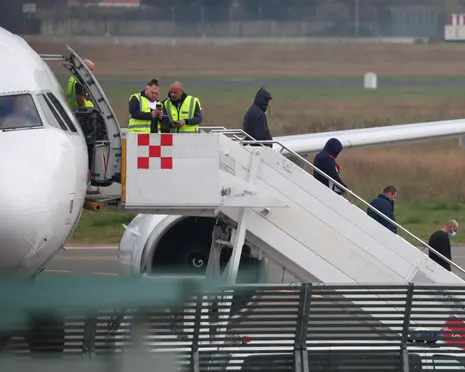
Nearly 100 children detained as adults under UK-France migration deal


Table of Contents
Child Detention Under UK-France Migration Agreement Faces Scrutiny
Wanderstayfinder.com – A significant number of young people have been incorrectly classified and held as adults under the United Kingdom’s bilateral migration arrangement with France, according to internal monitoring data. The “one in, one out” framework, championed by Home Secretary Shabana Mahmood, has resulted in 94 out of 304 age-disputed cases being determined to involve minors over a nine-month period. This represents approximately 31 percent of all age-related disputes within the programme.
Under existing government guidelines, children should be excluded from the scheme entirely. Unaccompanied minors are subject to a strict 24-hour detention limit, yet the monitoring board’s interim chair, Jane Leech, highlighted that many vulnerable individuals are being held far beyond these parameters. Her correspondence to Home Office minister Anna Turley outlines multiple concerns regarding the treatment of detainees under the arrangement.
Extended Detention and Medical Concerns
Leech’s letter identifies several systemic issues affecting those processed through the agreement. Some individuals have remained in detention for more than six months, despite regulations stipulating that extended stays should only occur in exceptional circumstances. The standard maximum detention period is 28 days.
Medical considerations have also been overlooked in certain instances. People awaiting removal to France include individuals diagnosed with tuberculosis or those requiring immediate hospital treatment. Additionally, family separation has emerged as a significant problem, with some detainees facing deportation after being separated from relatives who arrived alongside them. Leech described this outcome as having a “particularly damaging impact” on those affected.
“Your officials have informed the IMB that 304 age disputes have taken place between 15 August 2025 and 1 May 2026, of which 94 (31%) were assessed to be children.”
Age Assessment Delays and Vulnerability
The monitoring board has raised serious questions about the effectiveness of child safeguarding mechanisms within the programme. Leech noted that age assessments are taking considerably longer than necessary, with two cases observed by the Heathrow Board requiring 40 days or more from arrival at the immigration removal centre to final assessment completion.
Officially designated as Operation Hillmore within the Home Office, the initiative allows the UK to return certain small boat arrivals to France while accepting an equivalent number of people from France who demonstrate legitimate claims. However, Leech argued that this approach is placing highly vulnerable, newly arrived individuals—including children and abuse survivors—into detention unnecessarily.
“The IMB is therefore concerned that child safeguarding mechanisms are ineffective, and believes more should be done to ensure that those whose age is under dispute are not detained in the first place.”
Health Screening and Psychological Distress
Psychological wellbeing has been identified as another area of concern. Leech reported that many recent arrivals present with significant psychological distress, and monitoring boards have documented testimonies indicating that numerous detainees are survivors of torture and abuse.
Health screening procedures at Manston have also drawn criticism. Gatwick immigration removal centre received one individual from Manston with tuberculosis, while another was denied admission to Brook House due to critical health conditions and was referred directly to hospital.
Despite the programme’s intention to operate efficiently, some detainees have experienced prolonged confinement. One man was held for 27 weeks, significantly exceeding typical detention periods. Government statistics covering the period from 4 August 2025 to 30 June 2026 reveal that 1,087 people were returned to France under the arrangement, while 27,920 individuals arrived in the UK via small boats during the same timeframe.
Expert Response and Future Developments
Imran Hussain, executive director of external affairs at the Refugee Council, characterised the figures as “disturbing” and identified them as further evidence of children being misclassified by the Home Office.
“Too often refugee children are being treated as adults and put into unsafe situations, at risk of abuse and neglect, and exposed to significant safeguarding risks.”
Hussain urged the government to prioritise professional assessments conducted by trained social workers, noting that this methodology has proven to be the most accurate approach for determining age and minimising safeguarding risks.
A Home Office spokesperson defended the current system, stating that robust age assessments remain essential for maintaining border integrity and ensuring migrants receive appropriate safeguarding and access to services. The department announced plans to strengthen and modernise the assessment process, including the deployment of advanced AI technology beginning next year to support age determination procedures.
Related Reading
Frequently Asked Questions
What is Nearly 100 children detained as adults?
Nearly 100 children detained as adults is the main topic of this guide. The article explains the context, practical details, and next steps readers should understand.
Why does Nearly 100 children detained as adults matter?
Nearly 100 children detained as adults matters because readers are looking for a useful answer, not just a short summary. Good content should match search intent and help them decide what to do next.