South Korean airport becomes busiest in world for global traffic amid Iran war

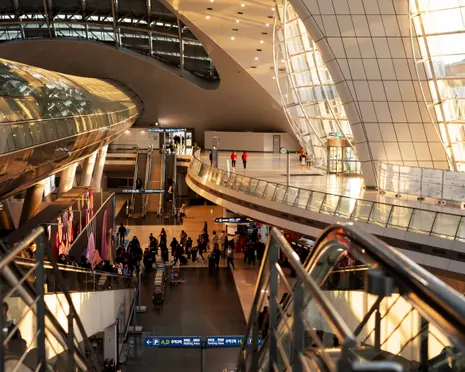
South Korean Airport Becomes Busiest in World for Global Traffic
Wanderstayfinder.com – South Korea’s Incheon International Airport has claimed the top position globally for international passenger traffic, a remarkable achievement fueled by ongoing disruptions in the Middle East due to the Iran war. Situated roughly 30 miles west of Seoul, the airport handled 38.39 million international travelers in the first six months of 2026, edging out every other airport worldwide in this metric.
This milestone represents a historic moment for the facility, which began operations in 2001. After ranking tenth globally in 2002, Incheon steadily ascended to fifth place by 2018 and secured third position in both 2024 and 2025. Now, for the first time since opening, the airport has achieved the number one ranking in international passenger volume.
Geopolitical Shifts Reshape Air Travel Routes
The dramatic increase in Incheon’s passenger numbers mirrors wider transformations in global aviation. The conflict between the United States and Iran has considerably diminished traditional Middle Eastern hubs, especially Dubai, which long functioned as a crucial East-West connection point. Airlines and passengers have increasingly adopted alternative routing through East Asia, with Incheon emerging as a major beneficiary of this redirection.
Passenger traffic heading to the Asia-Pacific region rose by 7.9 percent during the first half of 2026, while capacity bound for the Middle East fell by 16.5 percent. This contrasting trend illustrates how geopolitical tensions can swiftly alter global air travel networks, generating opportunities for airports situated along new corridors.
Foreign Travelers Drive Record Growth
Incheon’s international passenger volume expanded by 6.3 percent compared to the same timeframe last year, with non-Korean travelers contributing significantly to this expansion. Foreign passengers represented 39.3 percent of all travelers at the airport during the first half of 2026, up from 35.2 percent for the full year of 2025. This proportion hit a record high of 44.4 percent in the second quarter alone.
According to local media reports, this influx of international visitors originates mainly from increased travel from China and Japan. The rising number of foreign tourists and business travelers reflects South Korea’s growing appeal as a destination and its strategic role as a regional aviation hub.
European Airports Battle for Position
Meanwhile, London’s Heathrow Airport secured second place globally in international passenger traffic with 37.79 million travelers during the first half of 2026. Singapore’s Changi Airport came in third with 34.53 million international passengers. Heathrow logged a total of 40 million passengers across all categories during the same period, marking its most active first half ever.
Earlier this week, Istanbul overtook Heathrow to become Europe’s busiest airport by total passenger volume. Information released on Tuesday showed that 8.15 million passengers moved through Istanbul’s terminals in July, compared to 7.9 million at Heathrow. This transition highlights the increasing significance of Turkish aviation infrastructure as a continental bridge.
Infrastructure Investments Support Expansion
Incheon has concurrently reinforced its status as an international hub through considerable infrastructure development. The airport currently serves 101 airlines operating to 183 cities, with 158 destinations dedicated to international passenger flights. A comprehensive four-phase expansion project finished in late 2024 increased the airport’s annual capacity to 106 million passengers.
Kim Beom-ho, the acting president of the Incheon International Airport Corporation, highlighted the collaborative spirit behind this accomplishment.
The ranking reflects the support of the government, the public’s encouragement and the hard work of everyone stationed at the airport.
Domestic Routes Set Global Standards
Beyond international traffic, South Korea also maintains the distinction of operating the world’s busiest air route. The domestic corridor linking Gimpo Airport in Seoul with Jeju Island scheduled 14.4 million seats in 2025, exceeding any other single route globally. This accomplishment showcases the strength of the domestic aviation market alongside Incheon’s international prominence.
The convergence of geopolitical disruption, strategic infrastructure investment, and expanding regional connectivity has placed Incheon Airport at the heart of global aviation. As the Iran war continues to influence Middle Eastern flight patterns, the airport’s function as a vital alternative hub is expected to grow, benefiting both airlines and travelers seeking reliable connections.
Frequently Asked Questions
Why has South Korean airport become busiest in world? The Iran war has disrupted Middle Eastern hubs like Dubai, causing airlines and passengers to redirect through East Asia, with Incheon benefiting most from this traffic shift.
How many international passengers did Incheon handle in 2026? Incheon processed 38.39 million international travelers during the first six months of 2026, surpassing all other airports globally.
What is Incheon’s annual passenger capacity after expansion? Following a four-phase expansion completed in late 2024, Incheon’s annual capacity now stands at 106 million passengers.
Which airport ranks second globally in international traffic? London’s Heathrow Airport finished second with 37.79 million international passengers in the first half of 2026.