Preserving a Living Tradition: Ghana’s Hand-Painted Cinema Posters as Collectible Treasures
Wanderstayfinder.com – On a modest porch in Teshie, a suburb close to Accra, Heavy J carefully applied red oil paint to a flour sack canvas. With precise strokes, he added crimson details to a knife held by a figure, while above, the outline of a skull began to take shape. This was not a typical horror movie advertisement. Rather, it was a vibrant interpretation of the animated classic The Little Mermaid. The menacing figure with the blade was actually Eric, the benevolent prince, and the skull had nothing to do with the original narrative. “We add more to make people interested,” explained Heavy J, known by his birth name Jeaurs Affutu.
A Cultural Phenomenon Born from Necessity
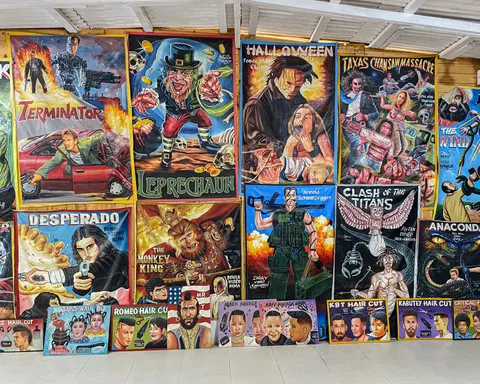
From the late 1970s through the early 2000s, hand-painted cinema posters became an iconic element of Ghanaian visual culture. Local artists created these works to promote film screenings at neighborhood venues called video clubs. The practice emerged when organizers discovered that imported posters failed to draw crowds. Rather than merely advertising plotlines, these artists treated storylines as springboards for creative, often humorous departures. Each video club employed competing painters who strove to produce the most compelling “forgery” – their term for these imaginative reinterpretations.
The tradition gradually diminished around the year 2000 as increasing numbers of Ghanaians acquired television sets and video players, reducing reliance on video clubs. Many establishments closed, while painters adapted by exploring other artistic ventures. However, by this point, the posters had already captured international attention through publications and exhibitions abroad. Vintage and rare examples transformed into highly sought-after collectibles.
Revival Through Digital Commerce
Although interest in newly created posters declined during the early 2000s, renewed demand has emerged, fueled by internet marketing and growing appreciation among Western film enthusiasts. Deadly Prey Gallery plays a central role in maintaining this artistic heritage while addressing contemporary market needs. Established in 2012, the enterprise bears its name after an action film. Robert Kofi, a Ghanaian native from Winneba who spent his childhood as a “hype man” for local video centers, co-founded the gallery alongside Brian Chankin, a Chicago-based video rental proprietor. Their partnership began when Kofi sold Chankin several poster works.
The gallery collaborates with fifteen painters, including Heavy J, who has been creating posters for forty years. They connect these artists with international buyers and handle shipping once commissions are complete. According to Kofi, who now resides in Accra and serves as both manager and creative director, most purchases originate from the United States. Classic action, science fiction, and horror titles generate the strongest interest, with popular selections including The Exorcist and franchises like Star Wars and Terminator. Commissioned works begin at $600, equivalent to approximately £450.
The Art of Exaggeration
Kofi maintains close relationships with his artists, selecting those best suited for particular projects and sharing his vision. He regularly visits studios to examine developing works. In Ashaiman, roughly eleven miles from Heavy J’s residence, another painter named Stoger was simultaneously working on two commissions: one depicting the horror film Poltergeist, and another illustrating the 1997 experimental drama Gummo. That poster featured three felines and a man bathing with spaghetti before him. During feedback delivered in Ga, a major Ghanaian language, Kofi noted that two cats lacked sufficient aggression and the meal appeared too pristine. “I want uglier cat scenes,” he clarified. “The spaghetti has to be dirtier.”
Stoger, born Benjamin Amartey, transitioned from sculpture to poster painting in 1992 after developing a passion for cinema. “I use my imagination to make scenes that will attract people so that they’ll love the poster,” he remarked.
“The posters’ audiences have not seen the film, so it’s impossible for them to know [whether they are accurate]. Therefore, the artists tap into what they call imaginative painting,” said Joseph Oduro-Frimpong, director of the Centre of African Popular Culture at Ashesi University and an avid collector himself.
This emphasis on exaggeration stems from an African cultural practice of “visualising the invisible,” according to Oduro-Frimpong. Artists highlight dramatic elements and incorporate details absent from the source material, creating what he describes as a form of sensationalism. These bold reinterpretations occasionally provoked negative reactions, including threats, insults, and even physical confrontations from viewers who felt misled by the artistic liberties taken.
Kofi chuckled recalling a 1990s incident when people became so upset by a particularly dramatic poster that they confronted the artist directly. Such moments underscore the cultural significance these works hold – not merely as advertisements, but as living expressions of artistic imagination that continue to evolve while honoring their rich heritage.