Diplomatic Maneuvering Intensifies as Trump Signals Military Option for Iran
Wanderstayfinder.com – Amid escalating tensions in the Middle East, President Donald Trump has issued a fresh warning regarding potential military intervention with Iran. Speaking to reporters aboard Air Force One, the American leader emphasized that diplomatic channels remain open but are running out of time. “We are in very deep talks with Iran. If they don’t work out, we will go back to very strong military action,” the president explained during his Monday interview with Axios. When pressed about the timeline for these negotiations, Trump offered a straightforward assessment: “Not much time. Either it goes fast or not at all.”
Trump’s Stance on Negotiations and Military Pressure
The president reiterated his position later that same day, suggesting that Iran’s willingness to engage stems from recent American military pressure. “They want to meet, and we’re meeting. Without what we did, they wouldn’t even be talking to us,” Trump stated. He continued, “They would not have requested the meeting if we were doing poorly. The only reason they want to meet is because we’ve been hitting them very hard.”
Shortly thereafter, at a campaign rally in Michigan, Trump reinforced his hardline approach. “You can’t bribe them. You’ve got to beat them, and we’ll beat the hell out of them. But we’ll see how it turns out,” he declared. “Right now, there are very friendly negotiations going on.”
Iran’s Position and Regional Developments
Meanwhile, Tehran has maintained that no direct negotiations are taking place with Washington. The conflict, which erupted in late February following coordinated American-Israeli military strikes, continues to disrupt regional stability and global economic markets. Esmaeil Baqaei, spokesperson for the Iranian foreign ministry, clarified the situation: “Mediators may convey messages from the American side to us regarding current developments in the region. But at present we are not engaged in any negotiations with the United States.”
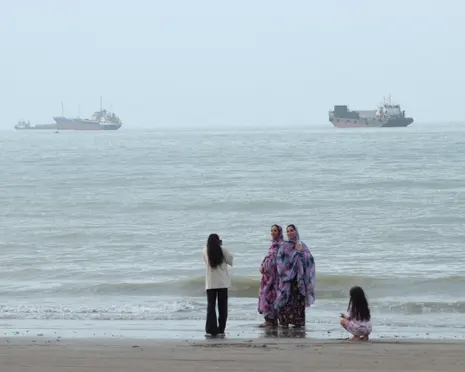
Concurrently, Oman and Iran have been working toward an agreement concerning the strategic Hormuz Strait. While progress has been made in principle, disagreements persist over Tehran’s insistence that all vessels navigating the waterway must pay some form of transit fee to a consortium jointly managed by both nations.
Technical Talks and Military Considerations
Technical discussions held in Tehran on Friday and Saturday could prove pivotal in averting further hostilities. Perceived momentum in these talks—supported by China, Qatar, and Pakistan—appears to have influenced Washington’s decision to halt its aerial bombardment of Iran after nearly two weeks of sustained operations.
Senior American officials have reportedly cautioned Trump about diminishing munitions reserves and the growing threat posed by Iranian retaliatory strikes against American installations in Kuwait and Jordan. Admiral Brad Cooper, the top US military commander stationed in the Middle East, allegedly advised suspending the bombing campaign near the strait, arguing that its effectiveness had plateaued.
Washington characterizes its military response as a reaction to repeated violations of a June memorandum of understanding. Iran has allegedly attempted to block commercial shipping through a southern route overseen by American forces. Tehran contends that this southern passage violates the ceasefire arrangement, which it maintains grants Iran exclusive authority over the strait’s reopening.
The Malacca Model and Future Proposals
A diplomat noted that the objective of the Tehran discussions is to harmonize Iranian and Omani proposals into a framework that aligns with international maritime law. At a press conference in Tehran, Baqaei rejected the notion that the American pause constituted an informal ceasefire.
Since May, Oman has advocated for a voluntary fee structure to comply with maritime regulations. The Omani proposal mirrors the system governing the Malacca Strait, where participating nations contribute to a fund supporting environmental and safety services for commercial vessels. Arsenio Dominguez, secretary general of the International Maritime Organization, has indicated to the Guardian that the Malacca approach warrants consideration for Hormuz.
Iran’s environmental department has developed an alternative framework requiring compensation for the annual passage of more than 50,000 ships and oil tankers through the strait and their contribution to Persian Gulf pollution. Under this scheme, fees would vary based on vessel type, cargo capacity, navigation patterns, and pollution history.
While the comparison between the two straits remains imperfect due to differing traffic patterns, Iranian media outlets have shown increasing interest in adopting the Malacca model. The Khabaronline news agency suggested that such an arrangement could provide a sustainable solution for managing one of the world’s most critical maritime chokepoints.
Related Reading
Frequently Asked Questions
What is Trump warns of return to strong?
Trump warns of return to strong is the main topic of this guide. The article explains the context, practical details, and next steps readers should understand.
Why does Trump warns of return to strong matter?
Trump warns of return to strong matters because readers are looking for a useful answer, not just a short summary. Good content should match search intent and help them decide what to do next.