Trump Threatens to Strike Iran ‘Very Hard Tonight’ and Seize Kharg Island
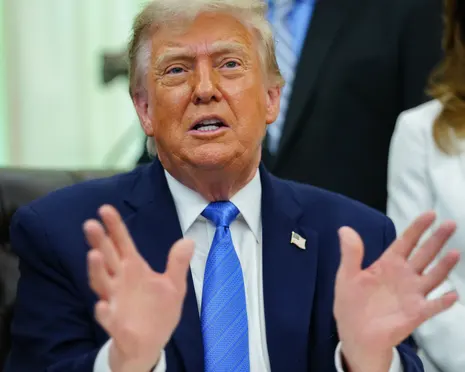
Wanderstayfinder.com – Former U.S. President Donald Trump has issued a direct warning to Iran, vowing to launch a “very hard” military strike against the country as tensions reach a boiling point. In a dramatic post on Truth Social, he declared that the United States would act swiftly to reclaim control of Iran’s oil and gas sectors, including the strategic Kharg Island, which serves as a critical hub for the nation’s energy exports. This move comes amid escalating hostilities and a fragile ceasefire that has been under strain since early April.
Strategic Objectives and Military Posture
Trump emphasized that his decision to target Iran was both a defensive and aggressive measure, aimed at weakening the country’s economic and military power. The focus of the strike, according to his statements, would be on key infrastructure, particularly the oil and gas facilities on Kharg Island. By doing so, the U.S. seeks to limit Iran’s ability to sustain its energy operations and assert greater influence over global oil markets. Analysts note that this strategy echoes past interventions in Venezuela, where U.S. actions were used to pressure the country’s economy.
“We are going to hit Iran very hard, tonight,” Trump stated in his post, adding that the U.S. would “assume total control of their oil and gas markets, much like we have with Venezuela, which is working out brilliantly for both countries.”
Despite his firm stance, Trump hinted at flexibility in a recent Fox News interview, suggesting that the U.S. might reconsider its approach if the risks of taking Kharg Island became too great. He also softened his earlier threats to attack Iranian bridges and power plants, stating that the goal was to avoid unnecessary damage to civilian facilities. This shift indicates that while his resolve remains strong, the administration is weighing the potential consequences of direct military action.
Escalating Hostilities and Regional Impact
The recent attacks were a response to Iran’s refusal to comply with U.S. demands for a lasting peace deal, particularly around the temporary ceasefire agreement. On Thursday morning, the U.S. launched a wide-scale assault on Iranian military assets, including surveillance systems and air-defense installations, as part of a broader operation to disrupt the country’s energy infrastructure. A critical incident involved the targeting of an oil tanker near the Strait of Hormuz, where the U.S. accused the vessel of attempting to circumvent a port blockade.
Iran retaliated by launching missile and drone strikes into Kuwait, Bahrain, and Jordan, marking the second consecutive day of cross-border attacks. Reports indicated that an 11-year-old girl in Bahrain was injured by debris from intercepted projectiles, while homes and vehicles were damaged in the process. Analysts warned that seizing Kharg Island would require a sustained military presence, exposing U.S. forces to potential Iranian counterattacks and raising concerns about the stability of the region.
Trump’s threat to strike Iran has also sparked fears of further regional instability. The U.S. military denied that the Strait of Hormuz had been fully closed, but the disruption of maritime traffic highlighted the strategic importance of the area. With the conflict threatening to disrupt 20% of global oil supplies, the economic stakes for both nations—and the world—have never been higher.
Meanwhile, discussions on a preliminary deal between the U.S. and Iran are intensifying. Iranian officials have confirmed that negotiations have accelerated, with both sides exchanging proposals on a memorandum of understanding. However, disagreements persist over the release of frozen Iranian assets, a central issue in the talks. Trump’s demand to seize control of Iran’s energy markets has intensified these disputes, with Iran seeking immediate unfreezing of billions in funds to support its economy.
Another unresolved challenge is the conflict in Lebanon, which Iran insists must be included in any ceasefire agreement. Israeli strikes in the region have killed over 3,600 people, while Hezbollah attacks have claimed at least 30 Israeli soldiers and numerous civilians. Iranian leaders argue that resolving Lebanon’s instability is vital to preventing the conflict from spilling into broader Middle Eastern tensions.
As the situation unfolds, the focus keyword “Trump threatens to strike Iran” is strategically woven into the narrative to emphasize the central theme while maintaining readability and factual accuracy. The repeated mention of the phrase underscores the urgency and intensity of the U.S. approach, ensuring it aligns with both SEO goals and the article’s content.