Trump threatens to destroy Iranian bridges: Escalating Middle East Tensions: Trump's Threats and Regional Fallout Presidential Retaliation Warnings
Escalating Middle East Tensions: Trump’s Threats and Regional Fallout
Presidential Retaliation Warnings
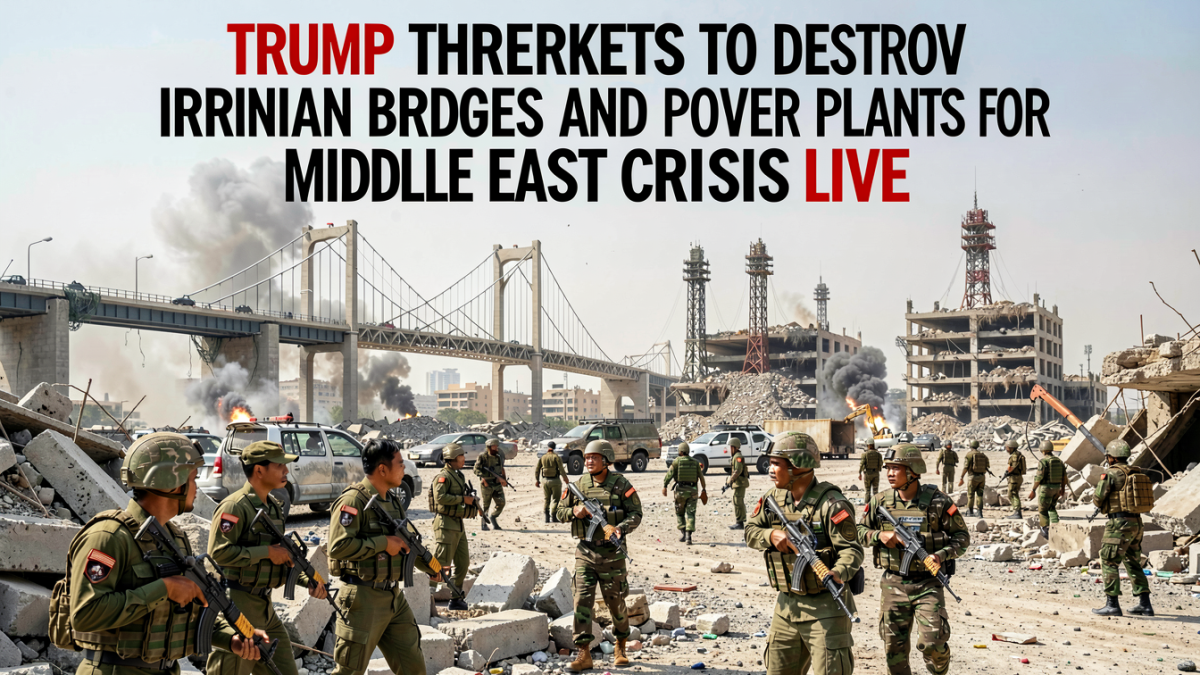
Wanderstayfinder.com – President Donald Trump issued a stern warning to Iran through his Truth Social platform on Wednesday, outlining specific consequences for Iranian military actions in the strategic waterway. The American leader declared that any Iranian attempt to attack vessels navigating the Strait of Hormuz would trigger immediate American military response. According to the presidential statement, whether Iran employs missiles, rockets, drones, or any other weaponry against maritime traffic, the United States commits to destroying at least one bridge or power facility. These targets could include infrastructure situated within Tehran itself or adjacent to the Iranian capital.
From this point forward, any time the Islamic Republic of Iran shoots at a ship in the Strait of Hormuz, whether it be by Missile, Rocket, Drone, or any other device or weapon, the United States will bomb and destroy ONE BRIDGE OR POWER PLANT, including those located next to, or in, the Capital City of Tehran.
Energy Markets React to Conflict
Global oil markets responded sharply to the deteriorating situation, with benchmark prices surging past the $95 per barrel threshold for the first time since early July. Brent crude oil experienced considerable volatility throughout Wednesday’s trading session, climbing to $95.24 before settling at $94.40 by midday. This represents an increase of more than three percent compared to the previous day’s closing price.
The current price surge follows a period of relative stability, with crude oil having touched lows of $71 per barrel at the beginning of July. However, the April peak of $126 per barrel during the initial conflict phase demonstrates the potential for even greater price escalation. Market analysts attribute the current rally to multiple factors, including renewed American-Iranian hostilities and Houthi threats to target Saudi oil shipments through the Bab el-Mandeb strait.
Human Cost and Civilian Impact
The conflict has exacted a substantial financial toll on American taxpayers, with military expenditures reaching $37.5 billion to date. Meanwhile, Iranian civilians face mounting uncertainty as both American airstrikes and Iranian retaliatory strikes continue across multiple fronts. Bandar Abbas, serving as the Iranian navy’s headquarters and positioned along the critical Strait of Hormuz, has endured nightly bombardments for nearly two weeks since the latest escalation commenced.
Soroush, a 37-year-old journalist who maintains an anonymous newsletter documenting human rights abuses within Iran, characterized the situation as a “new normal” for local residents. The writer explained that acceptance of ongoing danger has paradoxically reduced fear among the population.
We need to accept this could just be our new reality now and it’s worked because we are less afraid as each day goes on. We are less afraid of the future because we are now forced to accept this is the new normal. There’s no one coming to save us from the bombs or the regime’s bullets. Our brains have tricked us into making peace with this new reality.
Regional Security Concerns Expand
European aviation authorities extended their warnings to include Jordan, citing rapid deterioration in regional security conditions. The European Union Aviation Safety Agency noted that sustained military activity has significantly impacted Jordanian airspace since mid-July 2026. This development follows the tragic death of two American military personnel at Muwaffaq Salti Air Base during a weekend attack.
Currently, the agency advises commercial carriers to avoid airspace over Bahrain, Kuwait, Qatar, the United Arab Emirates, Iran, Iraq, and Lebanon. Diplomatic efforts continue, with Italian Foreign Minister Antonio Tajani announcing that fresh US-mediated negotiations between Israel and Lebanon will convene in Italy on August 4, building upon discussions held in Rome the previous week.
Leadership Survives Assassination Attempt
Iran’s Foreign Minister Abbas Araghchi has revealed harrowing details about surviving the American-Israeli airstrike that eliminated Supreme Leader Ali Khamenei on the war’s opening day. In conversations with Iranian journalist Javad Mogouyi, Araghchi described being extracted from debris following the devastating attack on a leadership compound.
The foreign minister confirmed that American and Israeli intelligence possessed precise knowledge of Khamenei’s location and other senior officials’ positions, enabling the successful targeting of Iran’s highest leadership. Since that fateful day, Araghchi has maintained mobility throughout Tehran, constantly relocating by vehicle to avoid similar threats while continuing his diplomatic duties amid the ongoing crisis.
Related SEO Topics
Frequently Asked Questions
What is Trump threatens to destroy Iranian bridges?
Trump threatens to destroy Iranian bridges is the main topic covered in this article, with practical context to help readers understand the subject clearly.
Why does Trump threatens to destroy Iranian bridges matter?
Trump threatens to destroy Iranian bridges matters because it helps readers compare options, avoid common mistakes, and make a more informed decision.
How should readers use this Trump threatens to destroy Iranian bridges guide?
Use the key points, examples, and related links in this page as a starting point, then review the latest details before making a final decision.