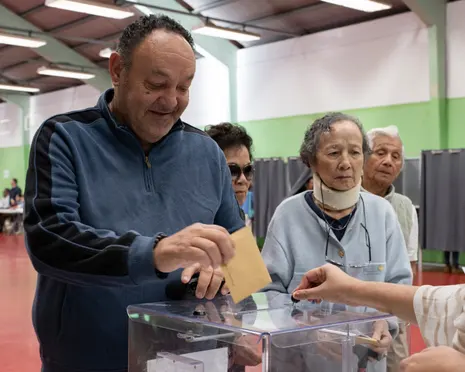
New Caledonia Polls Open in First Provincial Vote Since 2019
New Caledonia polls open in first – Voting commenced in New Caledonia on Sunday, marking the first provincial elections in the French territory since 2019. The delay, caused by stalled negotiations over the region’s political status, has now been resolved as the polls opened. This election, originally scheduled for 2024, will shape the balance of power ahead of renewed discussions with France on the archipelago’s future, with independence remaining the central issue for many voters.
Electoral Structure and Governance
The ballot will determine the selection of 76 local officials across three provinces: South, North, and the Loyalty Islands. Voters will elect 40 representatives for the South Province, 22 for the North Province, and 14 for the Loyalty Islands. Of these 76 positions, 54 will be allocated to the congress, the primary legislative body of the territory responsible for enacting local laws. The congress will then choose up to 11 members for the collegial government, which will oversee the executive branch.
Rejection of the Bougival Accord
Pro-independence advocates had previously rejected a proposed deal with France, known as the Bougival Accord. The agreement aimed to establish a Caledonian state within the French framework, granting the territory its own nationality recognized by the French constitution. However, it would have eliminated the possibility of future independence referendums, a move that drew strong opposition from independence supporters. This rejection has kept the political debate alive, with the election serving as a critical test of public sentiment.
Referendum History and Indigenous Support
Three referendums held in 2018, 2020, and 2021 showed a consistent majority in favor of maintaining New Caledonia’s status as a French territory. However, the third vote, conducted during the pandemic, was boycotted by pro-independence groups, weakening its legitimacy. Despite this, the independence movement continues to hold significant influence, especially within the Kanak population, the indigenous Melanesian community that has historically advocated for self-rule. The election is seen as a chance to reinvigorate support for their cause.
Expanded Voter Eligibility and Previous Tensions
A law passed in May 2026 expanded the electoral register, adding approximately 10,575 residents previously excluded from voting. This included over 4,000 individuals with a traditional status known as “customary civil status,” which is specific to Kanaks. The amendment increased the number of eligible voters for Sunday’s poll, following a freeze on the electoral roll under a 1998 agreement that aimed to stabilize the territory. This freeze had been in place for nearly two decades, until the recent legislative changes.
Impact of Past Riots and Security Measures
The expansion of voting rights has come after a previous attempt to grant long-term residents of non-Indigenous descent the ability to vote sparked deadly riots in 2024. Those protests, which left 14 people dead and caused damage exceeding two billion euros, highlighted the deep divisions within the community. The current election is being closely watched, more than two years after the unrest, as a symbol of progress and reconciliation. To ensure stability, France has deployed 2,400 law enforcement officers to New Caledonia, where they will remain until mid-July.
French Prime Minister’s Commitment to Negotiations
French Prime Minister Sebastien Lecornu has pledged to resume talks on the territory’s future next month, with the goal of finalizing an agreement before the end of the year. The election is expected to provide a clearer mandate for the upcoming negotiations, which will determine whether New Caledonia moves closer to independence or consolidates its ties to France. The outcomes of Sunday’s vote could influence the direction of these discussions, particularly as the Kanak population remains a key voting bloc.
With the electoral roll now expanded, the potential for increased representation of indigenous communities is significant. The addition of 10,575 voters, including thousands with traditional status, reflects efforts to address historical disparities in political participation. This change comes as a response to past grievances, where the exclusion of Kanaks from the voting process was seen as a barrier to self-determination. The election also underscores the ongoing tension between Indigenous and non-Indigenous residents, who have different views on the territory’s autonomy.
France’s involvement in the region has been pivotal since the 1998 agreement, which set the stage for a gradual transfer of power. The current political landscape is a direct result of that framework, with the congress playing a central role in shaping the future of New Caledonia. The Bougival Accord, while controversial, was designed to bridge the gap between independence supporters and the French government, offering a compromise that would allow the territory to govern itself while remaining part of France. Its rejection, however, has left the path to autonomy uncertain.
The election results will be closely analyzed by political analysts and activists alike. A shift in the balance of power could lead to renewed momentum for independence, or it might signal a return to French integration. The Kanak population, which makes up about 40% of the territory’s inhabitants, is expected to be a decisive force in determining the outcome. Their support for independence has remained strong, even after the majority of voters in recent referendums chose to stay within France.
Historical Context of the Territory’s Status
New Caledonia’s political journey has been marked by a series of referendums and agreements. The first vote in 1998 established a path toward self-governance, with the territory gaining its own congress. Subsequent referendums in 2018 and 2020 confirmed the preference for French status, but the 2021 vote, held during the global health crisis, saw lower turnout and a stronger boycott by independence supporters. These events have shaped the current electoral climate, with both sides seeking to assert their vision for the future.
As the polls open, the focus is not only on the immediate election but also on the long-term implications for New Caledonia’s political status. The region’s autonomy has been a topic of discussion for decades, and the outcome of Sunday’s vote could determine the next steps in this process. With the French government’s commitment to negotiations, the election serves as a crucial opportunity to gauge public opinion and lay the groundwork for a new political chapter.
“This election is a turning point. It will show whether the people of New Caledonia are moving toward a more independent future or reinforcing their ties to France,” said a political analyst. “The inclusion of previously excluded voters is a clear sign that the government is trying to build broader support for a compromise.”
The long-term goal of the Bougival Accord, which was abandoned last year, remains relevant. While it would have allowed for a Caledonian state, it also left the door open for future referendums on independence. The current election may be seen as a precursor to such a vote, depending on the results. French officials have emphasized the importance of maintaining stability in the territory, especially after the 2024 riots that disrupted the political process.
As the ballots are cast, the outcome will be a testament to the evolving dynamics between the Kanak population and the broader community. The electoral changes introduced in May 2026 are intended to reflect this balance, with more Kanaks now able to participate in shaping the territory’s governance. The election’s success could be a step toward addressing past inequalities, or it might highlight ongoing divisions. Regardless, the results will be pivotal in the months ahead as negotiations continue and the future of