Tens of Thousands March in London for Annual Pride Parade
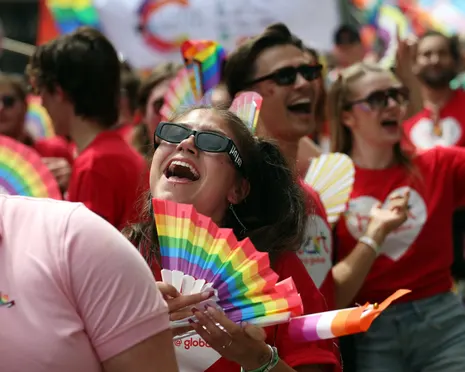
Tens of thousands march in London – On a sweltering Saturday afternoon, central London buzzed with energy as thousands gathered for the annual Pride parade, a vibrant celebration of LGBTQ+ identity and solidarity. The event, which draws participants from across the city and beyond, marked another year of protest, pride, and communal expression. Sadiq Khan, the mayor of London, joined the march, walking alongside attendees to symbolize his support for the cause. This year’s procession stretched from Hyde Park Corner to Whitehall, passing through Piccadilly, and featured participants from over 600 organizations, with estimates suggesting more than 35,000 individuals took part.
A Rallying Cry for Equality
As the parade moved through the streets, many marchers carried rainbow flags, a visual testament to the community’s enduring spirit. Julian Hows, a 70-year-old activist at the front of the march, emphasized the significance of the event. “Pride is important because it needs to have an underlying level of protest,” he explained. “The freedoms we have can so easily be taken away, and it’s crucial to keep pushing for more.” His words echoed the broader message of the day: that while progress has been made, the fight for LGBTQ+ rights remains ongoing.
“Pride is important because it needs to have an underlying level of protest, and you can see the freedoms that we have can so easily be taken away. We also always need to push further because there’s always somewhere where our rights are being taken away.”
The organizers highlighted the event’s role in addressing pressing issues facing the LGBTQ+ community. A spokesperson noted that the urgency of the moment is undeniable, citing statistics such as NHS gender-affirming care waiting lists exceeding four years in some regions. Additionally, the absence of a comprehensive legal ban on conversion therapy, despite a 2018 government pledge, has sparked concerns. “These gaps in care, protection, and safe spaces are unfolding amid continued hostility,” the spokesperson added, referencing Home Office data showing over 18,000 hate crimes related to sexual orientation reported in 2025.
Historical Roots and Modern Challenges
The London Pride parade traces its origins back to July 1972, when the first official march took place, inspired by the Stonewall uprising in New York three years earlier. This year’s event, however, faced some scrutiny from within the community. Critics have raised questions about the inclusivity of the march, arguing that certain groups feel underrepresented. Meanwhile, accusations of “pinkwashing” have emerged, suggesting that some corporate sponsors benefit from their association with the event without fully committing to LGBTQ+ equality.
Rebecca Paisis, the interim chief executive of Pride in London, expressed her determination to ensure the event remains a beacon of unity. “Our movement has always been built on many voices becoming one united front,” she stated. “From the people who marched in 1972 to those joining us for the first time this year, that’s where our power lies.” She emphasized the importance of collective action, noting that the community’s resilience is often tested by adversity but is also its greatest strength.
“Our movement has always been built on many voices becoming one united front – from the people who marched in 1972 to those joining us for the first time this year. That’s where our power lies. As LGBTQ+ people, we’ve never been strangers to adversity, but neither are we strangers to collective action.”
Despite its history and widespread participation, the London Pride parade has encountered challenges in recent years. Some LGBTQ+ activists have distanced themselves from the event, citing concerns about sponsors’ ties to the arms trade and their role in the conflict in Gaza. These critiques have prompted a reevaluation of the march’s priorities and its ability to reflect the diverse experiences of the community. Nevertheless, the parade remains a powerful symbol of resistance and celebration, uniting people across the spectrum of gender and sexual identities.
Madonna’s Absence and the Event’s Ambitions
Organizers confirmed that Madonna would not be attending the Pride event, dispelling rumors of her participation. “In response to the rumours, we can confirm that Madonna will not be appearing or performing at Pride in London,” Pride in London stated in a social media post. The event’s focus this year was on amplifying voices through protest and cultural highlights, with two notable headliners set to perform at Trafalgar Square. The choice of performers underscored the organizers’ commitment to honoring both the historical struggles and contemporary aspirations of the LGBTQ+ community.
While Madonna’s absence was notable, the parade’s energy was undiminished. Attendees, clad in colorful attire and adorned with slogans, showcased the vibrancy of the community’s spirit. The route, which wound through London’s iconic landmarks, served as a reminder of the progress made and the challenges yet to be overcome. As the march reached its conclusion, the crowd gathered for a moment of reflection, celebrating the strides achieved while acknowledging the work that still lies ahead.
Building a Future of Inclusion
Rebecca Paisis also stressed the need for the parade to evolve, ensuring it remains a platform for all LGBTQ+ individuals. “We want to oversee the most inclusive Pride in London event yet,” she said. “This isn’t just about celebration; it’s about building a future where everyone feels seen and valued.” Her vision aligns with the event’s broader mission, which seeks to address systemic issues and promote greater awareness of LGBTQ+ rights. From the 1972 march to the present day, Pride in London has consistently aimed to be a catalyst for change, though its path has not been without obstacles.
As the sun set over the city, the parade’s impact became clear. It was more than a celebration; it was a statement of defiance and hope. The marchers, with their rainbow banners and chants, reminded London of the community’s enduring presence and its ability to adapt and thrive. Whether through protest, art, or unity, the Pride parade continues to be a vital part of the LGBTQ+ movement, even as it faces questions about its direction and inclusivity. For many, it represents not just a day of pride, but a ongoing commitment to fighting for equality in every corner of society.
The parade’s legacy is intertwined with the history of LGBTQ+ activism, from the Stonewall protests that ignited the modern movement to the present-day struggles for recognition and protection. As the marchers moved through the streets, they carried forward the torch of a community that has long been at the forefront of social change. Their presence was a testament to the power of collective action, a reminder that while challenges persist, the spirit of Pride remains unyielding.
With its roots firmly planted in history and its eyes fixed on the future, the London Pride parade continues to inspire. It is a celebration of identity, a call to action, and a reaffirmation of the community’s strength. As the event drew to a close, the message was clear: the fight for LGBTQ+ rights is far from over, but the community remains united in its pursuit of a more inclusive world.