South Korea to train half a million military personnel to become ‘drone warriors’
South Korea to train half a million – South Korea is undergoing a major transformation in its military strategy, with plans to equip all of its armed forces with drone operation skills. This initiative, announced by the country’s defense minister, Ahn Gyu-back, aims to make drones an essential tool for every soldier, akin to a personal firearm. The overhaul reflects a growing recognition of the strategic importance of unmanned systems in modern combat, as evidenced by recent conflicts in Ukraine and the Middle East.
From traditional warfare to drone-centric operations
Speaking at a press briefing on Friday, Ahn emphasized that the integration of drones into military training would redefine South Korea’s approach to defense. “All soldiers should be able to use drones like a second personal firearm,” he stated, underscoring the ministry’s commitment to making drone technology a cornerstone of its military capabilities. This push comes as global conflicts increasingly highlight the transformative role of unmanned aerial vehicles (UAVs) in altering battlefield dynamics.
“All soldiers should be able to use drones like a second personal firearm,” Ahn Gyu-back said on Friday.
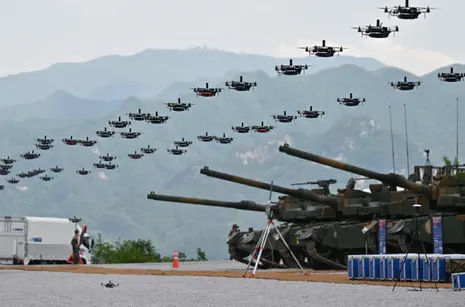
The plan targets 500,000 authorized military personnel across the army, navy, air force, and marines. By the end of 2026, the ministry will acquire approximately 11,000 commercial drones for training, with projections of 60,000 by 2029. Additionally, over 20,000 low-cost, disposable combat drones are expected to be deployed by 2030. These numbers reflect a strategic shift toward quantity as a means of bolstering operational flexibility and response times.
Drone warfare’s global influence
The decision to prioritize drone training is driven by the success of UAVs in recent wars, which have demonstrated their ability to outmaneuver traditional defenses and deliver precision strikes. Ahn pointed to the use of drones in Ukraine and the Middle East as proof of their impact, noting that their low cost and scalability have made them a “gamechanger on the battlefield.” He also warned that North Korea is actively enhancing its own drone capabilities, posing a direct threat to both military and civilian infrastructure in the South.
“Low-cost drones operated in large numbers are fundamentally changing the nature of warfare,” Ahn said.
North Korea’s advancements in drone technology are attributed to its military collaboration with Russia. Analysts suggest that this partnership has granted Pyongyang access to battlefield data and tactics, accelerating its development of drone systems. The country’s deployment of thousands of troops in Ukraine has provided firsthand experience with drone warfare, enabling it to refine its strategies and weaponize the technology effectively.
Domestically developed systems gain momentum
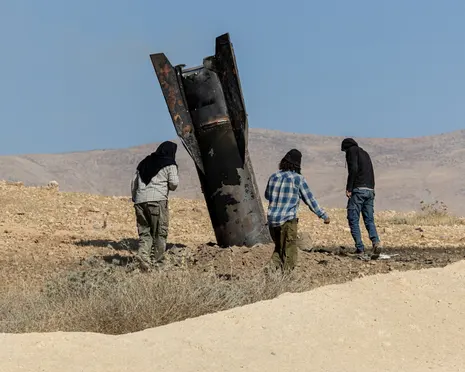
As part of its broader strategy, South Korea is also fast-tracking the development of a long-range loitering munition known as K-Lucas. This system is modeled after the American Lucas drone, which was reverse-engineered from Iran’s Shahed-136 suicide drone. Russia’s extensive use of Shahed-136 in Ukraine has further inspired South Korea’s efforts to create a comparable, cost-effective solution.
The K-Lucas project highlights the country’s ambition to reduce reliance on foreign technology while enhancing its strategic options. With a focus on affordability and adaptability, the system is designed to operate in a range of environments, from urban settings to open battlefields. This development is part of a larger initiative to ensure South Korea’s military remains agile in the face of evolving threats.
Countering rising drone threats
Alongside training personnel, South Korea is investing in counter-drone technologies, including laser and high-power microwave weapons. These systems are intended to neutralize enemy drones before they can cause damage, addressing a critical vulnerability exposed during a notable incident in 2022. At that time, five North Korean drones infiltrated South Korean airspace, with one entering the no-fly zone above the presidential office in Seoul.
The event was a significant embarrassment for Seoul’s security forces, as jets and attack helicopters scrambled to intercept the drones. Despite firing around 100 rounds, the military failed to bring down any of the intruders. This incident underscored the need for a more robust drone defense infrastructure, prompting the ministry to accelerate its training programs and technological upgrades.
North Korea’s growing arsenal
North Korea’s military capabilities have expanded rapidly, with recent tests showcasing its progress in missile and artillery systems. On Friday, the country announced that leader Kim Jong-un had overseen trials of tactical ballistic missiles and an upgraded rocket artillery system capable of reaching 90 kilometers. These developments are framed as efforts to strengthen firepower along the border with South Korea.
“Low-cost drones operated in large numbers are fundamentally changing the nature of warfare,” Ahn said.
Kim Jong-un has also emphasized the importance of nuclear expansion, calling it the “most correct and unique way” to address global instability. His pledge to grow the nuclear arsenal at an exponential rate signals a long-term vision for deterrence. Analysts note that South Korea’s drone strategy is part of a broader effort to counter North Korea’s growing influence, both in conventional warfare and nuclear capabilities.
The military’s focus on drones aligns with the broader geopolitical context of the Korean peninsula. With North Korea’s drone forces becoming more sophisticated and its conventional arsenal expanding, South Korea is positioning itself to maintain a strategic edge. The combination of training, procurement, and counter-drone systems aims to create a comprehensive defense framework that can adapt to any scenario.
A future shaped by aerial dominance
As South Korea prepares for the future of warfare, its investment in drone technology marks a pivotal shift. By the end of this year, the acquisition of 11,000 commercial drones will lay the groundwork for a larger force, while the 20,000 disposable combat drones by 2030 will ensure rapid deployment capabilities. This approach not only enhances tactical flexibility but also reduces the financial burden of maintaining large fleets of manned aircraft.
Experts suggest that the program’s success will depend on the integration of training with real-time data and advanced analytics. The ability to operate drones effectively in diverse conditions, from mountainous terrain to coastal regions, will require both technical expertise and strategic coordination. South Korea’s commitment to this transformation reflects its awareness of the changing landscape of modern conflict, where unmanned systems are no longer a luxury but a necessity.
With the training program set to begin soon, the military’s focus on drones is expected to accelerate. This shift may redefine the roles of soldiers, emphasizing remote operation and situational awareness over traditional combat skills. As the country invests in both offensive and defensive capabilities, its drone warriors will play a central role in shaping the future of warfare on the Korean peninsula and beyond.