France and Germany Abandon Joint Project to Build European Fighter Jet
Wanderstayfinder.com – European defense cooperation has taken a significant hit as France and Germany have ended their shared initiative to develop a next-generation fighter jet, officials confirmed. The decision, announced following months of discord between the two nations’ key defense firms, marks a setback for the continent’s ambitions to create a unified military aviation program. This development comes amid growing tensions over the future direction of European defense strategies and the role of major powers like the United States and Russia in shaping regional security frameworks.
The Origins of FCAS
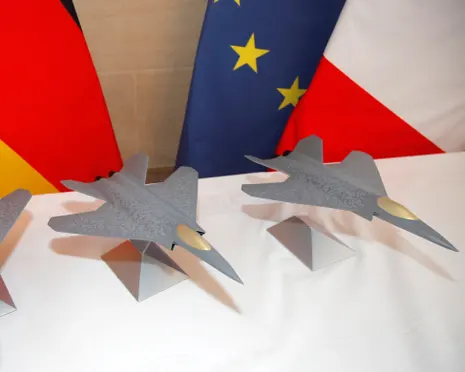
The Future Combat Air System (FCAS) was launched in 2017 by then-German chancellor Angela Merkel and French president Emmanuel Macron as a cornerstone of European defense integration. The project aimed to replace aging aircraft fleets, including France’s Rafale jets and Germany’s Eurofighter Typhoon, with a new European design set to be operational by 2040. Initially, the plan was hailed as a bold step toward reducing reliance on external defense suppliers and strengthening strategic autonomy within the bloc.
At the heart of the effort was a vision to develop a single, advanced combat platform that would serve as the backbone of a broader network incorporating drones and a secure data infrastructure. This system was designed to offer a cohesive defense architecture, capable of addressing evolving threats in the 21st century. However, the path to realization has been fraught with challenges, particularly as disagreements between the project’s leading entities have deepened over time.
Leadership and Control Disputes
A key point of contention has been the question of who will lead the development of the fighter jet. France’s Dassault Aviation has pushed for a dominant role in steering the project, arguing that maintaining control over intellectual property is critical to preserving its competitive edge. Meanwhile, Airbus, which represents German and Spanish interests, has advocated for a more balanced partnership, emphasizing the need for technology sharing and collaborative management.
Officials in Berlin stated that the two leaders, Macron and Merz, had reached a mutual understanding that the companies involved could not reconcile their differing priorities. “They acknowledge this reality,” said a spokesperson, underscoring the decision as a culmination of persistent disputes. The French government, in particular, had expressed concerns over Airbus’s insistence on equal partnership, fearing it might dilute France’s influence in the program.
Complicating matters further has been the debate over the jet’s design. France has long championed a unified European model, while Germany has argued that its military requirements differ significantly. German officials highlighted that French aircraft, which must carry nuclear weapons and operate from aircraft carriers, have unique operational needs that may not align with Germany’s focus on land-based and multi-role capabilities. This divergence has made it difficult to agree on a common vision for the project.
Implications for European Defense
The collapse of FCAS has raised questions about the future of European defense collaboration, especially as the continent has faced years of underfunding and shifting geopolitical priorities. With Russia posing a growing threat and the United States showing signs of reduced commitment, the need for a unified European defense effort has never been more urgent. However, the breakdown of this joint venture has cast doubt on the ability of France and Germany to lead such initiatives.
Despite the termination of the fighter jet component, European sources suggested that the program’s other elements—drones and a high-security combat data cloud—might still proceed. The German government emphasized that the core of FCAS would remain intact, describing it as a “nervous system that networks aircraft, drones, and other components into an integrated whole.” This distinction suggests that the project may not be entirely abandoned, though its scope could be significantly scaled back.
Macron’s office, however, did not immediately comment on the decision. The French leader is expected to balance the outcome of this high-profile project against his broader political agenda, particularly as elections are scheduled for next year. A positive resolution from the FCAS initiative could be seen as a way to highlight achievements during his campaign, even if the project itself is no longer viable in its original form.
Behind the Decision: Diplomatic and Technical Struggles
The decision to terminate FCAS followed a series of failed attempts to bridge the gap between the two nations. German government sources revealed that Merz and Macron had discussed the move on the sidelines of a summit with western Balkans leaders in Montenegro, where the final decision was announced. Both leaders had previously expressed optimism about the project’s success, but their confidence waned as the rift between Paris and Berlin became increasingly evident.
Efforts to salvage the program included the appointment of mediators from each country in March, tasked with proposing solutions to the deadlock. However, these intermediaries were unable to resolve the fundamental disagreements, with Dassault’s CEO reportedly stating that the company could manage the project independently. “The company could handle it alone and did not want it to be ‘co-managed,’” the executive told AFP, signaling a reluctance to cede control.
The abandonment of FCAS has also sparked discussions about the future of the European aerospace industry. Airbus and Dassault, while disappointed, may now pursue separate initiatives to meet their respective national needs. This shift could have long-term consequences for the continent’s ability to develop cutting-edge military technology in a coordinated manner. Analysts warn that the loss of this collaborative model may force individual countries to invest more heavily in their own programs, potentially fragmenting the European defense market.
As the project ends, the focus will turn to how the remaining components—drones and the combat data cloud—can be developed without the unified framework that FCAS provided. The German government has expressed hope that these elements, which are critical for modern warfare, will continue to be pursued as a European effort. “The actual core of FCAS is to be continued as a European system,” a source noted, highlighting the importance of maintaining technological cohesion even as the fighter jet component is shelved.
The decision reflects a broader trend of divergence in European defense priorities, driven by national interests and evolving security challenges. While France and Germany have been key players in the continent’s defense cooperation, their inability to align on this project signals a shift in the balance of power. The future of European military integration now depends on whether other nations can step in to fill the void left by the abandoned initiative.
With the FCAS project officially terminated, the European defense landscape has entered a new phase. The outcome underscores the difficulties of creating a unified military strategy in a fragmented political environment, but it also opens the door for alternative approaches. As France and Germany move forward with their separate paths, the continent’s defense industry will need to adapt to a new era of competition and cooperation.