Japan’s Kumamoto Region Faces Mounting Crisis After Powerful Seismic Event
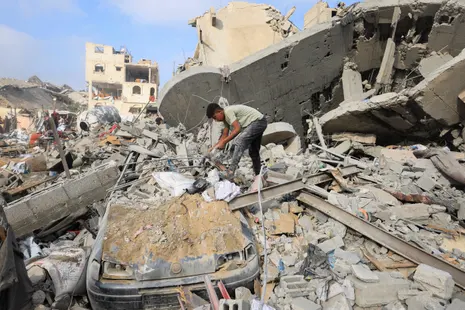
Wanderstayfinder.com – Rescue operations continue across southwestern Japan following a devastating 6.8-magnitude earthquake that struck Kumamoto prefecture on Tuesday. The confirmed death toll has now climbed to thirty individuals, with search teams working tirelessly to locate survivors buried beneath collapsed structures. Emergency personnel are focusing their efforts on multiple locations, including a severely damaged shopping complex, a paper manufacturing facility, and numerous residential buildings that have been reduced to rubble.
The seismic event, which occurred on the island of Kyushu, caused injuries to at least sixty-two people according to local government records. Deployment of approximately five thousand Self-Defence Forces members to the affected area has been complicated by challenging weather conditions. Officials reported that temperatures reached as high as thirty-five degrees Celsius on Thursday, creating additional difficulties for rescue workers operating in the heat. Compounding these challenges, a secondary earthquake measuring 5.8 on the magnitude scale struck overnight, further disrupting ongoing recovery operations.
Shopping Centre Tragedy and Factory Collapse
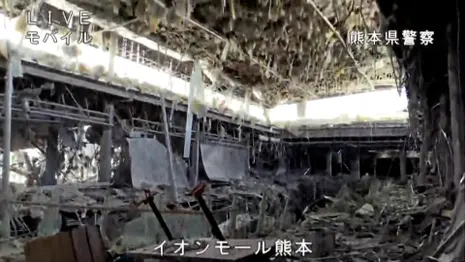
At the Aeon shopping centre in Kashima town, roughly one hundred and seventy rescue workers are combing through debris. The facility was crowded with thousands of shoppers when the earthquake struck. Company representatives stated that approximately three thousand customers were successfully moved to a nearby parking area before a gas explosion erupted in a separate section of the building. Tragically, six of the twelve individuals extracted from the wreckage have succumbed to their injuries. According to Aeon, all those caught in the blast were employees who had returned to the premises following the initial evacuation order.
The retail chain’s president offered a public apology during a Wednesday press briefing, acknowledging that the company had not foreseen the explosion. Investigators are currently examining the cause of the incident. Video footage broadcast by Japanese news organizations captured scenes inside the shopping centre, revealing portions of the ceiling that had fallen inward. Helmeted and masked rescue teams navigated through scattered metal fragments and other debris as they continued their search.
Meanwhile, at the Nippon Paper mill in Yatsushiro, police and military personnel are searching for one missing worker among the wreckage. A chimney structure collapsed at the facility, trapping ten individuals. Eight of those trapped perished, while two sustained injuries. In a notable development, the Vietnamese government confirmed the death of a Vietnamese technical intern who was killed when a crane toppled onto him at the factory. This marks the first reported fatality among foreign nationals.
Infrastructure Damage and Relief Efforts
Kumamoto officials reported that nearly twenty-three thousand residences lost electrical power, while seventy-five thousand homes were without running water. Approximately fifteen thousand residents have been relocated to four hundred emergency shelters across the region. Defence Minister Shinjiro Koizumi announced on Wednesday evening that the Self-Defence Forces are transporting coolers to shelters via aircraft, while naval vessels are delivering essential food and water supplies.
“We’re doing everything possible to make saving lives a priority, making efforts to deliver life-saving supplies, beginning with water,” Shinjiro Koizumi stated during his address.
Aerial surveillance footage captured by police revealed several homes completely flattened, with some structures having crumbled into nearby riverbeds. The earthquake achieved the maximum rating of seven on Japan’s seven-level shindo scale. Kanzo Matsumoto, a seventy-three-year-old operator of a luxury hot spring inn in Yatsushiro, described the experience to Agence France-Presse: “It was the strongest quake I have ever experienced.”
The national Geospatial Information Authority reported that ground displacement reached eighty-seven centimetres during the seismic event. Yatsushiro town hall sustained damage to its base-isolation system, an earthquake-resistant technology that protects buildings by cushioning foundations against intense shaking. This system had been reconstructed following a catastrophic earthquake in 2016.
Industrial Impact and Historical Context
Several automotive and semiconductor manufacturers operating facilities in Kyushu have temporarily suspended production activities. Toyota announced it would pause operations at three of its plants while evaluating the earthquake’s effects on suppliers and logistics networks. Honda has halted operations at its motorcycle manufacturing plant through Friday. Taiwan’s TSMC has resumed operations at its Kumamoto facility, whereas Sony, Renesas Electronics, and Tokyo Electron have maintained production halts.
Kyushu serves as a critical hub for Japan’s automotive and semiconductor sectors, which collectively contribute approximately twenty percent of the region’s industrial output. Industry analysts indicated that the production stoppages appear to be primarily precautionary measures rather than responses to direct damage to manufacturing facilities.
Kumamoto experienced two devastating earthquakes in 2016 that claimed 273 lives and injured more than 2,800 people. Japan’s archipelago, which is home to approximately 125 million residents, typically records hundreds of seismic events annually and accounts for roughly eighteen percent of global earthquakes.
With Associated Press, Reuters and Agence France-Presse
Related Reading
Frequently Asked Questions
What is Death toll in Japan earthquake rises?
Death toll in Japan earthquake rises is the main topic of this guide. The article explains the context, practical details, and next steps readers should understand.
Why does Death toll in Japan earthquake rises matter?
Death toll in Japan earthquake rises matters because readers are looking for a useful answer, not just a short summary. Good content should match search intent and help them decide what to do next.