USS Abraham Lincoln sailors tried to jump overboard amid extended deployment – reports

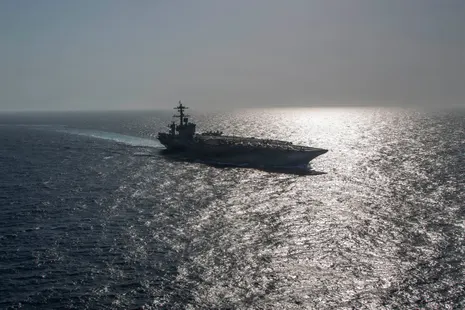
Table of Contents
USS Abraham Lincoln Sailors Tried to Jump Overboard During Extended Deployment
Wanderstayfinder.com – Concerns are growing aboard the USS Abraham Lincoln as sailors tried to jump overboard amid mounting pressures from an extended deployment. The aircraft carrier is currently navigating through what has become a historic stretch of service, tied directly to ongoing hostilities with Iran. According to coverage from prominent military publications, multiple crew members have attempted to leap overboard as deteriorating living conditions push the vessel’s 5,000 sailors and marines toward their limits.
Record-Breaking Time at Sea
The carrier’s crew has now spent nine consecutive months aboard the warship, accumulating 250 straight days without setting foot on land. This achievement marks a modern milestone for aircraft carriers, which typically cycle through shorter deployment periods. The extended timeline was originally scheduled to conclude in May, but repeated extensions have kept the vessel in active service throughout the conflict.
The deployment’s unusual duration stems from shifting strategic priorities. The warship departed San Diego on November 21 with plans to operate in the Pacific region. However, the outbreak of hostilities between the United States, Israel, and Iran prompted an immediate redirection to Middle Eastern waters. Since that pivot, the crew has experienced only two brief periods on land—time spent in Guam during December and a short stay in Oman in July.
Families Voice Deepening Concerns
Emotional gatherings have become increasingly common as families attempt to understand what their loved ones are experiencing. During a town hall meeting in San Diego last Thursday, approximately 200 family members confronted navy leadership with their anxieties. Acting Navy Secretary Hung Cao and other senior officials attended the session, where frustration was palpable.
One spouse shared a message her husband had sent that morning: “he hopes he doesn’t wake up tomorrow.” Another woman at the meeting expressed her sense of betrayal, telling Cao that the navy had “broken trust between us and the leadership.” These sentiments reflect a broader pattern of families feeling disconnected from decision-makers who determine deployment conditions.
Overboard Attempts and Suicidal Ideation
The Navy Times has documented several thwarted suicide attempts aboard the carrier during this deployment. Annabelle Loma described her husband’s experience to the publication, explaining that he attempted to jump overboard after his time at sea continued to lengthen. “He’s scared. He thinks he’ll get a dishonorable discharge, and just because he was burnt out his 13-year career is ruined, just like that,” she explained.
Another sailor’s wife recounted a separate incident in which her husband intervened to prevent a fellow crew member from jumping overboard. He grabbed the distressed sailor and pulled him back onto the deck, averting what could have been a tragedy.
These men and women signed up to serve their country. The least their country owes them is hot water, a working toilet and a real meal. Hegseth cannot even manage that, and he has the nerve to look their families in the eye and call them liars.
Deteriorating Living Conditions
Congressman Mike Levin of California has been vocal about the harsh reality facing Lincoln’s crew. During the vessel’s fifth month of combat operations against Iran, Levin took to social media to describe the daily struggles of sailors. He characterized their living situation as “moldy showers, broken toilets, laundry down for weeks, long stretches with no hot water, a meal that came down to half a cup of rice and two tortillas. No soap, deodorant, or toothpaste.”
Levin’s criticism intensified after Defense Secretary Pete Hegseth dismissed earlier reports of poor conditions as “more fake news.” The congressman’s response highlighted the disconnect between official statements and the lived experience of service members. Meanwhile, Jason Crow, a Democratic representative from Colorado and former Army Ranger who served in Afghanistan and Iraq, warned that the strain on both sailors and their families is “building week by week.”
Official Navy Response
Following publication of reports regarding overboard attempts, a Navy official provided clarification. The statement acknowledged that “extended deployments place a significant strain on our service members and their families, and we are grateful for the resilience and sacrifices they make.” The official emphasized that the health and wellbeing of every Lincoln sailor remains a priority.
According to the official, “Based on information available to the command, we have not identified an increase in reported overboard incidents compared to previous deployments.” However, the statement did not deny that multiple sailors tried to jump overboard during this extended mission, confirming that the incidents are being taken seriously by naval leadership.
Frequently Asked Questions
How long has the USS Abraham Lincoln been deployed?
The carrier has been deployed for nine consecutive months, totaling 250 straight days at sea. The deployment was originally scheduled to end in May but was extended due to ongoing hostilities with Iran.
What are the living conditions like aboard the carrier?
Sailors have reported moldy showers, broken toilets, extended periods without hot water, and limited food supplies. Some meals have consisted of only half a cup of rice and two tortillas, with no soap, deodorant, or toothpaste available.
How many sailors tried to jump overboard?
Multiple sailors have attempted to jump overboard during the deployment. The Navy Times has documented several thwarted suicide attempts, with at least two separate incidents involving crew members trying to leap overboard.
What is the Navy’s official response to these incidents?
The Navy has acknowledged that extended deployments place significant strain on service members and their families. Officials state that they have not identified an increase in reported overboard incidents compared to previous deployments, though they confirm that multiple sailors tried to jump overboard during this mission.