Trump Launches Strikes Against Iran After Helicopter Incident
Wanderstayfinder.com – Following Donald Trump’s assertion that Iran was responsible for the downing of a US military helicopter near the Strait of Hormuz, the United States initiated a series of strikes against the nation. The attacks, carried out by the US military, marked a significant escalation in tensions between the two countries, threatening to unravel the fragile ceasefire that had been declared in April. Iranian officials swiftly responded, accusing the US of retaliating with disproportionate force and declaring that their Gulf neighbors now share a “legal and moral responsibility” to counter American and Israeli aggression.
Iran’s Retaliatory Strikes Target Key Allies
On Wednesday, Iran launched a coordinated series of counterattacks, hitting targets in Kuwait, Bahrain, and Jordan. According to Iranian media, the Revolutionary Guards deployed long-range missiles to strike the US al-Azraq base in Jordan, while Kuwait reported its air defenses had intercepted drones targeting the Ali Al Salem base, close to the Iraqi border. The strikes reportedly focused on facilities housing F-35 fighter jets and a command-and-control center, underscoring Iran’s efforts to disrupt US military operations in the region.
“We will not allow any aggression against our forces to go unanswered,” stated Iranian Foreign Minister Abbas Araghchi in a social media post, emphasizing Iran’s determination to defend its interests.
Despite the attacks, US officials confirmed that most of Iran’s missiles and drones were intercepted. Jordan’s armed forces reported neutralizing five projectiles before they reached their intended targets. The US Central Command described the mission as a “proportional response” to “unjustified Iranian aggression,” signaling that the strikes were meant to deter further escalations without plunging the region into full-scale war.
The Helicopter Downing and Its Aftermath
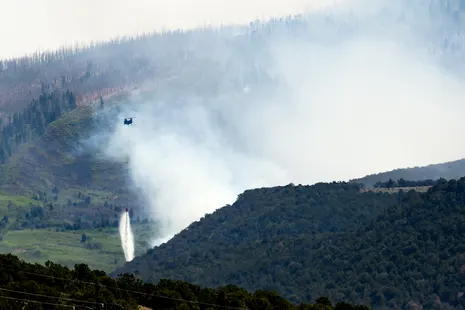
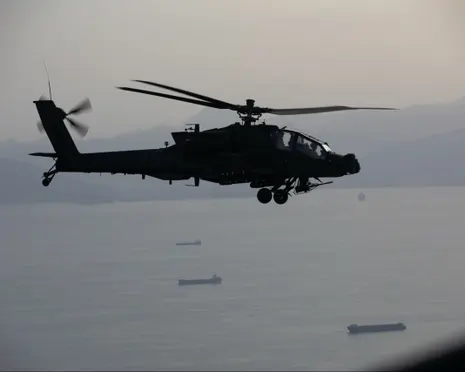
The incident occurred at approximately 3:30am local time on Tuesday off the coast of Oman, during a routine patrol. A US military helicopter, an AH-64 Apache gunship, crashed after colliding with an Iranian drone. While it remains unclear whether the collision was intentional, a US official confirmed the event was under investigation. The two crew members were later rescued through an unprecedented operation involving an unmanned drone boat, a detail highlighted by Centcom spokesperson Capt. Tim Hawkins as a first in US military history.
“The pilot is fine,” Trump remarked in an interview with the Wall Street Journal, downplaying the incident as “not a big deal.”
Earlier that day, Trump had accused Iran of deliberately targeting the helicopter, asserting that the US could not permit such an act to remain unaddressed. His post on Truth Social platform framed the crash as evidence of Iran’s aggression, reigniting concerns about the stability of the April ceasefire. However, US officials have since tempered the narrative, stating that the collision may have been an accident rather than a calculated strike.
Strategic Context and Economic Fallout
The conflict has intensified amid broader regional tensions, with Iran and Israel exchanging fire on Monday, the latest in a series of confrontations that have strained the ceasefire. Iranian state television reported that Israeli attacks had killed at least two members of Iran’s air defense units, further fueling the cycle of retaliation. Since February 28, when the US and Iran began striking each other, the war has disrupted global energy markets, driving up prices for oil and other essentials, and increasing the cost of everyday goods for millions.
While the April ceasefire aimed to provide a temporary pause, it has failed to achieve lasting peace. Israel’s ongoing military campaign in Lebanon against the Iranian-backed Hezbollah militia has compounded the challenges of de-escalation. Trump, who previously expressed optimism about reaching a deal, has now shifted toward a more confrontational stance, with the latest strikes reflecting his belief that Iran’s actions justify a stronger response.
The Role of Apache Helicopters in the Conflict
AH-64 Apache helicopters have played a critical role in US military operations, particularly in enforcing a blockade on Iranian crude oil shipments. Their presence in the region has been vital for monitoring Iranian activity and supporting allied forces. In addition to their use by the US, the helicopters have been deployed by the UAE to intercept Iranian drones, demonstrating their strategic importance across the Gulf.
The downing of the Apache gunship has raised questions about the effectiveness of these aircraft in the current conflict. With Iran’s drones posing a growing threat, the US military’s ability to respond quickly has been tested. The recent rescue operation, using a 24ft (7.3-meter) drone boat known as a Corsair, showcased innovative tactics in mitigating the risks of such incidents.
Quotes and Reactions from Both Sides
Trump’s insistence on blaming Iran for the helicopter incident has drawn sharp responses from Iranian leaders. In a social media post, Araghchi warned that Iran would “leave no attack or threat unanswered,” urging the US to consider withdrawing from the region if it sought safety. The Iranian foreign ministry also emphasized the importance of regional allies in shielding against external threats, framing the conflict as a test of their collective resolve.
“Leave our region if you want to be safe,” Araghchi wrote, echoing Iran’s broader stance of defiance against Western powers.
Meanwhile, the US military has sought to balance its actions with a message of restraint. Centcom’s statement underscored that the strikes were meant to be proportional, aiming to deter Iran without escalating to full-scale war. This approach aligns with the broader goal of maintaining stability in the region while applying pressure to secure a permanent ceasefire.
As the conflict continues, the incident serves as a reminder of the precarious nature of diplomatic efforts. Trump’s reversal from optimism to action highlights the challenges of negotiating peace amid rising tensions. With both sides demonstrating a willingness to retaliate, the path to resolution remains uncertain, and the global economy continues to feel the ripple effects of the ongoing crisis.