‘No more!!!’: Trump lashes out after US-Canada talks devolve into trade war

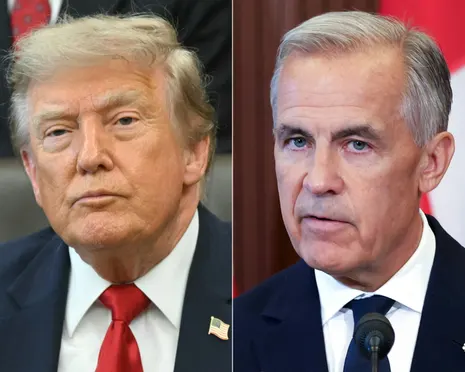
Table of Contents
Trade War Ignites Between Washington and Ottawa as Negotiations Collapse
Wanderstayfinder.com – The two closest trading partners in North America have slid into open economic confrontation after a final round of talks in Washington ended in deadlock on Friday. Within hours of the breakdown, Donald Trump took to social media to deliver a blistering rebuke of his northern neighbour, framing the dispute as a matter of principle rather than mere tariff arithmetic.
“Canada wants the benefits of being a State, without being one!!!”
The president continued, accusing Ottawa of levying “massive amounts of tariffs” on American agricultural producers over many years, before appending a emphatic three-word verdict: “No more!!!”
The Tariff Hammer Falls
The diplomatic rupture was accompanied by concrete policy action. Washington imposed 50 percent duties on roughly $20 billion (£14.6 billion) of Canadian imports, with the levies taking effect on Saturday. The affected product list spans an unusually wide spectrum — from hockey sticks to tongue depressors — underscoring how deeply intertwined the two economies remain despite decades of free-trade arrangements.
Mark Carney, Canada’s prime minister, responded swiftly, pledging to mirror the American measures “dollar for dollar.” His reciprocal tariffs, targeting steel, dairy products, household appliances, and electronics, are slated to take effect from 8 September.
“You’re at War When You’re Attacked”
Speaking to Canadian journalists in Ottawa, Carney used unambiguous language to describe the new reality.
“You’re at war when you’re attacked, and we got attacked. We cannot accept what they’ve offered and we will not give what they’ve asked.”
He attributed the collapse to a strategic error on the American side, arguing that Trump “miscalculated” by escalating his tariff offensive rather than seeking compromise.
On the US side, Jamieson Greer, the trade representative, framed the move as a necessary response to a full year of Canadian retaliatory measures. Appearing on Fox & Friends Weekend, he stated:
“We’ve said enough and so we’ve taken countermeasures. Our interest is in protecting American workers and protecting American supply chains.”
Small Businesses Brace for Impact
Trade economists expect modest job losses in affected sectors, but the more immediate shock is political: fresh friction between neighbours who share the longest undefended border on the planet. Dan Kelly, president of the Canadian Federation of Independent Business, warned that approximately 40 percent of small Canadian exporters will face direct tariff exposure. Nearly one-third of those firms anticipate revenue declines of 50 percent or greater.
For farmers in border states, the timing is particularly painful. American producers who had already absorbed years of Canadian duties now face a reciprocal wall that could strand shipments at the border and disrupt supply chains built over decades.
Domestic Backlash in Border States
The escalation drew sharp criticism from Democratic lawmakers and governors in states that share a land border with Canada. New York governor Kathy Hochul posted on X:
“Needlessly picking fights with our allies and raising prices here at home. That’s Trump’s economic policy in a nutshell.”
Minnesota senator Amy Klobuchar highlighted the disproportionate burden on small operators and rural households, noting that Canada ranks as the state’s single largest trading partner.
“Minnesotans are paying for Trump’s chaos.”
Similar concerns were voiced by officials in Washington state, where cross-border commerce in timber, seafood, and manufactured goods forms a significant share of local economic activity.
USMCA Hangs in the Balance
The confrontation has cast doubt on the future of the United States–Mexico–Canada Agreement, the trilateral pact governing approximately $2 trillion in annual goods and services flows. Trump signed the deal during his first term, yet this summer he declined to renew it after both Ottawa and Mexico City formally requested a further 16-year extension.
Pressed on how the bilateral collapse would ripple through the trilateral framework, Carney offered a terse assessment: “certainly not good news.”
Analysts note that USMCA’s dispute-resolution mechanisms were designed precisely for moments like this. Their continued viability now depends on whether either capital is willing to keep the institutional architecture intact or whether both sides treat the pact as a bargaining chip in a broader geopolitical contest.
A Fracturing of Public Sentiment
The trade fight sits atop a wider deterioration in bilateral goodwill. Tourism flows have already contracted: Canadians entering New York state fell by 21 percent in 2025, representing roughly three million fewer visits compared with the prior year. A petition calling for the expulsion of US ambassador Pete Hoekstra from Canada has amassed approximately 248,000 signatures since late July, per Associated Press reporting.
A Globe and Mail poll conducted earlier this year found that only 9 percent of Canadians regarded the United States as a “trustworthy ally,” while 51 percent of respondents said they had cancelled planned American trips in reaction to Trump’s public remarks.
Carney himself was elected to the premiership last year on a platform explicitly centred on mounting a “fightback” against what he characterised as American economic coercion. Previously governor of the Bank of England, he brought central-banking experience to a role now defined by tariff diplomacy. Trump, meanwhile, has periodically floated the notion of absorbing Canada as a 51st state wielding “economic force” — a remark that has done little to soften Ottawa’s resolve.
As both governments prepare for the next round of reciprocal measures, the question facing policymakers on either side of the 49th parallel is no longer whether tariffs will be matched, but whether the institutional scaffolding of North American trade can survive the political gravity now pulling the two nations apart.
Related Reading
Frequently Asked Questions
What is No more?
No more is the main topic of this guide. The article explains the context, practical details, and next steps readers should understand.
Why does No more matter?
No more matters because readers are looking for a useful answer, not just a short summary. Good content should match search intent and help them decide what to do next.