Eight Presumed Dead After B-52 Bomber Crash at California Air Force Base
Wanderstayfinder.com – Monday morning saw a tragic event unfold at Edwards Air Force Base in California’s Mojave Desert, where a B-52 bomber crashed shortly after liftoff, leaving eight people unaccounted for and presumed deceased, according to officials. The incident occurred at approximately 11:20 a.m., and the base released a statement later that day confirming the crash. “An Air Force B-52 Stratofortress, carrying eight individuals, came down during a routine test mission shortly after departure,” the base said, noting that the crash appeared to be non-survivable at this stage.
Victims and Initial Response
The deceased included a mix of military personnel, government workers, and civilian contractors, as revealed by James Hayes, the deputy commander at Edwards Air Force Base. He emphasized that the identities of those killed would not be disclosed until families had been informed. “Right now, our thoughts and prayers are with the families of those who lost their loved ones,” Hayes said during a press briefing. Emergency crews were swiftly deployed to the crash site, which was located near a runway, where extensive damage to the desert terrain was evident.
“Emergency response personnel are on scene, and officials are working to account for all personnel.” – Edwards Air Force Base statement
Crash Scene and Aircraft Details
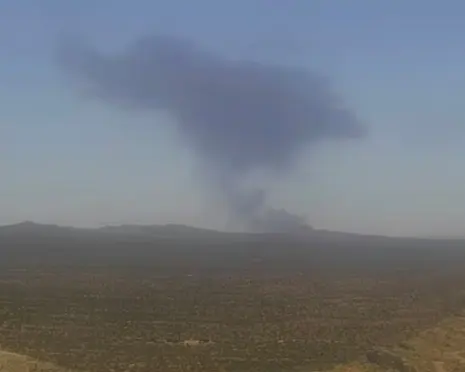
Aerial footage captured the aftermath of the crash, showing little more than smoldering debris and a plume of black smoke rising from the scorched earth. The area around the crash site was cordoned off, with emergency vehicles visible in the distance. While the military has not confirmed whether the bomber was armed at the time, the aircraft’s design allows it to carry both conventional and nuclear payloads. The B-52 Stratofortress, a long-range bomber that entered service in 1955, typically operates with a crew of five but was carrying eight people on this particular mission.
Edwards Air Force Base, a key location for military testing, has a storied history. It is the site where Chuck Yeager famously broke the sound barrier in 1947. The crash occurred during an experimental flight aimed at upgrading the plane’s radar system from analog to digital, as reported by ABC News 7. This modernization effort is part of a broader initiative to extend the operational lifespan of the B-52 fleet into the 2050s, ensuring its relevance for over a century of service.
Investigation and Safety Protocols
Authorities have initiated a safety review to determine the cause of the crash. The process will involve an accident investigation board, which will assess findings before deciding what information to share with the public. Hayes noted that the review could take several months, during which time details about the incident’s origins would be compiled. The base’s airfield was temporarily closed following the crash, and all incoming flights were redirected to nearby facilities. Visitor passes were also suspended to allow the installation to prioritize emergency response efforts.
Officials have not yet provided specifics on the crash’s cause, though aviation experts are speculating. Jeff Guzzetti, a former investigator with the Federal Aviation Administration and the National Transportation Safety Board, suggested that a flight control malfunction might have been responsible. “Given how quickly the B-52 came down after takeoff, I suspect there was a problem with the aircraft’s controllability,” he explained. The plane’s rapid descent without reaching significant altitude or distance raises questions about the nature of the failure.
Possible Causes and Expert Analysis
Guzzetti outlined several potential causes, including errors during maintenance, catastrophic engine failure, or malfunctions in the newly tested equipment. “It was definitely a controllability issue,” he stated, but added that the exact cause remains uncertain. While the crash was unexpected, testing new systems on aircraft like the B-52 is inherently risky. “Flight tests are always more dangerous than regular operations, which is why they require specialized pilots and additional safety measures,” Guzzetti said.
Despite its age, the B-52 remains a vital asset for the U.S. military, having been deployed in conflicts from the Vietnam War to recent operations in the Middle East. The modernization program, which focuses on integrating digital technology into aging systems, highlights the ongoing need to adapt these aircraft for contemporary missions. However, the incident underscores the challenges of maintaining reliability in such a long-serving platform.
Broader Implications and Next Steps
The crash has sparked discussions about the balance between innovation and safety in military aviation. While the B-52’s design has withstood decades of use, the introduction of new systems requires rigorous testing. Guzzetti noted that even minor oversights in maintenance or equipment setup can lead to critical failures, especially during high-stakes experimental flights. “It’s a complex interplay of factors, and we’re still piecing it together,” he remarked.
As the investigation progresses, officials will focus on determining the root cause of the crash and implementing recommendations to prevent similar incidents. The closure of Edwards Air Force Base for the day has disrupted routine operations, but the base is expected to resume normal activities once the inquiry concludes. Meanwhile, the families of the victims await further updates, with the military preparing to share details as they become available.
The B-52’s legacy as a versatile and enduring aircraft is now overshadowed by this recent tragedy. Its ability to adapt to new technologies and missions has made it a cornerstone of U.S. airpower, yet this incident serves as a reminder of the risks involved in pushing the boundaries of its capabilities. With the safety review underway, the aviation community will watch closely for insights into how such a catastrophic event could occur in an aircraft that has been in service for over six decades.
Edwards Air Force Base, located approximately 100 miles north of Los Angeles, continues to play a pivotal role in military aviation research and development. The crash has not only affected the lives of those on board but has also raised questions about the safety protocols in place for experimental flights. As the investigation board delves deeper, the focus will remain on understanding the technical and operational factors that contributed to the incident.