
Hantavirus-Stricken Cruise Ship Arrives in Tenerife, Passengers Prepare for Homebound Journeys
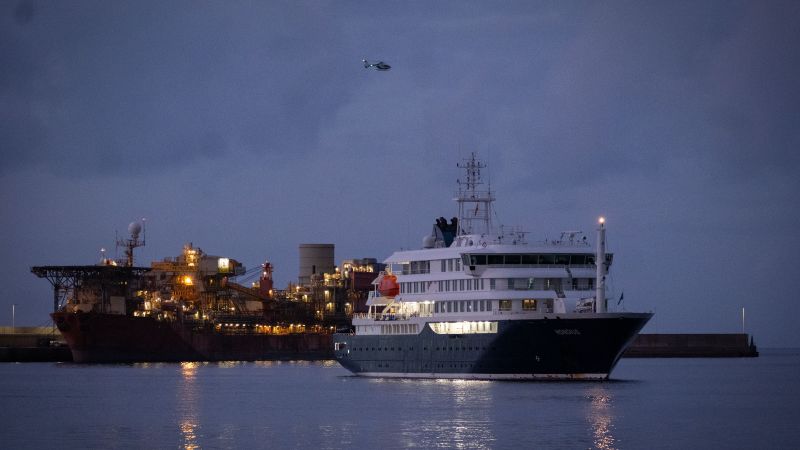
Hantavirus hit cruise ship arrives in Tenerife – The MV Hondius, the cruise vessel implicated in a recent hantavirus outbreak, has reached the Spanish island of Tenerife, where its 147 passengers are set to begin a phased departure process. This operation, described as a “meticulously coordinated evacuation,” involves collaboration between Spain and several other nations to ensure the safe transfer of affected individuals. The ship’s arrival at the Port of Granadilla in the Canary Islands marks the start of a critical phase in managing the health crisis that has unfolded during its transatlantic voyage.
As the sun rose over the port, small motorboats equipped with blinking sirens approached the MV Hondius, signaling the beginning of the disembarkation sequence. The vessel’s windows, partially obscured by curtains, revealed faint figures as a tugboat maneuvered into position beneath it. A solitary person, clad in a face mask, stood at the open doorway, while officials and medical personnel in hazmat suits gathered on the dockside, ready to conduct assessments. Spain’s health minister, Mónica García, confirmed that medical teams would board the ship shortly before dawn to perform initial tests on both passengers and crew.
“The sequence of disembarkation will be coordinated with arriving repatriation flights,” said Oceanwide Expeditions, the tour operator overseeing the evacuation. The statement highlights the complexity of the operation, which requires synchronizing the ship’s departure with the arrival of aircraft from countries such as the United States, Germany, France, Belgium, Ireland, and the Netherlands. These nations are dispatching planes to transport their citizens off the vessel, ensuring that the passengers’ return home is facilitated without delay.
The hantavirus, a rare illness typically transmitted through exposure to the urine or feces of infected rodents, has claimed three lives since the ship left Argentina last month. While the exact cause of the outbreak is still under investigation, health authorities have emphasized that the risk to the general public remains low. The virus, which can lead to severe respiratory symptoms, has prompted heightened precautions as passengers disembark. Local officials stated that the MV Hondius will anchor at a “safe distance” from the dock to minimize the spread of potential contaminants.
According to Oceanwide Expeditions, passengers will be evacuated in small groups of no more than 10 individuals at a time, organized by nationality. This approach aims to reduce crowding and allow for controlled medical oversight. The first group to leave the ship will consist of 14 Spanish passengers, who will be required to wear FFP2 masks throughout the process. García noted that these individuals, along with logistics staff and transportation personnel, will be isolated at the dockside to prevent cross-contamination.
Following the Spanish passengers, the two Dutch travelers on board will be the next to disembark. This staggered method ensures that each group receives appropriate medical attention before proceeding to their respective countries. For American passengers, the CDC has arranged for them to be transported to the University of Nebraska Medical Center, home to the National Quarantine Unit. A CDC official explained that the 17 U.S. citizens, all currently asymptomatic, will undergo preliminary evaluations at the unit and then participate in a 42-day home-based monitoring program, with daily check-ins anticipated.
The MV Hondius’s arrival has sparked concern among local workers and officials in the Canary Islands. Earlier in the week, the territory’s leader, Fernando Clavijo, expressed reservations about allowing the ship to dock, citing fears of public health risks. This sentiment has been echoed by port workers, who staged protests to highlight their frustration with the lack of prior communication about the potential dangers. The situation has raised questions about preparedness and transparency in handling such outbreaks during maritime travel.
Despite these concerns, the ship’s presence has been deemed necessary to manage the crisis. Once all passengers have been transferred, the vessel will proceed to Rotterdam, Netherlands, where the crew will disembark, and the ship will undergo a thorough disinfection process. This step is crucial to eliminate any residual virus particles and ensure the vessel is safe for future use. The WHO was first informed of the outbreak on May 2, and has since maintained that the risk to the broader population remains minimal, though the incident underscores the need for continued vigilance in global health protocols.
The repatriation process also involves logistical coordination to address the needs of passengers’ belongings. Oceanwide Expeditions confirmed that luggage will remain on board the MV Hondius during the initial evacuation and will be returned to individuals after they have completed their medical assessments. This arrangement has been designed to streamline the departure process while accommodating the additional time required for health checks.
The health minister’s comments on Saturday provided further clarity about the steps being taken to protect passengers. She stated that the first group of Spanish travelers will be taken to a military hospital, where they will reside in individual rooms with restricted access to visitors. Upon arrival, each individual will undergo a PCR test and receive a follow-up test seven days later. This protocol is intended to monitor for any signs of the virus and ensure early detection if necessary.
As the MV Hondius prepares to disperse its passengers, the focus remains on maintaining a controlled environment during the transfer. The ship’s itinerary now includes a stop in Rotterdam, where the crew will be processed separately, and the vessel will be sanitized before continuing its journey. The incident has prompted discussions about the role of cruise ships in global health emergencies, with officials stressing the importance of rapid response and clear communication to mitigate risks.
CNN has reached out to the Ports of Tenerife and Clavijo’s office for additional insights into the local response and future plans for managing similar situations. The coverage of this event has also drawn attention to the interconnectedness of international travel and public health, as the movement of people across borders can quickly amplify the spread of infectious diseases. While the MV Hondius is expected to be a focal point of this week’s efforts, its arrival in Tenerife has already set the stage for a broader conversation about preparedness in the face of such outbreaks.
The hantavirus outbreak serves as a reminder of the challenges posed by long-haul travel in the context of emerging health threats. With its unique blend of medical protocols, international cooperation, and logistical precision, the MV Hondius’s evacuation operation exemplifies how nations can work together to address crises in real time. As the passengers begin their homebound journeys, the focus shifts to monitoring their health and ensuring that the virus does not re-emerge as a larger threat. The process, though intricate, underscores the importance of swift action in safeguarding both travelers and communities along the way.





