
Livestreamer Known for Racist Content Set to Appear in Court on Attempted Murder Charges
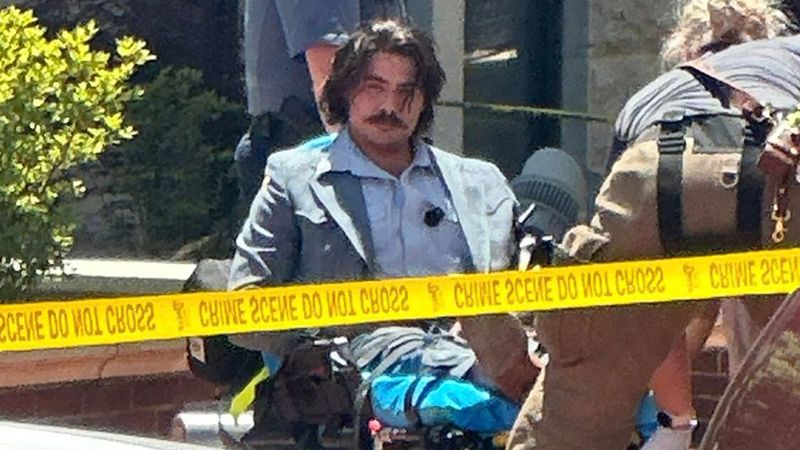
Livestreamer known for posting racist content – On Friday, Dalton Eatherly, a content creator recognized for his online videos featuring racially charged remarks, is scheduled to make an appearance in court. This follows a shooting incident that occurred outside the Montgomery County Courthouse in Clarksville, Tennessee, on Wednesday. The Tennessee District Attorney General’s Office confirmed that Eatherly, who goes by the moniker “Chud the Builder,” was taken into custody after a confrontation with an unidentified individual escalated into a firearms exchange. The details of the altercation remain under investigation, though both participants were reported in stable condition following the incident.
The Shooting at the Courthouse
The event unfolded outside the courthouse, where Eatherly and another man reportedly clashed. While authorities have not disclosed the full circumstances, the Montgomery County Sheriff’s Office stated that the confrontation led to a shooting. Both individuals were transported to nearby hospitals, with no immediate life-threatening injuries reported. The sheriff’s office further noted that “two adult males” were detained by deputies after the incident. However, the number of firearms involved and the sequence of events leading to the shooting are still being clarified by law enforcement.
Details about the victim are sparse. A witness, who described the other man being loaded into an ambulance, told the Associated Press that the individual was Black. This detail adds context to the ongoing investigation, though prosecutors have not yet provided a formal description of the victim. The court hearing scheduled for Wednesday morning, where the shooting took place, was part of a separate civil case between Eatherly and Midland Credit Management Inc. It is unclear whether he attended that proceeding.
Chud the Builder’s Racially Charged Online Presence
Eatherly’s online persona has been marked by a consistent pattern of racially inflammatory content. His social media accounts frequently feature videos in which he uses derogatory language toward Black individuals and other minority groups. In one notable instance, he referred to Black people as “chimps,” a term that has sparked controversy and criticism among viewers. This behavior is not new; his track record includes multiple instances of using force against Black individuals, as reported by the county’s court records.
The District Attorney General’s Office highlighted Eatherly’s history as a factor in the current charges. His livestreamed videos often depict him interacting with people in a confrontational manner, using racial slurs to describe others. These videos, which have garnered significant attention, suggest a broader pattern of prejudice that may have influenced the recent incident. While the exact connection between his online conduct and the courthouse shooting is still under scrutiny, the charges indicate a link between his actions and the use of a firearm in a threatening situation.
Eatherly’s statements during the livestream following the shooting provide insight into his mindset. In a video shared on social media, he recounted the event, saying that he had passed by a group of people who were “laughing” and “pointing at me.” He claimed the man in the group approached him, stating, “I have PTSD.” According to Eatherly, the individual began shouting racial slurs, prompting him to defend himself by firing a shot. “He said, ‘You start saying all that chimp out s**t to me and ‘imma hit you,’ and he hit me, he started whaling on me, even after I had to defend myself by shooting him,” he said in the video.
Previous Arrest and Legal History
Before the recent shooting, Eatherly had already faced legal action. On Saturday, he was kicked out of a restaurant in Nashville and subsequently arrested for theft of services, disorderly conduct, and resisting arrest. An affidavit from the county’s law enforcement details the incident, describing Eatherly as a livestreamer who “filmed content, including racially charged content” on social media. At the time, he was reportedly disrupting the restaurant’s atmosphere by continuing to livestream despite being asked to stop by the staff.
The affidavit states that Eatherly was told to cease live streaming and that he complied initially. However, he soon became “disruptive and started making racial statements, yelling, screaming,” and caused a scene. When confronted about his actions, he allegedly refused to pay for his $371.55 meal, stating, “I’m not paying if you are kicking me out.” This incident led to his temporary detention, though he was later released on a $5,000 bond, as per a judge’s order.
These prior actions underscore a recurring behavior of Eatherly, who has shown a tendency to escalate conflicts in public spaces. His recent arrest at the courthouse follows a similar pattern, where his verbal provocations reportedly led to physical confrontation. The legal system is now examining whether his history of prejudice played a role in the shooting, which has raised questions about the intersection of online activism and real-world violence.
Next Steps in the Legal Process
Eatherly’s next court appearance will take place at 9 a.m. local time on Friday, where he is expected to face an arraignment and bond hearing. The District Attorney General’s Office, led by Robert Nash, has confirmed the schedule, though it is unclear if Eatherly has legal representation at this stage. CNN is currently working to determine whether he has retained a lawyer for the upcoming proceedings.
The charges against Eatherly include attempted murder, employing a firearm during a dangerous felony, aggravated assault, and reckless endangerment with a deadly weapon. These allegations could have serious implications for his legal future, depending on the evidence presented in court. Prosecutors will need to establish a clear timeline of events to connect the shooting to his online history, which may involve analyzing his livestreamed content and witness testimonies.
Meanwhile, the case has sparked discussions about the role of social media in shaping public perception and inciting real-world violence. Eatherly’s videos, which often feature him making offensive remarks, have been cited as examples of his influence. The legal proceedings will not only determine his accountability for the shooting but also highlight how online expressions of prejudice can translate into physical aggression in everyday settings.
Broader Implications and Community Reaction
The incident has drawn attention from both local authorities and the public. Some community members have expressed concern over Eatherly’s history and the potential for his online rhetoric to fuel real-world violence. Others have called for a deeper investigation into how his actions may have been influenced by his social media presence. The case serves as a reminder of the growing importance of digital content in shaping behavior and the need for accountability in both virtual and physical spaces.
As the court proceedings unfold, the focus will likely remain on connecting Eatherly’s online conduct to the recent shooting. The legal team will need to present evidence that demonstrates a pattern of behavior leading up to the incident. Additionally, the civil case against Midland Credit Management Inc., which was set for Wednesday, may provide further context about Eatherly’s financial obligations and how they intersect with his actions. Whether he appeared for that hearing remains a mystery, but it could have implications for his overall legal strategy.
With the stakes high, Eatherly’s court appearance this Friday represents a critical moment in his legal journey. The outcome of the case could set a precedent for how online behavior is addressed in the legal system, particularly when it involves the use of firearms. As the community watches closely, the case highlights the complex relationship between digital expression and real-world consequences, raising questions about the responsibilities of content creators in public spaces.





