
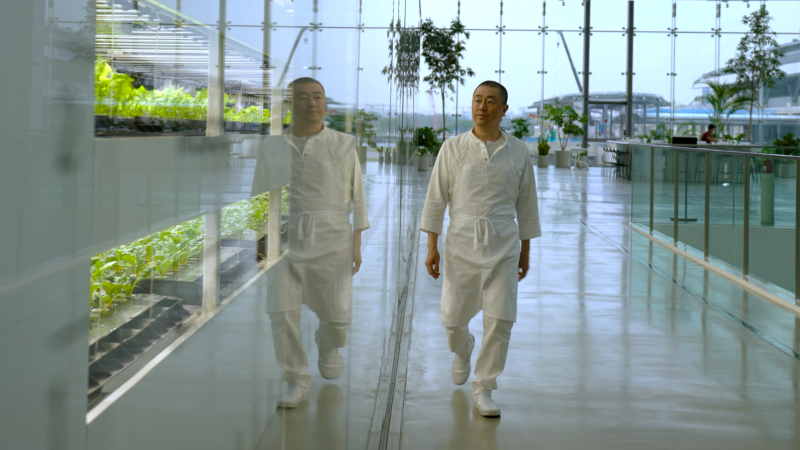
Before Korean Food Was Cool, Corey Lee Was Already Redefining It
Before Korean food was cool Corey – Corey Lee, the first Korean chef to secure three Michelin stars, has long been at the forefront of redefining Korean cuisine. His journey began in a New Jersey suburb where Korean food was not yet a common sight. Gochujang, the fermented chili paste now synonymous with Korean flavors, was a rarity in home kitchens, and kimchi, a staple of Korean culture, was far from a fashionable garnish in trendy urban restaurants. “During the early stages of my career, I never imagined I’d be serving kimchi in a fine dining setting,” Lee reflected. Today, the global embrace of Korean culture—spanning K-pop, K-beauty, and K-food—has transformed the culinary landscape, with kimchi exports reaching record levels and Korean food chains expanding rapidly in international markets since 2020.
A Culinary Awakening in a New World
Lee’s formative years were shaped by the stark contrast between his Korean heritage and the American culinary environment he grew up in. Born in Seoul in 1977, he relocated to the United States at age five, settling first in New York before moving to Tenafly, New Jersey. Raised in a household where Korean cooking was a central tradition, Lee’s initial exposure to food was rooted in his parents’ meals and his grandmother’s Buddhist-influenced recipes. These dishes, emphasizing umami through fermented ingredients and aromatic herbs, contrasted sharply with the ubiquitous presence of onions and garlic in Western cuisine. “The way my mother prepared food was both simple and refined, which taught me the power of balance,” he later said.
His professional path initially diverged from his cultural roots. Lee’s early career was steeped in French culinary traditions, where he honed techniques in demanding kitchens across London and the U.S. His first job at Blue Ribbon Brasserie in New York—a summer position that became a lifelong commitment—marked the beginning of his journey. “I fell in love with the kitchen instantly,” he recounted, describing the physical rigor, creative energy, and sense of purpose that drew him in. Though his parents, particularly his mother, initially resisted the idea of his son working in a kitchen, they eventually came to accept it after international acclaim and coverage in a South Korean newspaper highlighted his career’s potential.
Blending Heritage and Innovation
Lee’s career trajectory took a pivotal turn when he joined Thomas Keller’s team at The French Laundry in 2001. Under Keller’s mentorship, he learned to infuse personal history into his cooking, a philosophy that would later shape his own work. “Keller’s approach was about honoring the everyday, like mac and cheese, and elevating it through storytelling,” Lee explained. This insight inspired him to return to his Korean roots when he launched Benu, a contemporary Asian restaurant in San Francisco, in 2010. “I wanted to celebrate the flavors that defined my childhood,” he said, blending traditional Korean elements with French fine dining techniques and California-inspired ingredients.
Benu’s menu is a testament to Lee’s ability to merge East Asian traditions with modern gastronomy. It features quintessential Chinese components such as 1,000-year-old eggs and Jinhua ham, alongside Japanese sake and wasabi, and Korean perilla leaves. The restaurant’s 12-course tasting menu, which once cost $160 and now exceeds $425, has been praised for its innovation and depth. “It’s not just about the food—it’s about the narrative,” Lee emphasized. His work has since extended beyond San Francisco, with ventures including a Korean concept restaurant inside a Singaporean car factory and collaborations with leading South Korean kimchi brands to craft premium products.
Global Impact and Cultural Resonance
The global Korean wave, or Hallyu, has played a significant role in Lee’s mission to elevate Korean cuisine. As this cultural phenomenon spread, Korean food gained unprecedented popularity, with exports of fermented products like kimchi hitting new highs in 2023. This growth has allowed chefs like Lee to integrate Korean flavors into high-end dining, challenging traditional perceptions of what constitutes “fine cuisine.” His success is part of a broader trend where Korean culinary techniques are being recognized and reinterpreted worldwide.
Lee’s early experiences in American kitchens laid the groundwork for this evolution. Starting as a teenager in New York, he absorbed the rigor of French techniques but also noticed the lack of Korean representation in fine dining. “I realized there was a gap between what I grew up with and the expectations of international audiences,” he noted. This realization drove him to experiment with his heritage, creating a unique identity that bridges cultural traditions and modern palates. His approach has been both celebrated and scrutinized, as critics and fans alike debate the authenticity of his Korean-inspired dishes.
The influence of Lee’s mother and grandmother remains evident in his culinary philosophy. Their emphasis on clean, mild flavors and umami-rich broths has shaped his understanding of seasoning, allowing him to craft dishes that are both bold and nuanced. “My grandmother’s meals taught me to appreciate simplicity,” he said. This lesson has been applied to his work, where he balances Korean ingredients with French precision and Californian freshness. The result is a menu that feels both familiar and groundbreaking, reflecting his dual identity as an American-born Korean chef.
Expanding the Korean Culinary Narrative
Lee’s ventures have not only showcased Korean cuisine but also challenged its stereotypes. By opening a smart-casual Korean barbecue joint in San Francisco and experimenting with unconventional settings like a car factory in Singapore, he has brought Korean flavors to diverse audiences. “I wanted to make Korean food accessible without compromising its depth,” he said. His collaborations with kimchi brands further demonstrate his commitment to expanding the cultural reach of Korean products, ensuring they are both appreciated and reimagined in global markets.
As the popularity of Korean cuisine continues to rise, Lee’s contributions serve as a bridge between tradition and innovation. His journey from a suburban upbringing to Michelin recognition highlights the evolving role of Korean food in the international culinary scene. “When I first started, it was hard to believe Korean food could compete with the classics,” he admitted. Yet today, his work stands as proof that Korean cuisine is not only relevant but also revolutionary. Through his restaurants and partnerships, Lee has helped redefine what it means to be a Korean chef in a world that is increasingly embracing the culture’s richness.
Corey Lee’s story is emblematic of a broader shift in the food industry. As Korean cuisine gains global traction, it is no longer confined to street vendors or family recipes but is being elevated to the highest echelons of fine dining. His achievements, including three Michelin stars, underscore the potential for Korean flavors to transcend borders and expectations. “The goal is to make people see the beauty in their own heritage,” Lee stated. Whether through a 12-course tasting menu or a casual barbecue joint, his work continues to inspire a new generation of chefs and food enthusiasts, proving that Korean cuisine is not just a trend but a transformative force in the world of gastronomy.
A Legacy of Fusion and Tradition
Lee’s career exemplifies the power of cultural fusion. By integrating French techniques with Korean ingredients, he has created a unique culinary voice that resonates globally. His early exposure to French kitchens taught him discipline and artistry, but his return to his roots brought a new perspective. “I wanted to honor my past while pushing the boundaries of what’s possible,” he said. This balance is evident in Benu’s menu, which features dishes like Korean-style foie gras or kimchi-infused foams, blending the old with the new in a way that is both inventive and respectful.
As the K-Everything series, hosted by Daniel Dae Kim, explores the global impact of South Korean culture, Lee’s story is a compelling case study. His journey from a New Jersey suburb to the world stage illustrates how personal history and cultural pride can shape the future of food. “It’s about taking something you love and making it something that people can appreciate in a new way,” he said. Through his restaurants, collaborations, and advocacy, Lee has become a key figure in the ongoing redefinition of Korean cuisine, ensuring its place in the annals of world gastronomy.
Today, Lee’s work is not only a testament to his skill but also a reflection of the broader cultural movement that has embraced Korean food. The rise of K-pop and K-beauty has paved the way for Korean cuisine to gain global recognition, and Lee has been at the center of this transformation. “We’ve gone from being a niche culture to being a global one,” he noted. His success, however, is not without challenges. Balancing authenticity with innovation





