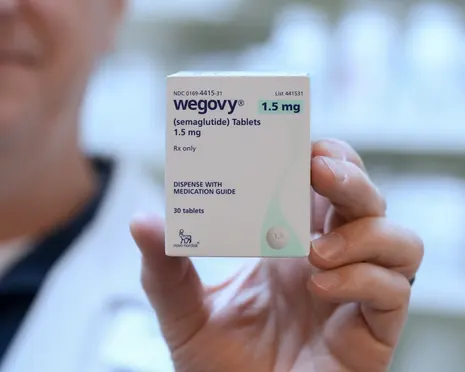
UK Patients Gain Access to Wegovy Weight-Loss Tablets
Wanderstayfinder.com – The UK’s medicines regulator has announced that patients will soon be able to purchase Wegovy, the first weight-loss pill in the form of a GLP-1 receptor agonist tablet to receive approval. This marks a significant milestone, as the Medicines and Healthcare products Regulatory Agency (MHRA) has granted authorization for the oral medication, positioning the UK as the third nation globally to approve the drug—following the United States and the United Arab Emirates. Previously, individuals using Wegovy in the UK had relied on the injectable version, but the introduction of tablets could offer a more convenient option for many.
A New Era in Obesity Treatment
Novo Nordisk, the Danish pharmaceutical company behind Wegovy, has expressed optimism about the approval. Emil Kongshøj Larsen, the firm’s executive vice-president for international operations, stated: “This is a landmark approval, making the UK the first country in Europe to approve Wegovy pill. We hope this approval supports increasing access to obesity care in the UK.” The pill contains semaglutide, a medication that mimics the actions of glucagon-like peptide-1 (GLP-1), a hormone that regulates appetite and glucose levels. This development could revolutionize how patients manage their weight, particularly for those who find injections cumbersome.
Clinical Efficacy and Dosing Guidelines
Regulatory approval for Wegovy tablets was based on clinical trials that demonstrated the drug’s effectiveness. Participants on the highest dose recorded a 14-17% reduction in body weight over 64 weeks, highlighting its potential as a sustainable treatment. The pills are now approved for adults with a BMI of 30 or higher, or those with a BMI between 27 and 30 who also have at least one weight-related health condition, such as type 2 diabetes or hypertension.
For patients already using the injectable version of Wegovy, the MHRA has indicated that a transition to the tablet form is possible. Those on weekly 2.4mg injections can switch to the 25mg daily dose if deemed suitable by their healthcare provider. However, the dosing regimen will begin at 1.5mg, with incremental increases to 4mg, 9mg, and 25mg, ensuring patients adjust gradually. Each step requires a minimum of one month of consistent use before moving to the next level.
Usage Instructions and Side Effects
To maximize effectiveness, Wegovy tablets must be taken on an empty stomach after fasting for at least eight hours. Patients are advised to consume the pill whole with a small sip of water, then avoid food or drink for 30 minutes afterward. This method ensures the medication is absorbed properly and reduces the risk of gastrointestinal discomfort. Common side effects include nausea, diarrhoea, constipation, and vomiting, though these are typically mild and temporary. The MHRA emphasized that individuals experiencing adverse effects should consult their doctor, pharmacist, or nurse and report them to the yellow card scheme, a system for monitoring drug safety.
Impact on NHS and Private Patients
Despite the approval, Wegovy tablets will not be immediately available on the NHS. The National Institute for Health and Care Excellence (Nice) must first evaluate the drug’s cost-effectiveness and safety before deciding on its inclusion in public healthcare. Until then, patients will need to obtain a private prescription, which may vary in cost depending on the dosage and treatment duration. While prices have not yet been finalized, patients anticipate that the pill will be more affordable than injections, which currently range from £90 to £300 monthly.
Jason Murphy, head of pharmacy at Chemist4U, hailed the approval as a “major step forward” in the fight against obesity. He noted that the convenience of daily pills could make treatment more accessible to millions, particularly those who struggle with self-injections. With an estimated 2.5 million people already using Wegovy injections, the shift to tablets may significantly boost demand and provide a new foundation for addressing the country’s obesity crisis.
Expert Perspectives on the Innovation
Prof. Victoria Tzortziou Brown, president of the Royal College of GPs, highlighted the potential benefits of the pill for general practice. She remarked: “Weight-loss medication can potentially benefit many patients, and being able to take it in tablet form would certainly be easier than having to inject it.” However, she also cautioned that the medication is not a one-size-fits-all solution. “It remains essential that this drug is not seen as a magic solution for weight loss, as it does come with potential side effects and won’t be appropriate for everyone,” she added.
Prof. Naveed Sattar, a specialist in cardiometabolic medicine at the University of Glasgow, underscored the importance of expanding treatment options. He stated: “Expanding the range of effective treatments is crucial in helping people sustainably reduce caloric intakes within an increasingly obesogenic environment. With obesity rates in the UK now at very high levels, and associated with substantial multimorbidity, additional treatment options for sustained weight loss are greatly needed.”
Challenges and the Role of Prevention
Katharine Jenner, executive director of the Obesity Health Alliance, praised the pill’s potential but stressed the importance of prevention alongside treatment. She said: “An oral Wegovy pill could help widen access to effective treatment, especially if it is cheaper and easier for patients to use. But we must be clear that weight-loss drugs are not a replacement for prevention.”
Jenner pointed out that no single medication can address the root causes of obesity, such as an over-reliance on processed foods. “The food system continues to provide affordable, heavily marketed, less healthy options, which contribute to rising obesity rates,” she explained. “That is why 65 health organizations and experts have written to the chancellor, urging action to support long-term weight management strategies.”
As the UK prepares to roll out Wegovy tablets, the focus will shift to balancing accessibility with proper guidance. While the convenience of oral administration is a game-changer, healthcare professionals will need to ensure patients understand the medication’s role in a holistic approach to health. This includes integrating dietary adjustments, physical activity, and behavioral support into treatment plans. The MHRA and Nice will play critical roles in determining how widely the drug can be adopted, but the availability of Wegovy pills represents a pivotal moment in obesity care.
With the potential to reach a broader audience, the new formulation may alleviate some of the burden on healthcare systems. However, experts remain cautious, emphasizing that the pill is just one tool in the fight against obesity. As more patients gain access to this treatment, ongoing monitoring and education will be vital to ensure its safe and effective use. The journey to combating the obesity epidemic is far from over, but this approval brings a significant new chapter to the table.