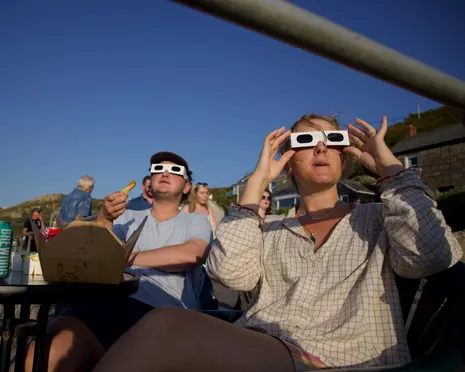
Cruise ships, quiet towns and an all-day festival: millions flock to eclipse viewing spots across Europe

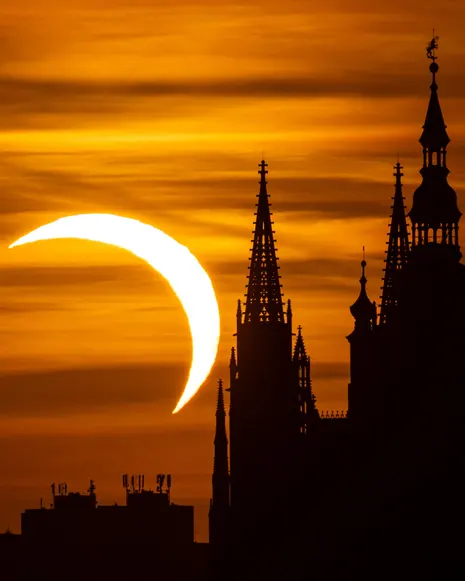
Table of Contents
Millions Gather Across Europe for Rare Total Solar Eclipse
Wanderstayfinder.com – From the frozen Arctic territories of Russia to the sun-drenched coasts of Spain, a celestial phenomenon captivated millions of observers on Wednesday as the moon passed directly between Earth and the sun. The total solar eclipse carved a sweeping arc across western Europe, offering some of the most spectacular viewing conditions in Greenland, Iceland, and Spain. During those brief moments of totality, daylight transformed into an eerie twilight, temperatures fell noticeably, and birds fell silent in the sudden darkness.
Iceland’s Maritime Eclipse Celebration
Iceland emerged as one of the premier destinations for eclipse enthusiasts, marking the nation’s first total solar eclipse in seven decades. Faced with the ever-present threat of cloud cover, maritime operators responded with unprecedented enthusiasm. A record-breaking fleet of thirty-one cruise ships positioned themselves along Iceland’s western coastline, creating floating observation platforms for approximately fifty-three thousand passengers and crew members seeking optimal viewing angles.
Adding cultural richness to the astronomical event, Icelandic musician Björk organized an extensive day-long music festival within Víðistaðatún park. The performance featured a carefully curated DJ program designed to complement the celestial spectacle. According to the artist’s social media announcement, the ten-hour musical program reserved exactly two minutes specifically for the totality phase. Festival organizers ensured that every attendee received certified solar viewing glasses with their admission ticket.
It was one of the most beautiful things I’ve ever seen in my life. It gave me goosebumps.
Scientific organizations also recognized Iceland’s significance. NASA deployed a high-altitude WB-57 aircraft to track the moon’s shadow as it moved across the landscape. Simultaneously, research teams launched atmospheric balloons to document how the sudden darkness and temperature changes affected the surrounding environment.
Spain’s Eclipse Tourism Surge
Spanish authorities anticipated massive crowds for what promised to be exceptional viewing conditions. The eclipse path extended roughly two hundred kilometers, stretching from the northwestern city of A Coruña to the Mediterranean island of Mallorca. Officials projected that up to six million people would position themselves within the narrow corridor of totality.
The influx of international visitors created logistical challenges across the country. More than four hundred and fifty thousand tourists arrived from destinations as distant as Canada and Australia, utilizing trains, buses, and caravans to reach their preferred observation points. Transportation networks experienced significant congestion, with major highways radiating from Madrid and Barcelona reporting substantial traffic delays just hours before the eclipse.
Our car was cancelled. So we took a three-hour bus, a 20-minute taxi and two-hour hike. Arrived at the location!
One Brazilian traveler shared her determination on social media after her rental vehicle fell through. Her journey exemplified the lengths many visitors would travel to witness the phenomenon. Meanwhile, Spanish airline Iberia operated a special charter flight at ten thousand meters altitude, broadcasting the celestial alignment to a global audience. The carrier described the experience as offering “a different perspective” on the world below.
Arctic Beginnings and European Wonders
The eclipse journey commenced in Russia’s remote Arctic regions before sweeping southward across the continent. Observers from the United Kingdom to northern Italy witnessed the sun’s light diminish dramatically as the moon advanced across its face. The most coveted viewing locations included portions of Portugal alongside the primary destinations already mentioned.
Within Madrid’s Parque del Oeste, hundreds of spectators gathered despite the city not lying directly in the eclipse path. They cheered enthusiastically as the moon obscured the sun, plunging the park into shadow. When the outer corona created a luminous ring around the darkened moon, onlookers gasped in wonder. Daylight returned slightly more than a minute later, triggering raucous celebrations among the crowd.
Until one goes and experiences it, there’s no way to explain what it is to see an eclipse.
César González, an astronomer and science communicator at the Madrid Planetarium, described the event as truly spectacular. He had departed the capital early Wednesday morning to establish himself in a northern Spanish field for the best possible view. His colleague Sara García Alonso, a reserve astronaut for the European Space Agency, shared similar sentiments alongside fellow astronaut Pablo Álvarez Fernández, who noted that the reality exceeded all expectations.
Total solar eclipses occur when the moon completely covers the sun’s disk, creating conditions rarely experienced in human lifetimes. The brief darkness allows scientists to study the sun’s outer atmosphere, the corona, which remains invisible under normal daylight conditions. For millions of Europeans who traveled to witness this rare alignment, Wednesday offered not just a visual spectacle, but a profound connection to the celestial mechanics that govern our solar system.
Related Reading
Frequently Asked Questions
What is Cruise ships quiet towns and an all?
Cruise ships quiet towns and an all is the main topic of this guide. The article explains the context, practical details, and next steps readers should understand.
Why does Cruise ships quiet towns and an all matter?
Cruise ships quiet towns and an all matters because readers are looking for a useful answer, not just a short summary. Good content should match search intent and help them decide what to do next.