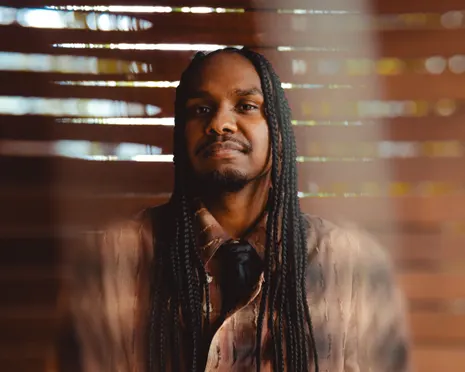
‘For this record, I took an edible and said, screw it’: jazz pianist Sullivan Fortner on confronting the trauma of Hurricane Katrina


Table of Contents
Sullivan Fortner’s New Album Channels Hurricane Katrina’s Legacy Through Unfiltered Jazz
Wanderstayfinder.com – When Hurricane Katrina struck New Orleans in 2005, it didn’t just flood streets—it reshaped the cultural DNA of a city that has long served as America’s musical heart. For jazz pianist Sullivan Fortner, now 39, that storm became the emotional foundation of his sixth album, Leave That in There, a work that refuses to sanitize the past or limit what jazz can express.
The album’s title comes from a quiet moment in Spike Lee’s 2006 documentary When the Levees Broke: A Requiem in Four Acts. In the film, which documented the federal government’s inadequate response to the disaster, a woman steps out of her car after evacuation. When told she left her purse behind, she simply says: “Leave that in there.” Fortner transformed those words into a creative philosophy—one that embraces rather than hides complexity.
“Music to me is a kind of a place of safety, where anything can happen,” Fortner explains. “Rather than saying, ‘OK, these are the things that I’m going to hide,’ it’s more a case of, ‘these are the things I want to keep with me.'”
Speaking during a video call between performances at Rotterdam’s North Sea jazz festival, Fortner describes Black music as “a tornado that’s always getting bigger and moving faster.” This energy permeates his latest work, which balances deep roots in Louisiana’s history with expansive musical exploration. The opening track, “Sugarcane,” features Kayvon Gordon’s bàtá drumming, connecting the album to the region’s sugar trade heritage—a commodity extracted through slave labor that made the area one of the wealthiest in nineteenth-century America.
The record’s sonic palette stretches across genres and eras. Listeners encounter Latin-accented piano passages, Hammond organ explorations, tributes to Thelonious Monk, and swirling Moog synthesizer textures. The album closes with Fortner himself delivering a wordless, Stevie Wonder-inspired vocal hymn dedicated to his late friend Linda Payne.
Fortner’s approach to this album marked a departure from his previous work. Where earlier records involved meticulous self-editing and extensive post-production, Leave That in There emerged from a more instinctive process.
“For this record, I took an edible and I just said, screw it,” he recalls with characteristic humor.
This creative freedom arrived at an opportune moment. Fortner recently received the Larry J Bell award, a prestigious $300,000 prize (approximately £225,000) presented every four years to exceptional jazz pianists. The recognition bolstered his confidence to present a more comprehensive artistic vision.
The Katrina connection runs deeper than the album title. Fortner was just 18 years old and preparing for another year at Ohio’s Oberlin Conservatory when a fellow New Orleanian student called to report that their city was underwater. Initially unconcerned—flooding was common—he rushed to his dormitory after his friend insisted. Turning on CNN, he saw his girlfriend and her mother waiting at the Convention Center for buses to arrive.
Communication networks had collapsed. After frantic attempts to reach home, Fortner received a brief five-second phone call from his sister confirming that their family had been safely evacuated to Baton Rouge. Meanwhile, his girlfriend’s family endured a seven-hour bus ride to Arkansas.
Two tracks on the album—”A Poignant Time” and “Another Poignant Time”—reference Wynton Marsalis’s observation in Lee’s documentary: “I think that this is a great moment in American history, because in this moment we see a lot of what’s wrong with us.” Lee’s film highlighted not only the immediate devastation but also the prolonged suffering that followed—denied insurance claims, inadequate housing, and Fema’s sluggish response.
“People are still dealing with the trauma of that time, even now,” Fortner reflects. “Not just through people losing their homes, but their mental and physical health—still dealing with grief.”
Yet the disaster also revealed extraordinary resilience. Fortner notes that many residents refused to leave, declaring the city their permanent home regardless of the damage.
His own family stayed, living a half-hour drive from downtown New Orleans. His father worked as an oil rigger, spending roughly half the year away from home, while his mother became “everything to us.” Singing, Fortner says, serves as their family’s “love language.” Approximately 40 of his relatives are singers, and he is currently developing an album featuring all of them.
Fortner’s musical foundation was built in church alongside these relatives, but a pivotal moment arrived when he was 11 years old. Local organist Ronald Markham sat at the instrument and began playing Bach. The young Fortner had never encountered anything similar.
“He got on the organ and started playing Bach,” Fortner remembers. “He said, ‘man, it
Related Reading
Frequently Asked Questions
What is For this record I took an edible?
For this record I took an edible is the main topic of this guide. The article explains the context, practical details, and next steps readers should understand.
Why does For this record I took an edible matter?
For this record I took an edible matters because readers are looking for a useful answer, not just a short summary. Good content should match search intent and help them decide what to do next.