Plymouth’s the Box Wins 2026 Art Fund Museum of the Year Award
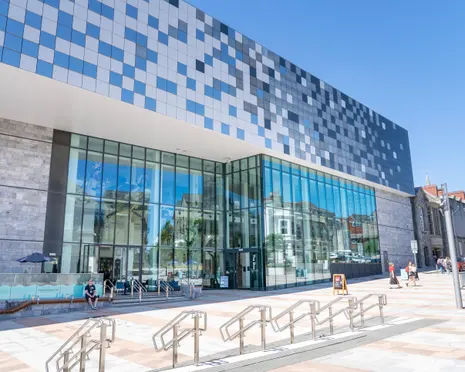
Plymouth s the Box wins 2026 – The Box, a cultural hub in Plymouth, has been named the winner of the 2026 Art Fund Museum of the Year award. This prestigious accolade, the most significant in the global museum landscape, recognizes the institution’s innovative and community-focused vision. The award, worth £120,000, was presented to Victoria Pomery, the museum’s chief executive, by June Sarpong, one of the judges, during a ceremony held aboard the Cutty Sark in London. The event marked a milestone for the museum, which has become a beacon of creativity and civic pride since its opening in 2020.
A Celebration of Cultural Impact
The Box, a hybrid museum, gallery, and archive, has redefined what it means to engage with history and art. Its collection of over 2 million items, including artworks, objects, and historical records, provides a dynamic narrative of Plymouth’s heritage and evolving identity. The winning citation highlighted the museum’s “ambitious and welcoming approach,” a philosophy that has transformed it into a space where diverse audiences feel represented and inspired. Since its launch, the Box has attracted more than 1.3 million visitors, a testament to its ability to resonate with both local and national communities.
According to the judges, the Box has emerged as a “true jewel in the crown of the south-west,” demonstrating how cultural institutions can drive economic and social growth. A recent report revealed that the museum contributed over £100 million in health and wellbeing benefits and boosted Plymouth’s economy by £244 million. These figures underscore its role as a catalyst for positive change, particularly through its efforts to connect with 89% of the city’s schools and foster educational partnerships. The success of the Box is not just measured in numbers but in its capacity to create shared experiences that transcend traditional boundaries.
“What stood out so strongly with the Box was the sense of pride and connection it has created across Plymouth,” said June Sarpong, a judge and broadcaster. “From local groups like the Windrush community to its collaborations with the university, it is a museum that genuinely belongs to the people it serves.”
Reimagining the Role of Museums
Victoria Pomery, the museum’s leader, accepted the award on behalf of the team, emphasizing the collaborative spirit that has defined the Box’s journey. The ceremony, held on the historic Cutty Sark, symbolized the museum’s broader mission to bridge the past with the present. “The Box is not just a building,” Pomery remarked. “It’s a living entity that reflects the stories and aspirations of the community it serves.”
Jenny Waldman, director of the Art Fund and chair of the judging panel, praised the museum’s ability to balance artistic excellence with societal impact. “The Box’s social and economic returns are remarkable,” she stated. “It shows how long-term investment in culture can yield transformative outcomes.” Waldman also highlighted the museum’s commitment to inclusivity, noting its evolution into a more audience-focused institution. “They’ve become more ambitious, inclusive, and responsive to the needs of the people who visit,” she added, underscoring the Box’s role as a model for future cultural projects.
“Through exhibitions that uncover overlooked histories to welcoming spaces for learning and creativity, the Box is reimagining what being a museum can mean,” Sarpong continued. “It’s not just about preserving artifacts—it’s about making them relevant to today’s conversations and tomorrow’s possibilities.”
Community-Driven Innovation
One of the Box’s standout initiatives is its community engagement programs, which have turned the museum into a hub for collective storytelling. In the Devonport district, the museum launched a project that sent postcards to every resident, inviting them to participate in a community-driven collection of social history artifacts. The response was overwhelming, with thousands contributing items that enriched the museum’s archives and deepened its ties to the local population.
Since its opening, the Box has consistently pushed the boundaries of what a museum can achieve. Its 2025 exhibitions, such as Osman Yousefzada’s *When Will We Be Good Enough?*, explored colonial histories with a critical lens, while Jyll Bradley’s *Running and Returning* reexamined the accessibility of archives. These efforts reflect a broader strategy to amplify marginalized voices and make history accessible to all. The museum’s partnership with the National Gallery further exemplifies its innovative spirit, as the *Hello Sailor!* event by Jeremy Deller brought its collections into public spaces, inviting new audiences to interact with art in unexpected ways.
This summer, the Box continues to captivate with two major exhibitions: *Echoes of Us*, which features works from the government art collection by artists like Barbara Hepworth and Chris Ofili, and *Gillian Ayres: A Life in Colour*, a retrospective spanning seven decades of the abstract painter’s career. These showcases not only highlight the museum’s curatorial depth but also its ability to connect with contemporary art movements and historical legacies.
A Finalists’ Highlight
The Box was one of five finalists for the 2026 award, alongside the Fitzwilliam Museum in Cambridge, the National Gallery in London, Norwich Castle Museum and Art Gallery, and V&A East Storehouse. Each of these institutions received £20,000 as part of the competition, with the judges commending their collective contributions to the cultural landscape. “They are innovative, forward-thinking, and pushing the boundaries of what a museum is and can achieve,” Waldman noted. “Their work proves that investment in culture brings tangible economic and social returns.”
The Box’s journey serves as a case study for how civic museums can thrive in the modern era. By integrating local narratives with global perspectives, it has established itself as a vital part of Plymouth’s identity. The museum’s success also highlights the importance of public funding in sustaining such projects. As Waldman pointed out, museums have a “tremendous responsibility” to preserve collections for future generations while making them engaging and participatory. The Box has excelled in this dual mission, ensuring that its archives remain both a repository of the past and a platform for the present.
Looking ahead, the Box aims to maintain its position as a leader in cultural innovation. Its future plans include expanding digital access to collections, deepening community partnerships, and exploring new ways to integrate art into everyday life. As the museum continues to grow, it remains a symbol of what can be achieved when art, history, and community come together to create something truly transformative.