What’s behind Sydney airport’s heavy delays and near-miss incident?

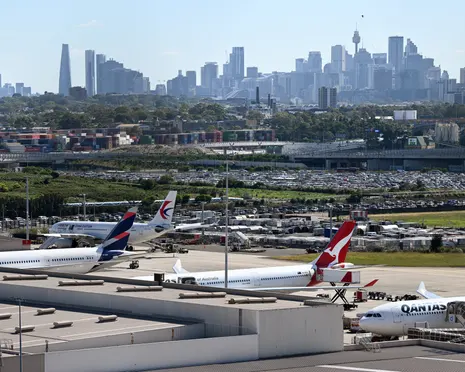
Table of Contents
Sydney Airport Crisis: Staffing Shortages and Systemic Challenges Behind Recent Delays
Wanderstayfinder.com – A tense moment unfolded on the Sydney airport tarmac when a Jetstar aircraft barely avoided striking a Qatar Airways plane during early morning operations on Sunday. This dramatic near-miss occurred against a backdrop of already significant travel disruptions, with passengers experiencing substantial delays well before the collision scare. The incident has intensified scrutiny on Australia’s aviation infrastructure, particularly regarding the critical shortage of air traffic controllers responsible for coordinating one of the nation’s busiest airports.
Just twenty-four hours prior to the near-collision, more than 150 flights navigating through Sydney faced postponements. These delays exposed the fragility of current rostering arrangements and highlighted how minimal staffing margins can quickly escalate into widespread disruption. While investigators examine the circumstances surrounding Sunday’s close call, two personnel—an air traffic controller and a tug driver—have been temporarily removed from duty pending mandatory substance testing protocols.
The Human Cost of Chronic Understaffing
Scott Nugent, who leads the Civil Air union representing air traffic controllers, identified the fundamental problem as insufficient personnel even before accounting for routine absences. Despite employment terms granting unlimited sick leave entitlements, the organization simply lacks adequate numbers to maintain baseline operations.
“In practice, the only way you fill the roster is with overtime, and it relies on overtime just to do business as usual,” Nugent explained, emphasizing how heavily the system depends on extended working hours.
The veteran controller described workers approaching exhaustion levels, with some employees completing ten consecutive days before receiving a single day of rest. This intensive schedule directly impacts operational capacity. When controllers perform the workload of two positions simultaneously, they can accommodate only half the normal volume of aircraft movements.
“The reason you’ve seen these delays in the last week is because we increased the spacing between aircraft to maintain safety when we have less people,” he noted, explaining how safety protocols adapt to reduced staffing levels.
Pandemic-Era Exodus and Recruitment Challenges
A significant contributor to current difficulties stems from a pandemic-era initiative that encouraged experienced personnel to depart Airservices Australia, the government entity overseeing national airspace management. With commercial aviation severely restricted during global health restrictions, 140 workers aged fifty-six or above accepted redundancy packages in 2021.
Although the organization subsequently launched an extensive recruitment campaign, hiring rates have consistently lagged behind operational demands. Financial incentives appear insufficient to attract and retain qualified candidates. Newly qualified controllers earn starting salaries of $116,990 annually, while seasoned supervisors command base compensation approaching $300,000. Despite these competitive rates, recruitment has remained problematic since the pandemic period.
February 2024 witnessed a similar crisis when two controllers failed to report for duty at Sydney airport, triggering cascading cancellations and delays across multiple Australian cities. Airservices managed to prevent an equivalent situation in September of the following year through rapid response measures.
Broader Organizational Pressures
Simultaneously addressing roster deficiencies, Airservices has undertaken a generational transition to modernize its flight-tracking technology infrastructure. The organization has also confronted historical workplace culture concerns. A comprehensive review conducted by Elizabeth Broderick’s consultancy revealed that twenty-seven percent of employees experienced bullying within the preceding twelve months during 2023, representing an increase from twenty-three percent recorded in 2020.
Training pipeline metrics show mixed results. Between July 2022 and 2026, the organization certified 245 controllers, with the majority completing qualification during 2025 and 2026. Conversely, 86 controllers departed during this identical timeframe. Current workforce statistics indicate 1,073 controllers as of July 2026, up from 985 recorded in December 2020.
However, operational demands have expanded considerably. The opening of Western Sydney airport and the recent acquisition of Ballina airspace in northern New South Wales have increased responsibilities without proportional staffing growth. Sydney remains particularly underserved despite being Australia’s primary aviation hub.
The Qualification Gap Problem
A critical complication involves the specialized nature of controller qualifications. Newly certified personnel cannot immediately replace retiring veterans across all operational areas. Following eighteen months of training, a fresh controller typically handles only one specific function—such as managing taxiway operations around the domestic terminal. These personnel lack qualifications for international airport taxiways or runway management, which demand additional specialized training.
This specialization creates a structural vulnerability where newer employees cannot flexibly fill urgent vacancies across different operational zones. Airservices has acknowledged the challenge, designating Sydney airport controller training as its highest priority. However, the organization cannot provide definitive timelines for achieving adequate staffing levels. Comprehensive controller training requires approximately two years, contingent upon candidates successfully navigating initial screening processes.
For travelers, these systemic issues translate into unpredictable journey experiences. While individual incidents like Sunday’s near-miss capture headlines, the underlying staffing crisis represents a persistent challenge requiring sustained investment and strategic workforce planning to resolve effectively.
Related Reading
Frequently Asked Questions
What is What s behind Sydney airport s heavy?
What s behind Sydney airport s heavy is the main topic of this guide. The article explains the context, practical details, and next steps readers should understand.
Why does What s behind Sydney airport s heavy matter?
What s behind Sydney airport s heavy matters because readers are looking for a useful answer, not just a short summary. Good content should match search intent and help them decide what to do next.