Italy Says It’s Temporarily Suspending Schengen Deal With Spain
Border Measures After 60,000 Migrants Reach Ceuta
Wanderstayfinder.com – Italy says it’s temporarily suspending its Schengen free-movement agreement with Spain following a historic migration surge that brought roughly 60,000 people from Morocco into the Spanish enclave of Ceuta. Prime Minister Giorgia Meloni confirmed the emergency measure, explaining that Italy must protect its citizens and prevent secondary migration flows that could destabilize the entire continent. This unprecedented decision comes as European leaders scramble to coordinate a unified response to the crisis unfolding in North Africa.
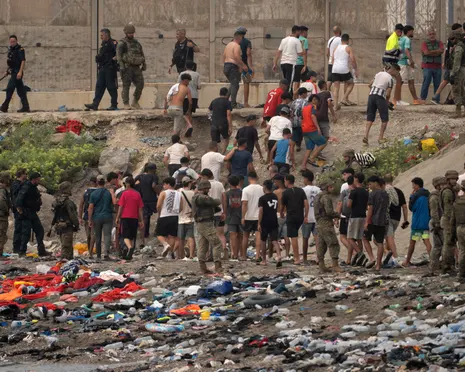
The migration wave arrived within a single day, overwhelming Ceuta’s modest population of 85,000 residents. Local hospitals, shelters, and emergency services faced immediate strain as thousands of newcomers sought refuge. The sudden crisis has triggered political tensions in Madrid while prompting international scrutiny of Spain’s border management capabilities and its continued participation in the Schengen zone.
Defending borders means defending the safety of citizens, combating irregular immigration, and striking at the criminal networks that traffic human beings.
Meloni emphasized that the suspension would remain in place only as long as necessary, with careful consideration given to minimizing disruption for summer tourists. The Italian leader clarified that the measure targets selective checks on third-country nationals arriving from Spain rather than a complete shutdown of all travel between the two nations. Italy remains committed to maintaining essential connections while implementing stricter monitoring protocols.
European Leaders Weigh In on Crisis Response
Spanish Prime Minister Pedro Sánchez accused human trafficking networks of spreading misleading information that fueled the mass exodus toward Ceuta. He argued that false narratives about open borders and easy passage through Europe motivated thousands to attempt the dangerous journey. Spanish authorities reported that by Friday afternoon, the majority of migrants had voluntarily returned to Morocco, recognizing that no clear route existed to reach mainland Spain or other EU countries.
The situation has reignited debates about Spain’s Schengen membership across multiple European capitals. Several EU member states have publicly called for potential suspension measures, while American officials have expressed serious concerns through diplomatic channels. Slovakia’s Robert Fico emerged as an unexpected ally for Madrid, suggesting that removing Spain from Schengen would not solve the underlying problems. Fico pledged his government’s support to help Madrid manage the crisis while participating in Meloni’s initiative for a stronger European Union response.
I am closely monitoring developments in the migration crisis in the Spanish enclave in Africa on an hourly basis. Today, I also joined the initiative of Italian prime minister Giorgia Meloni calling for a strong response from the EU institutions.
Human Toll and Future Implications
The human cost of the migration surge has been devastating, with at least 57 people losing their lives attempting to reach Ceuta. These deaths highlight the desperate conditions pushing vulnerable populations toward perilous Mediterranean crossings. Meloni stated that Italy stands ready to assist any European effort aimed at helping Spanish authorities regain full control over the Union’s external borders.
The Italian government’s announcement preceded the end of live news coverage as officials outlined the practical details of the suspension. Air and sea routes between Italy and Spain would face enhanced screening procedures, allowing authorities to track arrivals more effectively while keeping essential travel corridors open. Both nations are now working simultaneously to address immediate humanitarian needs while considering long-term reforms to European border policy.
The Ceuta crisis has exposed significant weaknesses in the current Schengen framework and sparked renewed discussions about migration management strategies. European leaders must now balance compassion for refugees with security concerns as they work toward sustainable solutions. Read more about European migration policy as this situation continues to develop.
Frequently Asked Questions
What does the Schengen suspension mean for travelers? The temporary suspension primarily affects third-country nationals arriving from Spain. Italian and Spanish citizens can continue traveling between the two countries, though enhanced checks may apply to certain passengers.
How long will Italy’s suspension last? Prime Minister Meloni indicated the measure would remain in effect only as long as necessary to manage the crisis and prevent secondary migration flows to Italy and other European nations.
Why did so many migrants travel to Ceuta? Spanish officials believe that false information spread by human trafficking networks convinced thousands that Ceuta offered an easy pathway into Europe through the Schengen zone.
What happens to migrants who cannot return to Morocco? Those unable to make the journey back are being housed in temporary facilities in Ceuta while authorities work on repatriation and alternative arrangements.