Justice Delayed But Not Denied: The Final Chapter of Víctor Jara’s Murder Case
A Fugitive Finally Captured After Half a Century
Wanderstayfinder.com – More than five decades have passed since the tragic death of Chilean folk singer Víctor Jara, and the last individual sought in connection with his murder has finally been apprehended. Nelson Haase Mazzei, a retired military colonel, was taken into custody by Chilean police on Saturday in Puyehue, a rural locality in the southern portion of the country. A judge promptly ordered his immediate imprisonment following the arrest announcement.
Mazzei had been living as a fugitive since 2023, when he and six fellow retired soldiers received sentences in absentia for their roles in killing Jara and another victim. The Víctor Jara Foundation, established by his widow Joan Jara—a British dancer and prominent activist—issued a statement welcoming the development while expressing reservations about the timing of justice.
“We learned that retired Colonel Nelson Haase Mazzei, who had been a fugitive from justice since 2023, was found and imprisoned. We welcome this news. However, it is important for us to emphasize that, half a century after the murders of Víctor Jara and Littré Quiroga, it is difficult to see this as this justice.”
The Brutal Murder at the Stadium
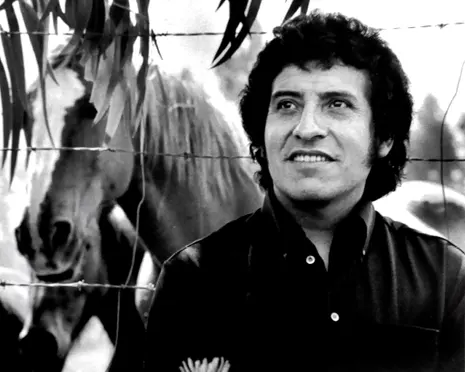
Víctor Jara, a beloved singer and committed leftwing activist, was detained in Santiago on September 11, 1973—the very day following General Augusto Pinochet’s violent, US-backed coup that overthrew socialist president Salvador Allende. Along with thousands of other Chileans, Jara was held at a small covered stadium in central Santiago, which would later be renamed in his honor.
Four days after his arrest, Jara met his brutal end in the stadium’s changing rooms. He was murdered alongside Littré Quiroga, who served as Allende’s national director of prisons. The torture Jara endured was particularly horrific. Officers played Russian roulette with him, broke his hands, shattered his skull, and riddled his body with automatic gunfire.
When his body was discovered near Santiago’s main cemetery, it bore 44 bullet wounds and 56 broken bones. Jara was only 40 years old. The body of Quiroga, who had been shot 23 times, was found at the same location.
The Pinochet Era and Its Victims
Mazzei’s arrest represents what is likely the final act in the prolonged quest for justice on behalf of Jara, one of the most recognizable victims of the Pinochet dictatorship. Over 17 years of repressive rule, the regime killed or disappeared more than 3,000 people and detained and tortured tens of thousands more.
Haase Mazzei joined the Chilean army’s notorious Tejas Verde brigade in 1972 and later became part of Pinochet’s secret police organization, the Dirección Nacional de Inteligencia (Dina). There, he worked closely with Manuel Contreras, the Dina’s leader and a renowned regime loyalist who was sentenced to more than 500 years in jail for crimes against humanity before his death in 2015.
Other Soldiers Face Their Fate
Among those sentenced alongside Mazzei was 86-year-old Hernán Chacón. When police arrived to arrest him at his home in a wealthy Santiago district in 2023, Chacón asked for a moment to take his medication, then slipped into a side room and took his own life.
Another Tejas Verde officer, Pedro Barrientos, had fled to the United States in 1989 and was deported back to Chile in December 2023, more than a decade after his extradition was first requested. One former soldier testified that Barrientos had a habit of brandishing his pistol and declaring, “I killed Víctor Jara with this!” Barrientos was eventually arrested in the US following a routine traffic stop and lost his US citizenship not because of his crimes, but on the grounds that he had failed to disclose his military background in his application.
Jara’s widow, Joan Jara, died at the age of 96, just weeks before Barrientos was returned to Chile to face justice.
Looking Forward
After evading justice for nearly half a century, seven retired soldiers were found guilty of the murder and sentenced in absentia to varying jail terms in August 2023. Haase Mazzei received a 25-year sentence. He had claimed for years that he was not present at the stadium, but sworn testimony placed him at the scene.
Mazzei’s defense team has already requested his transfer from a prison in the southern city of Osorno to Punta Peuco, a well-appointed jail north of Santiago that was built specifically to house the human rights criminals of the Pinochet era.
Related Reading
Frequently Asked Questions
What is Pinochet era soldier jailed for killing?
Pinochet era soldier jailed for killing is the main topic of this guide. The article explains the context, practical details, and next steps readers should understand.
Why does Pinochet era soldier jailed for killing matter?
Pinochet era soldier jailed for killing matters because readers are looking for a useful answer, not just a short summary. Good content should match search intent and help them decide what to do next.