Trump Tariffs Target Australian Exports Over Forced Labor Claims
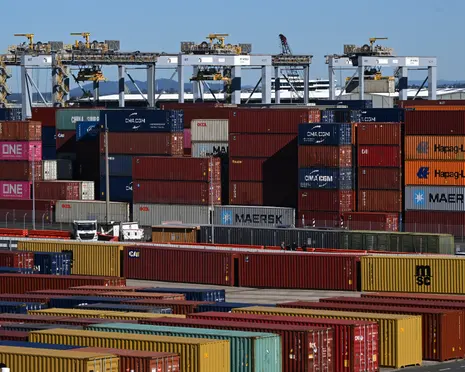
Wanderstayfinder.com – The United States has imposed new trade tariffs on Australian goods, marking a significant development in bilateral commerce. Donald Trump hits Australian exports with a 12.5 percent additional charge following Washington’s concerns about forced labor practices. The Albanese government has formally requested that these levies be withdrawn, arguing that Canberra has already taken adequate steps to address the issue. This tariff action affects numerous Australian products and represents part of a broader international trade framework impacting multiple nations.
Despite the wide-ranging nature of these measures, Australian officials have confirmed that three key export sectors will remain protected. Beef, gold, and copper—cornerstones of Australia’s trade relationship with the United States—will be shielded from the financial impact. The US Department of Commerce placed Australia on a roster of fifty-four economies classified as having inadequately enforced prohibitions against importing goods manufactured through forced labor conditions.
International Trade Implications
Australia joins several other major economies under the new tariff structure. Brazil, China, Egypt, Israel, Japan, New Zealand, Norway, Russia, and Singapore will all face the identical 12.5 percent rate. Meanwhile, countries including the United Kingdom, India, Indonesia, Canada, and Mexico encounter a reduced 10 percent tariff. Washington maintains that these nations demonstrated insufficient enforcement rather than complete failure regarding forced labor prohibitions.
This development fulfills a previous warning from the Trump administration. The threat emerged after the US Supreme Court invalidated Trump’s original ten percent global tariffs earlier in the year. In response to that judicial decision, Trump announced temporary trade sanctions scheduled to conclude on the same day as the new announcement. Australian government insiders had indicated they suspected these forced labor-related tariffs would serve as a substitute for the invalidated measures.
President Trump isn’t serious about combating forced labor. He’s trying to make an end-run around the Supreme Court and Congress to reimpose his illegal tariffs.
US Congresswoman Linda Sánchez criticized the justification behind these tariffs, characterizing the rationale as fundamentally flawed. She suggested the administration was attempting to circumvent both judicial and legislative bodies. The American trade documentation asserts that the United States stands alone globally in adopting and successfully implementing a comprehensive ban on forced labor imports.
Australian Government Response
Australian Trade Minister Don Farrell issued an immediate call for policy reversal. He described the tariffs as unwarranted and incompatible with existing free trade agreements between the two nations. Farrell emphasized that Australia maintains some of the world’s most robust frameworks for addressing forced labor and modern slavery, receiving international recognition for this leadership role.
Forced labour is definitely something which needs to be combated around the world, so we support that objective. But we have laws, which are amongst the strongest in the world, and we’ve been making that point to the Trump administration.
Deputy Prime Minister Richard Marles echoed these sentiments during an ABC radio interview. While acknowledging the global importance of eliminating forced labor, he argued that the American approach lacked logical consistency given Australia’s established legal protections. Marles noted that Australian exports to the United States have actually grown since Trump’s initial “liberation day” tariffs were implemented.
The official trade action document outlines specific exemptions covering numerous product categories. These include beef, various agricultural items such as vegetables and fruits, aircraft components, selected coal, oil, mineral, and chemical products, certain metal and steel goods, timber products, and machinery. The regulations take effect beginning at 12:01am US eastern time on July 24, which corresponds to 2pm Australian Eastern Standard Time. Following a thorough investigation, the US Trade Representative concluded that imposing the 12.5 percent tariff on Australian products was warranted, though limited exemptions would apply to certain goods.
Related SEO Topics
- Home
- Artikel terkait Donald Trump hits Australian exports to US
- Mayor shot dead in Mexico months after surviving assassination attempt
- MoD cancels army training in Kenya over powers to prosecute British soldiers
- Two Russian men jailed in Angola for terrorism and spying
- Orcas seen ramming prey so hard it explodes may be playing game
Frequently Asked Questions
What is Donald Trump hits Australian exports to US?
Donald Trump hits Australian exports to US is the main topic covered in this article, with practical context to help readers understand the subject clearly.
Why does Donald Trump hits Australian exports to US matter?
Donald Trump hits Australian exports to US matters because it helps readers compare options, avoid common mistakes, and make a more informed decision.
How should readers use this Donald Trump hits Australian exports to US guide?
Use the key points, examples, and related links in this page as a starting point, then review the latest details before making a final decision.