Democracy ‘under assault’ from significant third parties at 2025 federal election, parliamentary inquiry finds
Democracy under assault from significant third – Following a parliamentary inquiry into the conduct of the 2025 federal election, Australia’s democratic process has been labeled as being “under assault” by external actors, including prominent groups like the Plymouth Brethren Christian Church and the rightwing lobby organization Advance. The inquiry’s chair, Jerome Laxale, emphasized the need for legislative reforms to address disruptive behavior observed at polling stations. This conclusion was reached after a detailed examination of reports and testimonies, which highlighted concerns about the influence of third parties on voter participation.
Interim Report Highlights Systemic Concerns
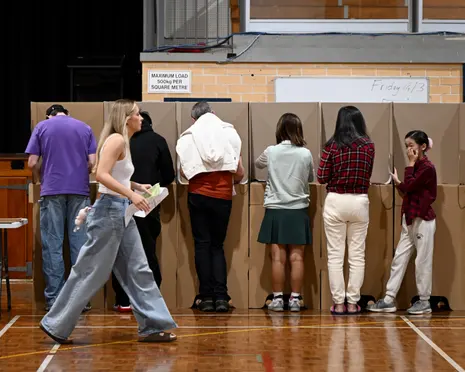
The Labor-led committee, which investigates electoral matters, released an interim report on Tuesday afternoon detailing its findings. Among the 14 recommendations, a proposed code of conduct for campaigners stands out. This code would govern activities in designated “campaign zones” near polling booths, restricting the number of participants and signage to minimize interference. The report also called for a review of the criteria defining “significant third parties,” a category of entities that could face regulation under federal electoral laws.
Laxale, who chairs the inquiry, argued that the behavior of these groups created an environment where voters felt intimidated. “The events at the federal election felt like an attack on our democratic principles, particularly in key constituencies,” he stated. The committee’s report acknowledged that while it did not explicitly name the groups, a substantial portion of antisocial conduct was linked to third parties. This included instances where members of the Plymouth Brethren Christian Church were seen supporting Liberal candidates in closely contested seats, raising questions about their impact on the electoral process.
Political Responses to the Findings
The Coalition has criticized the inquiry for its perceived bias, accusing Labor of transforming the investigation into a “hyper-partisan witch-hunt.” Liberal Senator Jess Collins defended the party’s stance, claiming that the treatment of the church was a “stain on our democracy.” “The way they have been treated by Labor for exercising their right to participate in our political process is a stain on our democracy,” Collins said in a parliamentary address.
The church’s director, Lloyd Grimshaw, has since expressed willingness to testify, stating that he would “state the facts” to clarify the church’s involvement. He noted that the group had initially cited scheduling conflicts as a reason for not attending hearings on a proposed date. “It is for the committee chair to talk to his remarks to parliament,” a spokesperson for the church said in a statement, adding that they had written to the inquiry five times to offer evidence.
Advance, another group under scrutiny, has also responded to the findings. A representative for the organization dismissed Laxale’s claims as part of a “witch-hunt,” stating, “Jerome Laxale is a sook who is currently conducting a witch-hunt into anyone who disagrees with him.” The spokesperson emphasized that the group would not accept the committee’s interpretation of electoral conduct without further discussion.
Evidence and Denials
The committee received numerous reports detailing the actions of Plymouth Brethren Christian Church members, who were noted for their large presence in marginal seats during the election. Despite this, the church has denied any organized coordination with the political campaign, asserting that its members acted independently. “The church did not support, coordinate or otherwise participate in the 2025 election,” the spokesperson confirmed, highlighting their desire to provide a direct response to the inquiry’s claims.
Laxale’s report cited submissions that described the behavior of these third parties as a “fundamental disruption” to the integrity of voting. He argued that such actions undermined the principles of free and fair elections, especially in areas where the outcome was closely contested. “Many described this assault by third parties, identified in submissions like the Plymouth Brethren and Advance, as a fundamental disruption to the foundations of our free and fair voting process,” Laxale said, underscoring the urgency of legislative action.
The committee’s focus on third-party influence has sparked debate about the balance between free speech and electoral fairness. While some view the inquiry as a necessary step to protect democratic processes, others argue that it risks overstepping its role by targeting specific groups. The Coalition’s criticism highlights the political polarization surrounding the issue, with accusations of partisanship being used to challenge the inquiry’s credibility.
Ongoing Legal Actions and Future Implications
In a further move to ensure transparency, the committee announced plans to compel witnesses from Plymouth Brethren Christian Church and Advance to attend public hearings. This step was described as “extraordinary” but “necessary” to address the lack of cooperation from the groups. The committee warned that it would issue formal summons if the organizations continued to refuse invitations, emphasizing its commitment to a thorough investigation.
The interim report’s findings have significant implications for future elections. By introducing a mandatory code of conduct, the committee aims to create a more structured environment at polling booths, reducing the potential for intimidation and ensuring that all voters feel secure. The review of the threshold for significant third parties could also redefine the scope of regulation, potentially expanding oversight to include more organizations.
As the inquiry progresses, the focus remains on clarifying the role of these groups in the election and their impact on voter behavior. The committee’s efforts to gather evidence through public hearings and legal mandates reflect a broader push to safeguard electoral integrity. While the Coalition and the groups under investigation contest the findings, the inquiry’s chair has stressed the importance of addressing the evidence presented.
With the interim report serving as a foundation for further discussion, the debate over electoral conduct is likely to continue. The proposed reforms aim to create a fairer and more inclusive voting process, but their implementation will depend on the political will to enact change. As the Australian public watches closely, the outcome of this inquiry could shape the future of democratic participation in the country.