European Trust in US as Security Partner Plummets, Survey Reveals
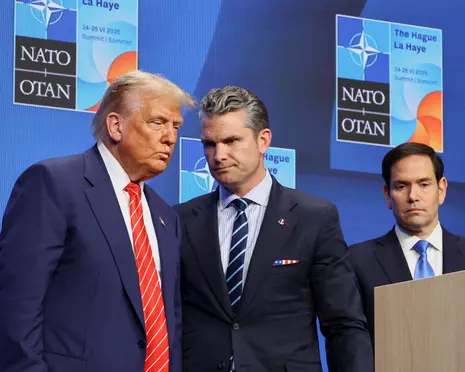
Wanderstayfinder.com – A recent survey conducted by the European Council on Foreign Relations (ECFR) has uncovered a dramatic shift in public sentiment across Europe, with only 11% of respondents in 15 countries now viewing the United States as a true ally. This marks a historic decline in confidence, as majorities in every nation surveyed now question Washington’s commitment to supporting European interests in times of crisis. The findings, released ahead of pivotal G7 and NATO summits in France and Turkey, underscore a growing sense of European skepticism toward the U.S., particularly in light of recent geopolitical developments.
Shifting Perceptions Amid U.S. Policy Uncertainty
The report highlights a significant erosion of trust in the U.S. as a reliable security partner, driven by a series of actions and statements from the current administration. President Donald Trump’s aggressive approach in the Middle East, his public threats against Greenland, and his pledge to withdraw troops from European military bases have all contributed to this sentiment. Additionally, doubts about the future of NATO have further strained transatlantic relations, prompting Europeans to adopt a more pragmatic stance in their defense strategies.
“Across the continent, there’s clear support for reducing dependence on Washington,” said Jana Kobzová, a co-author of the report and ECFR senior policy fellow. “Europeans are increasingly open to higher defence spending and, crucially, show a striking degree of confidence that neighbouring countries would come to their aid in a crisis.”
Despite this skepticism, the survey found that many Europeans remain hopeful about future improvements in relations with the U.S., particularly after Trump’s term concludes. However, this optimism does not translate to immediate trust, as the majority are now prepared to take steps to safeguard their own interests. This includes a notable increase in support for national defense initiatives, with Europeans on average 4% more likely to back higher military expenditures than they were the previous year.
The ECFR analysis, based on May 2026 polling in Austria, Bulgaria, Denmark, Estonia, France, Germany, Hungary, Italy, the Netherlands, Poland, Portugal, Spain, Sweden, Switzerland, and the UK, reveals a widespread shift in attitudes. While the U.S. is still seen as a “necessary partner” by a majority, 13% of respondents classify it as a rival, and 12% view it as a direct adversary. This division reflects deepening concerns about American reliability in a time of global uncertainty.
Europe’s Strategic Reckoning
The data highlights a strategic rethinking among European nations. In nearly every country, respondents expressed a desire to lessen their reliance on U.S. military hardware, with support for “buy European” initiatives reaching its peak in Denmark (75%), the Netherlands (72%), Sweden (70%), Portugal (69%), France (66%), Switzerland (64%), and the UK and Spain (both 62%). This trend signals a collective push toward self-sufficiency in defense capabilities.
Yet, the survey also uncovered a divide in how Europeans are willing to fund these efforts. While 47% of participants supported the idea of collective EU borrowing to finance greater defense spending, 35% opposed it. The most ardent backers of this approach were found in Portugal (59%), Denmark (56%), the Netherlands (55%), and Spain (55%), while opposition was strongest in Italy (63%), Austria (59%), Germany (56%), Spain (54%), and Denmark (52%).
Interestingly, the perception of the U.S. as a potential adversary is not uniformly shared across all regions. In Bulgaria, a majority still holds a positive view of American-European ties, but in other countries—such as France, Italy, the Netherlands, and Sweden—support for European independence is growing. These nations, which have far-right political factions, are particularly inclined to prioritize local defense solutions over continued reliance on Washington.
Public Demand for Self-Reliance
Paweł Zerka, another co-author and ECFR senior policy fellow, emphasized that public pressure for greater self-reliance has created a “window of opportunity” for European leaders to accelerate security reforms. “There’s a clear demand for increased national autonomy,” Zerka noted. “Europeans are not only questioning U.S. commitments but also actively seeking alternatives to hedge against potential failures in American support.”
This shift is evident in the public’s stance on energy security as well. Despite rising costs, 44% of Europeans believe it would be “rather bad” or “very bad” to resume importing oil and gas from Russia. This sentiment aligns with broader efforts to diversify energy sources and reduce strategic vulnerabilities. However, the survey also reveals that Ukraine’s bid to join the EU continues to split opinion, with respondents in Hungary, Bulgaria, Austria, Germany, and even Estonia—once a staunch U.S. ally—more likely to oppose the move in its current form.
The findings suggest that Europe is not only reevaluating its relationship with the U.S. but also redefining its own role on the global stage. With a majority of nations showing a willingness to invest in domestic defense, the report implies a potential long-term transformation in European security policies. While the U.S. remains a key player in transatlantic alliances, the survey indicates that its influence is waning, at least in the eyes of the public.
Notably, the idea of replacing NATO with a new EU-only defense organization has found limited traction, with just 29% of respondents endorsing such a move. This contrasts with the prevailing belief in most countries that U.S.-European relations will “probably get better” once Trump’s presidency ends, a view held by 60% or more in France, Spain, Denmark, the Netherlands, and Sweden. These optimism and pragmatism coexist, creating a complex landscape of European priorities.
As the G7 and NATO summits approach, the ECFR report serves as a timely reminder of the challenges facing transatlantic unity. The data underscores the need for European leaders to address public concerns about U.S. reliability while simultaneously advancing a more autonomous defense strategy. With 11% of Europeans now perceiving the U.S. as an ally—a stark contrast to the 22% recorded in November 2024—the continent is at a crossroads, balancing historical partnerships with emerging self-reliance.
The survey’s implications extend beyond immediate defense policies. They highlight a broader cultural shift in how Europeans view their security future, moving from a model of transatlantic reliance toward a more diversified and independent approach. As countries like Italy and Germany continue to voice reservations about increased spending, the debate over how to balance European solidarity with national interests will likely intensify in the coming months.
In summary, the ECFR findings reveal a pivotal moment in European-American relations. While the U.S. remains an important partner, its perceived reliability has diminished, and Europeans are increasingly prepared to take matters into their own hands. This evolving dynamic may reshape the geopolitical landscape, influencing how nations collaborate and compete in the years ahead.