Lawyer for Murdered French Girl’s Family Demands Increased Justice System Funding
Wanderstayfinder.com – In the wake of a tragic incident that has ignited nationwide discourse in France, the family’s lawyer for an 11-year-old girl whose disappearance and murder have fueled public outrage is pushing for greater investment in the country’s justice system. The lawyer, François Roujou de Boubée, has accused the government of failing to allocate sufficient resources to address the growing crisis of sexual violence against children. Speaking on Tuesday, he emphasized the urgency of the situation, stating, “Frankly, if the justice system had more resources, this tragedy and all the others wouldn’t have happened.”
A System in Crisis
Lyhanna, the victim, was last seen near her school in the car of Jérôme Barella, a 41-year-old man who is the father of one of her classmates. Her body was discovered in a grain silo in the Gers region, seven days after she went missing on 29 May. The location, nestled between two villages and situated 50 miles outside Toulouse, has become a symbol of the system’s shortcomings. Roujou de Boubée highlighted that the family’s trust in the justice system is now being tested, urging authorities to recognize the need for reform.
The case has taken center stage in the upcoming presidential election, bringing to light the pervasive issue of male violence against girls. Barella, who had previously been reported to police for multiple alleged rapes of young girls, remains a focal point of the debate. Despite these reports, he was never arrested, raising questions about the efficiency of the investigative process. His current accusations include online misconduct with a female student, which led to his dismissal from a school cleaning position.
The Mother’s Fight
Audrey, the mother who reported Barella to authorities last year for the alleged sexual abuse of her daughter, is now taking legal action against the state and Justice Minister Gérald Darmanin. She claims that the justice system’s inaction allowed the suspect to continue his harmful behavior unchecked. “He said to her: ‘If you tell anyone I’ll go to prison and kill myself,’” Audrey recounted, describing how Barella had allegedly threatened her daughter to silence her. The child’s case was supported by medical and psychological evaluations, yet the family feels the system has failed to act decisively.
Audrey’s frustration grew when she was repeatedly told by police that the investigation was ongoing, even after submitting multiple requests for updates. She shared that one officer warned her, “that if I kept harassing them they’d sue me.” This comment has sparked renewed criticism, with the interior minister, Laurent Nuñez, vowing to review the call logs to determine who made the statement. The mother’s lawsuit underscores the personal and systemic failures within the French legal framework.
Political Responses and Reforms
In response to the growing public pressure, Prime Minister Sébastien Lecornu has called for an emergency meeting of ministers to discuss potential legislative changes. The focus will be on addressing all forms of sexual and sexist abuse, including measures to improve investigation protocols and training for law enforcement. However, the lawyer for Lyhanna’s family has dismissed these efforts as insufficient, arguing that the lack of resources has rendered any proposed reforms unachievable.
Justice Minister Darmanin, while acknowledging the need for improvement, has refused to resign. He criticized the handling of previous accusations against Barella, calling it a “huge failure” but stopping short of attributing blame to specific individuals. In a bid to address the issue, he ordered the re-examination of 70,000 legal complaints related to child abuse within the next month. Yet, Roujou de Boubée dismissed this as a gesture rather than a meaningful solution, citing the system’s chronic underfunding as the root cause.
Systemic Failures and Public Protests
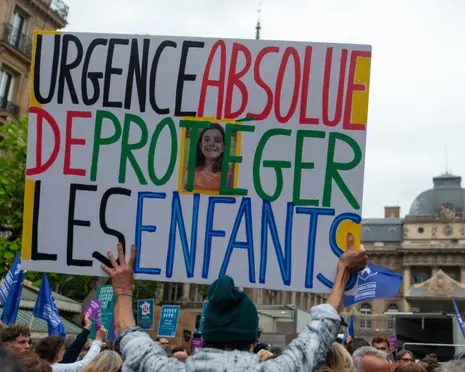
The tragedy has not only affected the victim’s family but has also mobilized thousands of citizens across France. Tens of thousands of protesters gathered outside the justice ministry in Paris and courtrooms nationwide on Monday night, demanding accountability and change. Many in the crowd shared their own experiences of childhood sexual violence, highlighting the long-term impact of the system’s delays and missteps.
Political leaders have echoed the call for reform. Yaël Braun-Pivet, leader of the National Assembly, stated before a parliamentary silence, “France has collectively failed.” She stressed that the issue is not about assigning blame to individuals but addressing the systemic nature of the problem. Similarly, Clémence Guetté from the radical-left La France Insoumise urged the government to prioritize funding, training, and prevention programs to combat child abuse effectively.
Meanwhile, Marine Le Pen of the far-right National Rally party has emphasized the need for a broader reflection on the justice system’s operations. She argued that the case should serve as a catalyst for rethinking how legal processes are managed, particularly in cases involving minors. The debate has intensified with each new development, revealing deepening tensions between political factions and the public’s demand for justice.
The incident has also prompted a reevaluation of how allegations against individuals like Barella are processed. With a history of being reported for sexual misconduct, Barella’s case exemplifies the challenges faced by victims in seeking timely justice. The lawyer for Lyhanna’s family believes that a more efficient and humane justice system is essential to prevent future tragedies. “The majority of investigating magistrates are excellent,” he noted, “but some are catastrophic, and others have been lazy.”
As the nation grapples with these revelations, the call for increased funding is gaining momentum. With the presidential election looming, political leaders are under pressure to address the crisis head-on. The lawyer’s plea serves as a reminder that the justice system’s effectiveness is intertwined with its financial stability. Without adequate resources, cases like Lyhanna’s may continue to go unsolved, leaving families to bear the brunt of systemic failures.
Looking Ahead
Lyhanna’s case has become a pivotal moment in France’s ongoing struggle to combat child sexual abuse. It has exposed vulnerabilities in the justice system, from delayed investigations to the underrepresentation of victims’ voices. As reforms are debated, the question remains: will increased funding lead to tangible change, or will it merely address symptoms of a deeper crisis? The answers may shape the future of justice in the country for years to come.