Rajoy Sparks Controversy with Comments on French Squad Composition
A Column That Ignited Cross-Border Debate
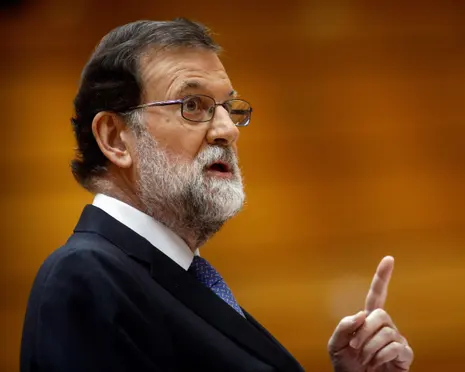
Former Spanish PM accused of racism – Mariano Rajoy, the former conservative leader of Spain who served as prime minister between 2011 and 2018, is encountering mounting criticism for remarks he made regarding the French national football team. In a piece published for the digital publication El Debate on Friday, Rajoy examined Spain’s upcoming semi-final encounter against France. While acknowledging France’s impressive tournament performance, he included a statement that has since generated considerable controversy.
The Spanish politician noted that France had previously claimed the World Cup title twice and reached the final in the most recent edition of the tournament. He highlighted that the French side had secured victory in every match during this year’s competition and currently held the top position in FIFA’s official rankings. Rajoy praised the quality of the French roster, describing it as exceptional. However, he then made a claim that would become the focal point of the controversy.
“That said, they don’t have any French players. And they’re playing very well. They’ll be a formidable opponent.”
Political Reactions Emerge on Both Sides
The comments drew immediate comparisons to a recent incident involving a Paraguayan senator who directed racist remarks toward French football star Kylian Mbappé through social media. Spain’s current prime minister, Pedro Sánchez, delivered a pointed response on the platform X. He distinguished between two approaches to national belonging, suggesting that some individuals evaluate citizenship through superficial characteristics while others recognize deeper connections.
“There are those who still measure belonging by surname, place of birth, or skin colour,” Pedro Sánchez wrote in a post on X. “Others measure it by our roots in a country and our will to contribute to it. Playing football. Caring for our elders. Or opening businesses. Spain belongs to those who love it and work for it. Not to those who shame it with xenophobic statements.”
French Officials Voice Strong Disapproval
Within France, the reaction was equally vigorous. Interior minister Laurent Nuñez appeared on the BFMTV television channel on Sunday to express his views. He characterized Rajoy’s comments as entirely unacceptable and inconsistent with French values. Nuñez emphasized that France represents a nation of diversity where individuals from various backgrounds can flourish and establish meaningful lives.
Olivier Faure, who leads the French Socialist party, took to X to clarify the composition of the national team. He asserted that every member of the squad holds French citizenship. Faure further explained that France operates as a political entity rather than an ethnic one, united by republican principles rather than shared ancestry, religion, or physical appearance.
“France is not an ethnic nation; it has no skin colour or religion,” he added in a post on X. “It is a political nation united around the republican motto – much to the chagrin of the racist right.”
Historical Context and Legal Action
Fabien Roussel, head of the French Communist party, also condemned the Spanish politician’s remarks. He drew parallels to the earlier comments made by Paraguayan senator Celeste Amarilla, who had described Mbappé as a “colonised Cameroonian” attempting to present himself as French. Roussel suggested that such statements represented a persistent pattern of hostility directed at France and its achievements.
“They cannot help but spew filthy racism in an attempt to annoy our beautiful French team.”
Naïma Moutchou, France’s minister for overseas territories, identified this as a recurring phenomenon. She argued that similar criticisms emerge whenever France achieves success on the international stage. Moutchou characterized these comments as more than mere verbal missteps, describing them instead as evidence of systematic prejudice against French identity. She urged the French football federation to explore all available legal options, noting that the federation had already submitted a formal complaint to Paris prosecutors regarding Amarilla’s statements.
Sánchez concluded his message with a gracious sentiment, expressing confidence that the best team would prevail while racism would ultimately be defeated. The semi-final match promises to be not only a sporting contest but also a moment of reflection on questions of national identity and inclusion in modern Europe.